
North Korea Launches About 10 Short-Range Ballistic Missiles, Response to UFS26 Reduction Was Not a Concession
 Tanaka Takashi
North Korea Launches About 10 Short-Range Ballistic Missiles; Response to UFS26 Reduction Was Not a Concession
The time of 5 PM was also a political clock chosen by Pyongyang. According to the South Korean Joint Chiefs of Staff, North Korea launched about 10 short-range ballistic missiles around 5 PM on August 20, from near the Pyongyang metropolitan area toward the eastern waters. The flight distance is reported to be about 300 kilometers. This was a simultaneous launch from the metropolitan area, differing from the 11th launch near Wonsan on August 12.
Immediate Response to Reduced Exercises
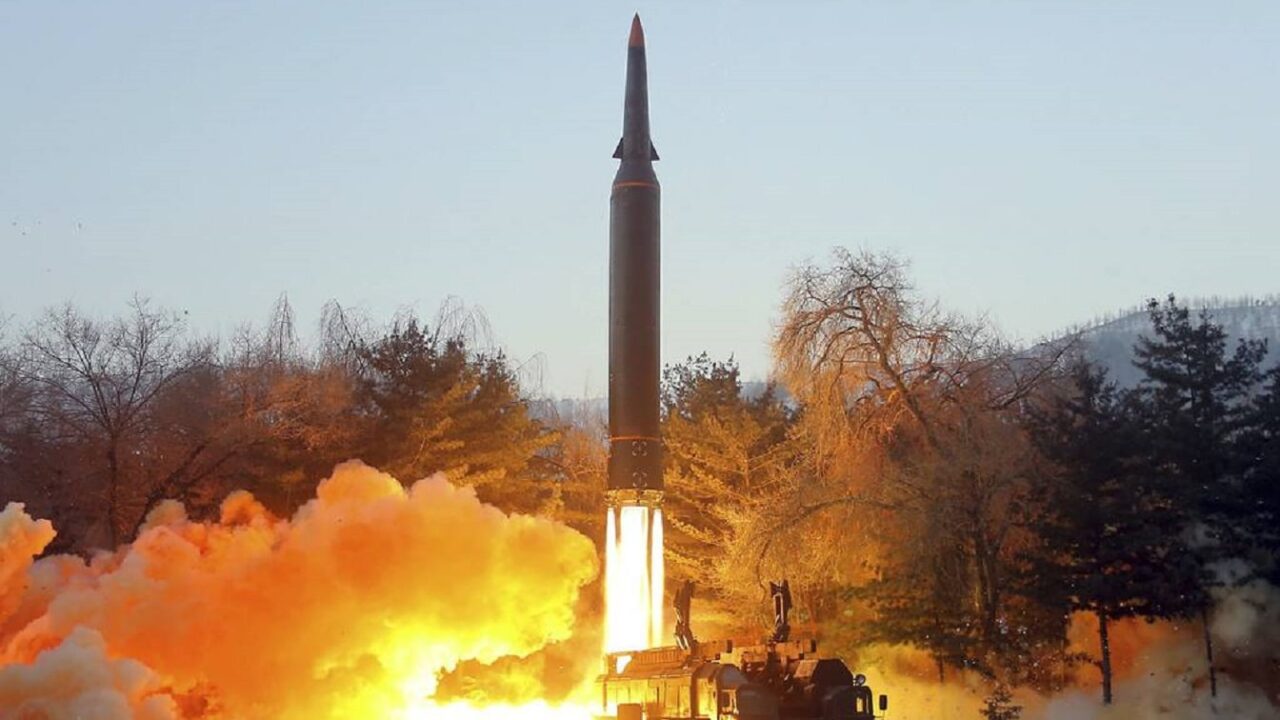
The key point this time lies in the order of events rather than the launch itself. President Trump ordered a significant reduction of the US-South Korea joint exercise UFS26 on August 16, and the US and South Korean militaries adjusted the exercise to nearly half its original duration over 11 days. On the 19th, he expressed willingness for a meeting with Kim Jong Un within the year. However, on the same day, Kim Yo Jong dismissed the notion that reducing the scale or duration of the exercises would change their "provocative and aggressive nature," stating that the US side would not receive the desired response to its goodwill propaganda. The next day, about 10 missiles were launched.
This indicates that Washington's expectation of "military concessions and creating a diplomatic atmosphere" was not immediately received by Pyongyang as a currency for easing tensions. Rather, it can be said that North Korea gained the opportunity to cheaply fire additional military signals at the point when the exercises were reduced. The side that made the concession pays the political price first, while the receiving side does not pay any compensation. This is the worst form of negotiation.
The Significance of the Number About 10
The South Korean presidential office convened a National Security Council meeting, condemning the launch as a violation of UN Security Council resolutions and ordered the military to maintain a general state of alert during the UFS26 period. The South Korean military is sharing information with the US and Japan. Regarding Japan, it has been confirmed that the Prime Minister's Office detected "suspicious missile launches," but details of any protest or directives from the Prime Minister have not been publicly confirmed at this time.
The South Korean Defense Minister reportedly mentioned the possibility of a 600mm multiple rocket system in the National Assembly. However, the South Korean military has not officially confirmed the type or range classification. There is no need to hastily conclude that it is a KN-25 or similar. Rather, what is important is the operational signal of launching about 10 missiles simultaneously. North Korea used the basic unit of a saturation attack as a political message, rather than a single protest.
Crack in Nuclear Warhead Assessment
On the same day, August 20, Defense Minister An Kyung-duk referred to a general estimate of North Korea's nuclear warhead count as being between 80 and 120. This is a significant difference from the "57 warheads" mentioned by Trump the day before. While this discrepancy may seem like a mere difference in information estimates, it practically alters the priorities for BMD requirements, ammunition stockpiling, evacuation plans, and standoff attack strategies. The simultaneous launch of delivery means the day after the warhead assessment diverged is hard to dismiss as mere coincidence.
From Pyongyang's perspective, the moment the political alignment between the US and South Korea faltered, it was an opportune time to encapsulate both nuclear and conventional forces in one picture. Is it 57 warheads or 80 to 120? Alongside that debate, short-range missiles fly toward the Sea of Japan in mere minutes. This is not just news for the Korean Peninsula; it directly relates to Japan's security, including vigilance and monitoring on the Sea of Japan side, information sharing among Japan, the US, and South Korea, and support plans for US military bases in Japan.
What Japan Should Observe
In my view, this launch is not merely an act to disrupt Trump's planned visit to North Korea. Rather, it is likely a preemptive indication of what price North Korea would bring if talks were to materialize. Even if exercises are reduced and good relations are discussed, the return to the starting point is not denuclearization but rather a demand for greater concessions.
A common saying in the Maritime Self-Defense Force during the Cold War was that while the opponent's intentions are hard to read, the launch location and number are clear, which is a simple rule of thumb. This time, it was the metropolitan area, about 10 missiles, right after the announcement of the UFS26 reduction. These three factors alone are sufficiently severe. The real issue is not the remaining days of the US-South Korea exercises. The danger lies in aligning the alliance's alert posture with the speed at which political leaders speak of "good personal relationships."
North Korea launched approximately 10 short-range ballistic missiles towards the East Sea around 5 PM on August 20, 2023, from the Pyongyang metropolitan area. This action was a direct response to the recent reduction of the UFS26 military exercises by the US and South Korea. The missiles reportedly flew about 300 kilometers, and the South Korean government condemned the launch as a violation of UN Security Council resolutions.
- North Korea launched approximately 10 short-range ballistic missiles towards the East Sea.
- The launch occurred around 5 PM on August 20, 2023, from the Pyongyang metropolitan area.
- The missiles reportedly flew approximately 300 kilometers.
- This action was a response to the reduction of the UFS26 military exercises by the US and South Korea.
- The South Korean government condemned the launch as a violation of UN Security Council resolutions.