
North Korea Launches Multiple Ballistic Missiles on October 12, 2026, Adding New Burden to Japan's Aegis Defense
 Tanaka Takashi
North Korea Launches Multiple Ballistic Missiles on October 12, 2026, Adding New Strain to Japan's Aegis Defense
On October 12, North Korea launched multiple ballistic missiles toward the Sea of Japan from its eastern coast. According to the South Korean military, at least two missiles are believed to have fallen outside Japan's Exclusive Economic Zone (EEZ). Even if the Japanese government could not immediately confirm any damage, the issue for the Japan Maritime Self-Defense Force (JMSDF) is not the impact points. The problem lies in the compressed time frame to detect the launch, determine the trajectory, and prepare for interception if necessary.
This launch follows the ballistic missile launch on October 3 and North Korea's subsequent announcement of hypersonic or medium-range strategic missile training. As of October 12, it is necessary to wait for the final announcements from Japanese and South Korean authorities regarding the type, flight distance, and altitude. It is premature to consider North Korea's announcements as evidence of improved capabilities, but the combination of multiple launches in a short period is closer to a repetition of a training cycle than mere political posturing.
Simultaneous Processing Capability Over Number of Launches
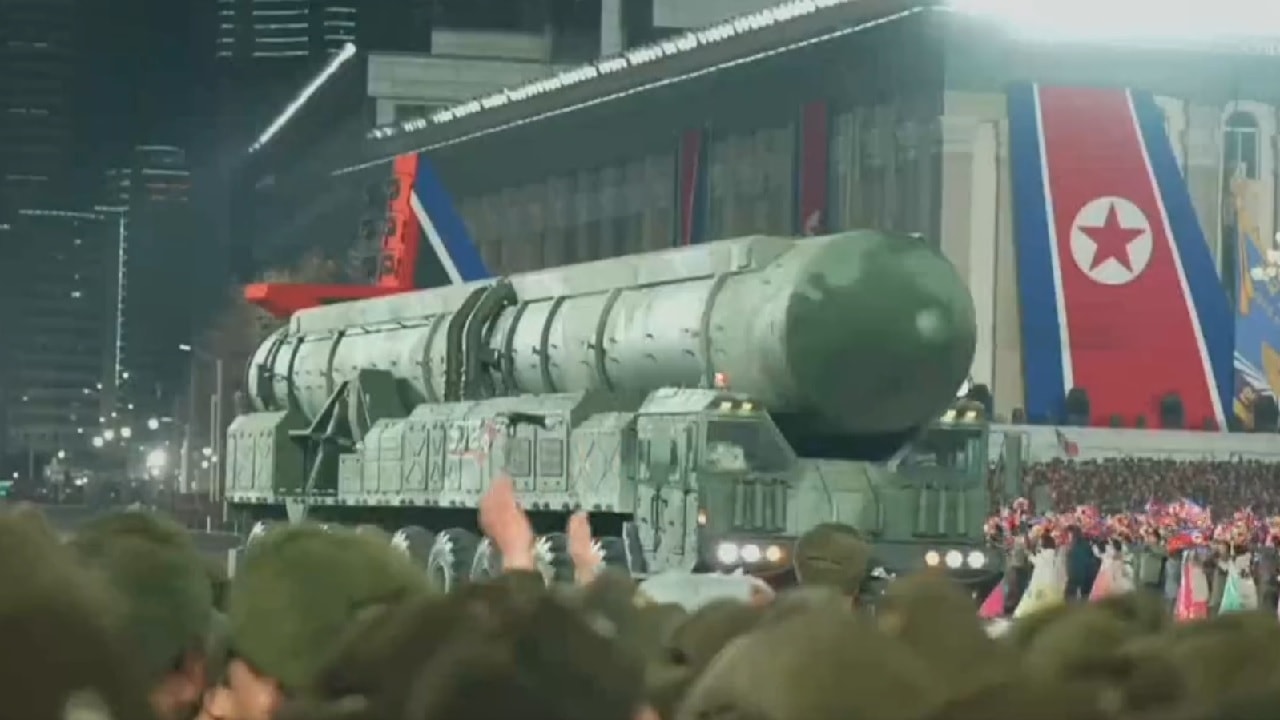
From a defense perspective, what is noteworthy for Japan is not the number of launches itself, but whether it can simultaneously process targets with different directions and flight characteristics. The Aegis-equipped destroyers of the JMSDF play a central role in ballistic missile defense, but there are limits to the number of vessels, crew, and maintenance cycles. If North Korea mixes short-range ballistic missiles with medium-range systems, the burden of surveillance, identification, and engagement decision-making will increase. Before deciding whether to launch interceptors, there will be command and control issues regarding which ship is responsible for which target.
This is where the practical value of the Japan-U.S. alliance comes into play. If U.S. military satellite and early warning information can be integrated quickly with sensors near the launch sites of the South Korean military and Japan's maritime radar, the effect can be greater than simply adding individual detection capabilities. Conversely, even if the political messages among the three countries are aligned, if there are delays in data sharing or differences in evaluation criteria, the deterrent power of the alliance will not be as strong as it appears.
Viewing the Southwestern Islands and the Sea of Japan as the Same Defense Issue
The U.S. and Japanese militaries are reportedly planning the Keen Sword exercise in late October, which assumes island defense in the southwestern region. The launches from North Korea and the exercises do not indicate a direct operational causal relationship. However, as Japan reallocates resources for long-range strikes, transport, and dispersed operations in the southwestern islands, the availability of vessels and personnel to support missile surveillance on the Sea of Japan will become increasingly strained. From the JMSDF's perspective, this is not a matter of two fronts, but rather a single sustainability issue shared by the same fleet and command structure.
Japan's weakness is not only in the performance of its interceptors. It lies in whether it can maintain its vessels, crew, and communication networks at the same level if a crisis lasts for several weeks.
Political Risks Hidden Behind Deterrence Numbers
North Korea claimed that a gap had emerged in Japan and South Korea's tracking capabilities following the October 3 launch. Regardless of the technical truth of the claim, it is clear that there is a political intent to exploit the differences in perception regarding the launch results. If Japan overly emphasizes the fall of missiles outside its EEZ, it may appear to its citizens that safety has been maintained, while simultaneously giving North Korea the opportunity to exhaust Japan's alert posture at a low cost.
According to Tanaka, the focus this time is not on the promotional language of new missiles, but on whether Japan can adapt to an environment where launches have become normalized. Simply increasing the number of Aegis ships will not resolve the issues of crew shortages and maintenance burdens. What is needed is a system that incorporates Japan-U.S.-South Korea alert information into regular operations and returns trajectory assessments with the same accuracy for launches that do not involve intercepts. The true risk is not how many missiles North Korea can launch at once, but whether Tokyo and Washington perceive it as just another launch and lose the tension in decision-making.
Major Information Sources
- Japan Times, Report on North Korea's October 12 Multiple Ballistic Missile Launch
- Reuters, Report on North Korea's October 3 Hypersonic Missile Training
- NHK WORLD-JAPAN, Report on the October 3 Launch
- USNI News, Report on the Keen Sword Exercise dated October 6
North Korea launched multiple ballistic missiles towards the Sea of Japan on October 12, 2026, with at least two landing outside Japan's Exclusive Economic Zone. This action follows a previous missile launch on October 3 and poses new challenges for Japan's Aegis defense system. The U.S. and Japan are set to conduct military exercises in response to the heightened threat.
- North Korea launched multiple ballistic missiles on October 12, 2026.
- At least two missiles fell outside Japan's Exclusive Economic Zone (EEZ).
- The launch is part of a series of missile activities following a previous launch on October 3.
- Japan's Aegis defense system faces increased pressure due to the simultaneous missile launches.
- The U.S. and Japan are preparing for joint military exercises in response.