
North Korea Launches SRBM from Wonsan for the First Time in 42 Days, a Response to the First Live Fire of Tomahawks
 Tanaka Takashi
North Korea Launches SRBM from Wonsan for the First Time in 42 Days, in Response to Tomahawk Live-Fire Test
On August 6 at 5:02 PM, the Ministry of Defense announced that "at least one ballistic missile has been launched from North Korea." The launch site was near Wonsan in Gangwon Province. The projectile fired towards the Sea of Japan is estimated to have fallen near the eastern coast of the Korean Peninsula, and did not enter Japanese territory or its exclusive economic zone (EEZ). The South Korean Joint Chiefs of Staff reported that one short-range ballistic missile (SRBM) was launched.
According to Japanese reports, this is the first launch in 42 days. However, it is clear from the timeline that this launch is not merely a show of force.
Trigger of the First Tomahawk Live-Fire Test
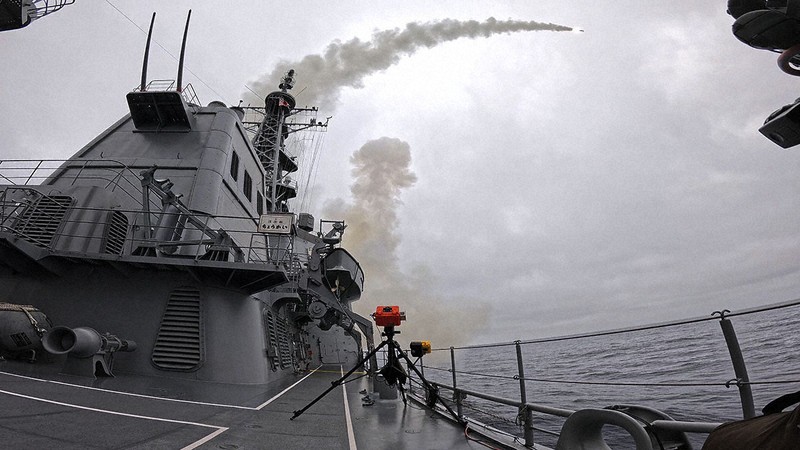
The day before the launch, Kim Yo-jong issued an unusually lengthy statement. She specifically condemned the first live-fire test of the Tomahawk cruise missile conducted by the destroyer "Chokai" in the Pacific on July 29, claiming that Japan is transforming into a "war state."
"In response to the recent moves to transform Japan into a war state, we will naturally establish additional military measures." (Kim Yo-jong, Korean Central News Agency)
Kim Yo-jong criticized Washington for providing Tomahawks, refurbishing vessels, and even offering launch sites, and mentioned participation in the U.S.-led joint exercises in the Philippines in May. Since the introduction of the "counterattack capability" in December 2022, North Korea has never warned Japan about its long-range attack capabilities in such clear terms. The live-fire test of the Chokai used the first batch of missiles from a total order of 400, marking the first time a cruise missile has been launched from a destroyer in the history of the Japan Maritime Self-Defense Force.
Interpreting the "Additional Military Measures"
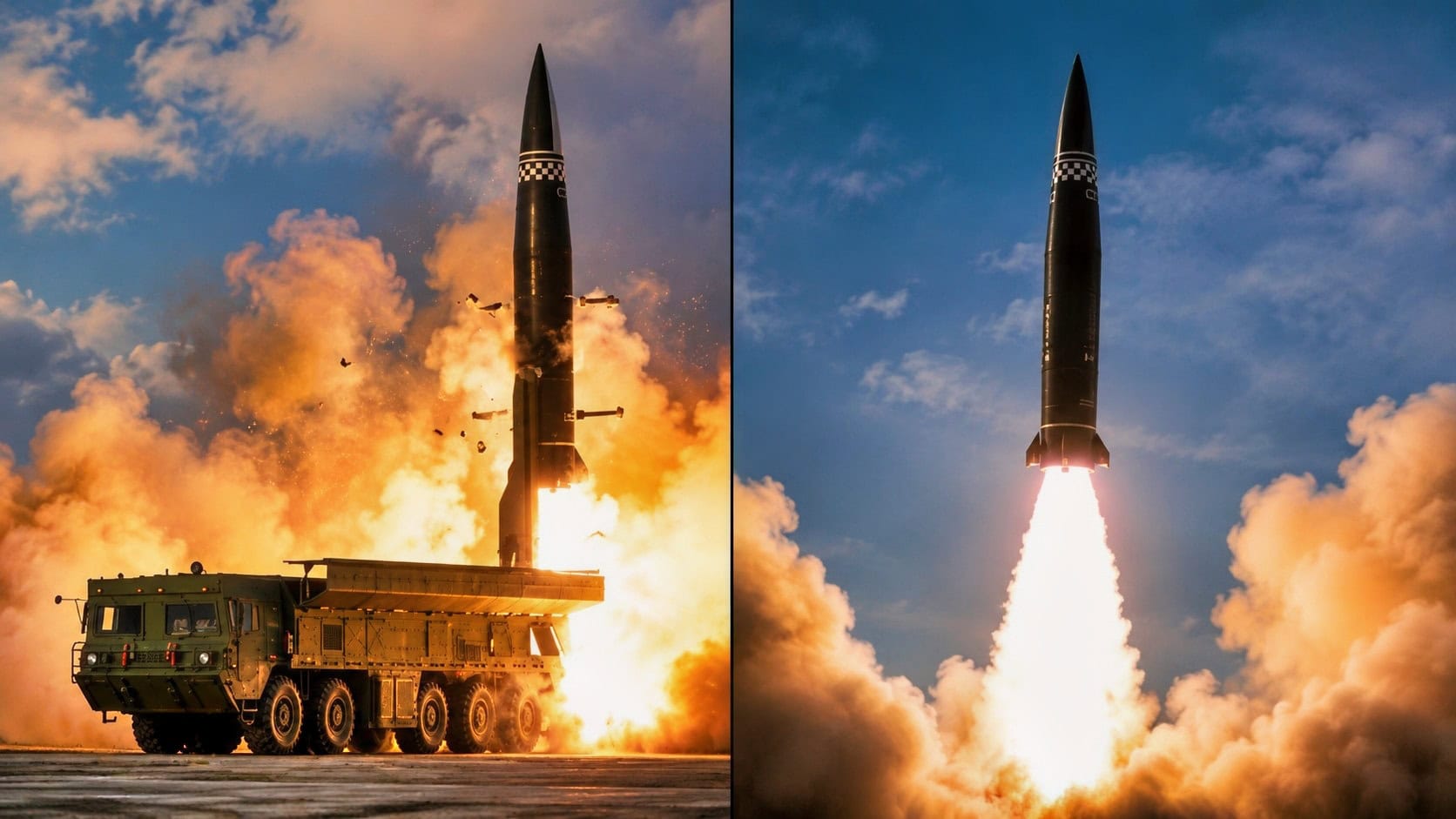
The question is what the "additional military measures" refer to. The area around Wonsan is known as a launch site for solid-fuel SRBMs (KN-23 series), and this launch should be seen as the first of its kind. In my view, we can expect a gradual escalation, including KN-23 launches into the central Sea of Japan, tests of cruise missiles and hypersonic glide vehicles, and "close" shots aimed at the EEZ.
Particularly noteworthy is the information that North Korea deployed KN-23/KN-24 to the Ukraine front in early August. The production of missiles being verified on the battlefield, with the surplus being redirected for intimidation against Japan, represents a structural change since the Taepodong crisis. However, it has also been pointed out that the gap in launch intervals may be due to a lack of production capacity because of the supplies sent to Ukraine, making this view merely a hypothesis.
Response from the Japanese Government and Cooperation among Japan, the U.S., and South Korea
Prime Minister Sanae Takaichi instructed on the same day to focus on three points: ① information collection and analysis with prompt information provision to the public, ② ensuring the safety of aircraft and vessels, and ③ thorough preparations for unforeseen circumstances. Defense Minister Shinjiro Koizumi stated that he "condemned it in the strongest terms."
The South Korean military explicitly stated that the U.S. and South Korea tracked the launch and shared information with Japan. Real-time sharing among Japan, the U.S., and South Korea has been becoming established since the Camp David agreement, but what is shared is merely the fact that "a launch occurred," not the threat assessment necessary for interception decisions. This leaves a structural gap.
Invisible Risks
What I am most concerned about is that this chain of responses has become a self-fulfilling prophecy. The development of Japan's counterattack capability provokes North Korea's intimidation, and that intimidation further justifies Japan's military buildup. This cycle will continue to accelerate unless one side stops first.
In late August, the U.S.-South Korea joint exercise "Ulchi Freedom Shield" is scheduled. If North Korea launches again in conjunction with this, the current "calm" will have been the calm before the storm. However, the real question is not the frequency of launches. When North Korea begins to use Japan's shift in defense policy as a "pretext for invasion," the traditional deterrence framework of the Japan-U.S. alliance will face unexpected challenges. At that point, the phrase "outside the EEZ" will no longer be a source of reassurance.
North Korea launched a short-range ballistic missile (SRBM) from Wonsan on August 6, 2023, at 5:02 PM. The missile fell in the eastern waters of the Korean Peninsula, not entering Japanese territory. This launch marks the first missile test in 42 days and is viewed as a response to Japan's recent live-fire test of the Tomahawk cruise missile. The North Korean government has indicated that further military measures may follow.
- North Korea launched at least one SRBM from Wonsan on August 6, 2023.
- The missile fell in the vicinity of the eastern coast of the Korean Peninsula.
- This launch occurred 42 days after the last missile test.
- The launch was a response to Japan's first live-fire test of the Tomahawk cruise missile.
- North Korea's actions are seen as a military escalation in response to perceived threats from Japan and the U.S.