
North Korea's Ballistic Missile Launch on October 3, 2026, Tests the US-Japan-South Korea Response System
 Tanaka Takashi
North Korea's October 3, 2026, ballistic missile launch tests the readiness of the US, Japan, and South Korea
On the morning of October 3, North Korea launched what is believed to be a ballistic missile from near Wonsan towards the East Sea (Sea of Japan). According to the South Korean Joint Chiefs of Staff, the launch occurred around 6:30 AM, and as of the time of writing, the number of launches, flight distance, and altitude have not been confirmed. The Japanese Prime Minister's Office also instructed to ensure the safety of aircraft and vessels and to gather information.
Confirmed facts and uncertainties
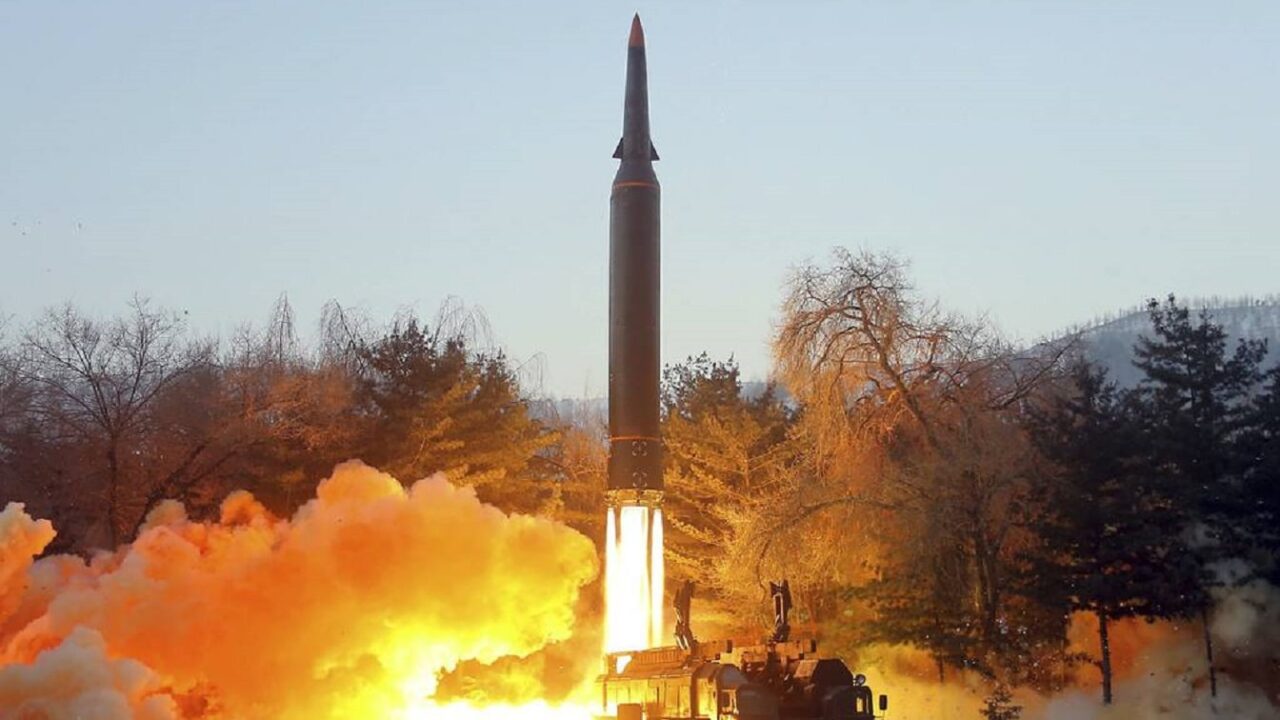
The image published is an archival document showing a missile launch from North Korea and was not taken during this launch. The South Korean side is closely sharing relevant information with the United States and Japan, maintaining a state of alert. On September 20, two short-range ballistic missiles were launched from Wonsan, with South Korean military reports indicating they flew approximately 450 kilometers and over 600 kilometers. Since this data has not been publicly disclosed, it is premature to conclude that it involves new warheads or hypersonic weapons.
Launch testing the response process rather than capabilities
Wonsan is a launch site on the Sea of Japan side, close to air and maritime traffic routes from the eastern coast of the Korean Peninsula to the Japanese archipelago. North Korea's intent is not necessarily limited to demonstrating new weapons. With a short notice in the early morning, it can also be seen as an action to measure how quickly South Korea's detection, US military information processing, and Japan's alertness and government reporting can connect.
From the perspective of the Japan Maritime Self-Defense Force, it is not only important to confirm the impact point afterward. It is crucial to integrate the understanding of launch signs, sharing of ballistic information, alerts to civilian vessels, and operational decisions for ballistic missile defense forces into a single flow. While information sharing among the US, Japan, and South Korea is said to be functioning, the speed of sharing and the speed of political announcements are not the same. This gap can create a void during a crisis.
Rejection of dialogue and military signals
The day before the launch, Kim Yo-jong rejected a proposal for dialogue regarding the military demarcation line from the South Korean side, indicating a desire to "cut off" relations between the North and South permanently. This launch serves to reinforce that political message with military action. However, at this stage, there is little basis to definitively link the launch to a specific exercise.
The focus this time is not on the name of the missile, but on whether the US, Japan, and South Korea can create a shared situational awareness despite having uncertain information.
Conclusion
For Japan, the threat is not only the projectile itself. During the several minutes when the number of launches and trajectory are unknown, it is necessary to balance safety measures for air and maritime traffic with a show of deterrent intent. The true weakness lies not in a lack of detection capability, but in the institutional time lag that forces decision-making before information is gathered.
Main sources of information
North Korea launched a ballistic missile from near Wonsan towards the East Sea on October 3, 2026, at approximately 6:30 AM. The South Korean military is maintaining a state of alert and sharing information with U.S. and Japanese forces. This launch is perceived as a test of the trilateral response capabilities of the U.S., Japan, and South Korea, coinciding with North Korea's rejection of dialogue with South Korea.
- North Korea launched a ballistic missile on October 3, 2026, around 6:30 AM.
- The missile was launched from near Wonsan towards the East Sea.
- The South Korean military is closely monitoring the situation and sharing information with the U.S. and Japan.
- The launch is seen as a test of the readiness of the U.S., Japan, and South Korea.
- Kim Yo-jong rejected dialogue proposals with South Korea the day before the launch.