
Pentagon approves F-35 software upgrade for Israel
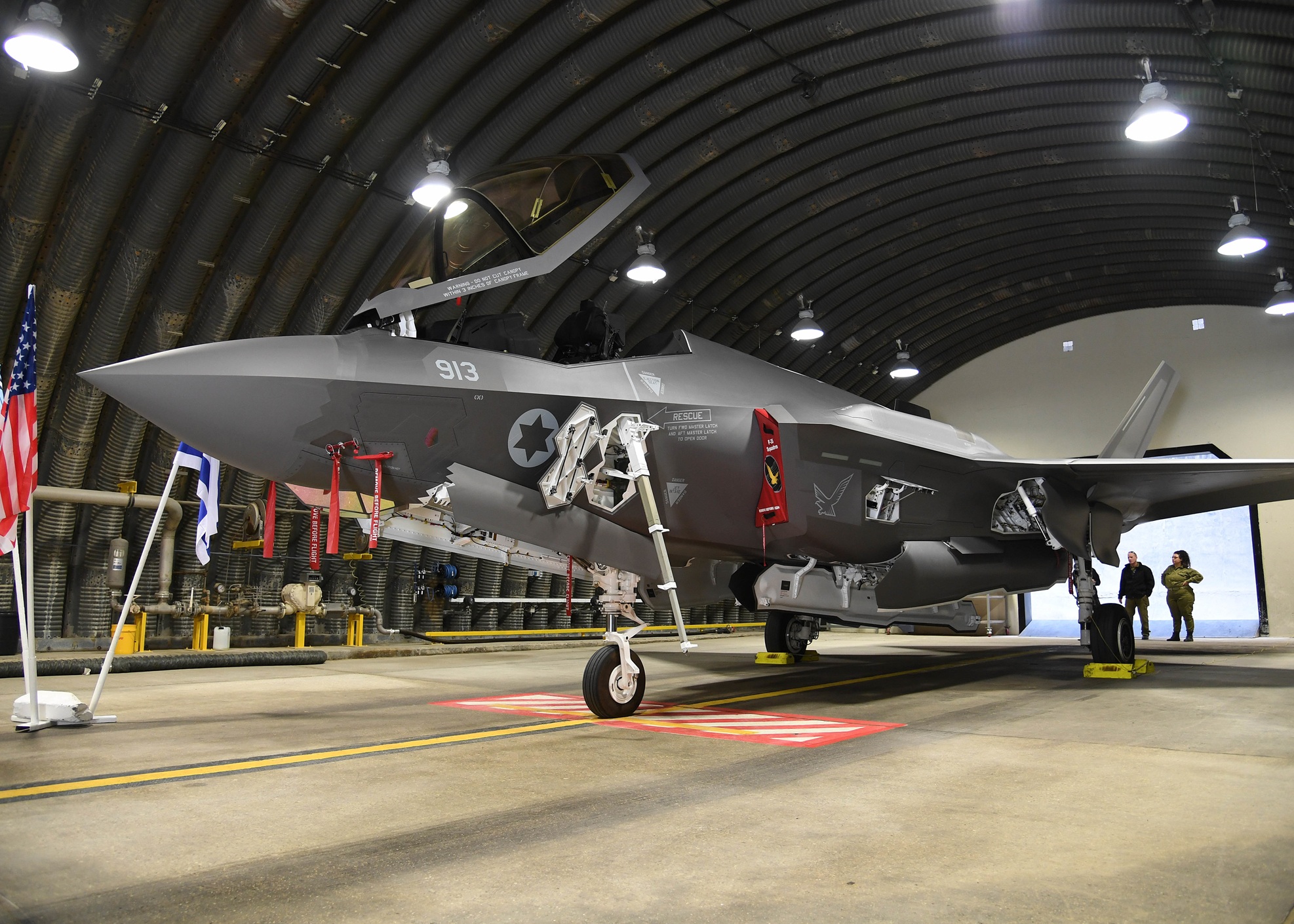
The U.S. Navy has awarded Lockheed Martin an $11.4 million contract modification to develop additional software for Israel’s F-35 Joint Strike Fighter fleet, the Pentagon announced April 7, 2026.
The modification adds $11,437,794 to a previously awarded contract numbered N0001921C0040. The work is fully funded through Foreign Military Sales customer funds — meaning Israel, not the U.S. taxpayer, is financing the effort — and the entire amount will be obligated at the time of award with no portion set to expire at the end of the current fiscal year. Naval Air Systems Command at Patuxent River, Maryland, is administering the contract.
The scope of the modification is specific: Lockheed Martin Aeronautics Company, based in Fort Worth, Texas, will produce three additional software data loads — described in the contract as “productionized plus builds” developed off existing enterprise software baselines. The work falls under Israel’s System Development and Design Phase II effort, which encompasses both software development and systems engineering activities for the F-35 aircraft. The overwhelming majority of the work, 80 percent, will be performed in Fort Worth, with the remaining 20 percent conducted at undisclosed locations outside the continental United States. Completion is expected by March 2030.
To understand what this contract delivers, it helps to know how software works on the F-35. The Joint Strike Fighter is among the most software-intensive combat aircraft ever built, with millions of lines of code governing everything from radar processing and sensor fusion to weapons employment and electronic warfare. That software is not a single monolithic system — it is organized into discrete “data loads,” essentially versioned software packages that can be updated, tested, and certified independently before being loaded onto operational aircraft. Producing “productionized plus builds” means taking software that has been developed and tested in a laboratory or engineering environment and hardening it into a form that can be reliably installed and operated on fielded aircraft at scale.
Israel’s F-35 program, known domestically as the Adir — meaning “mighty” in Hebrew — carries additional complexity beyond the standard U.S. and allied configurations. Israel has negotiated a degree of national customization for its jets, integrating Israeli-developed systems and software alongside Lockheed Martin’s baseline architecture. That integration requires dedicated engineering work to ensure Israeli-specific capabilities remain compatible with ongoing updates to the broader F-35 software enterprise, which is continuously evolving as new capabilities are added and existing ones refined. The System Development and Design Phase II effort referenced in this contract is the formal program structure through which that Israeli-specific engineering is conducted, contracted, and overseen by the U.S. government as the responsible foreign military sales case manager.
The cost-plus-incentive-fee contract structure under which this modification was issued reflects the inherently complex and evolving nature of advanced software development. Unlike a firm-fixed-price contract — where the government pays a set amount for a defined deliverable — a cost-plus-incentive-fee arrangement reimburses the contractor for allowable costs while providing financial incentives tied to performance outcomes. For a program as technically demanding as F-35 software integration, this structure gives both the government and Lockheed Martin flexibility to manage risks that cannot always be fully anticipated at the outset.
Israel operates 48 of the 75 ordered F-35I Adir aircraft and has used the platform operationally, making it one of the most combat-experienced F-35 operators in the world. Maintaining the software currency of that fleet — ensuring Israeli jets can employ the latest weapons, counter evolving threats, and remain interoperable with U.S. and allied aircraft — is an ongoing engineering commitment that requires sustained investment. Contracts like this modification are the mechanism through which that commitment is executed, translating strategic partnership into specific lines of code delivered to specific aircraft.
Content preview only. Full article available at source. View Full Article
The U.S. Navy awarded Lockheed Martin an $11.4 million contract modification on April 7, 2026, to develop additional software for Israel's F-35 Joint Strike Fighter fleet. The contract is funded by Israel through Foreign Military Sales and will primarily be executed in Fort Worth, Texas. This upgrade is crucial for maintaining the operational capabilities of Israel's F-35I Adir aircraft, which are among the most combat-experienced in the world.
- U.S. Navy awarded Lockheed Martin an $11.4 million contract modification for F-35 software upgrades for Israel.
- The contract is funded through Foreign Military Sales, meaning Israel is financing it.
- 80% of the work will be performed in Fort Worth, Texas, with the rest at undisclosed locations.
- Israel operates 48 of the 75 ordered F-35I Adir aircraft, making it a combat-experienced operator.
- The completion of the software upgrade is expected by March 2030.