
Pentagon wants a robot dog that maps toxic air in 3D
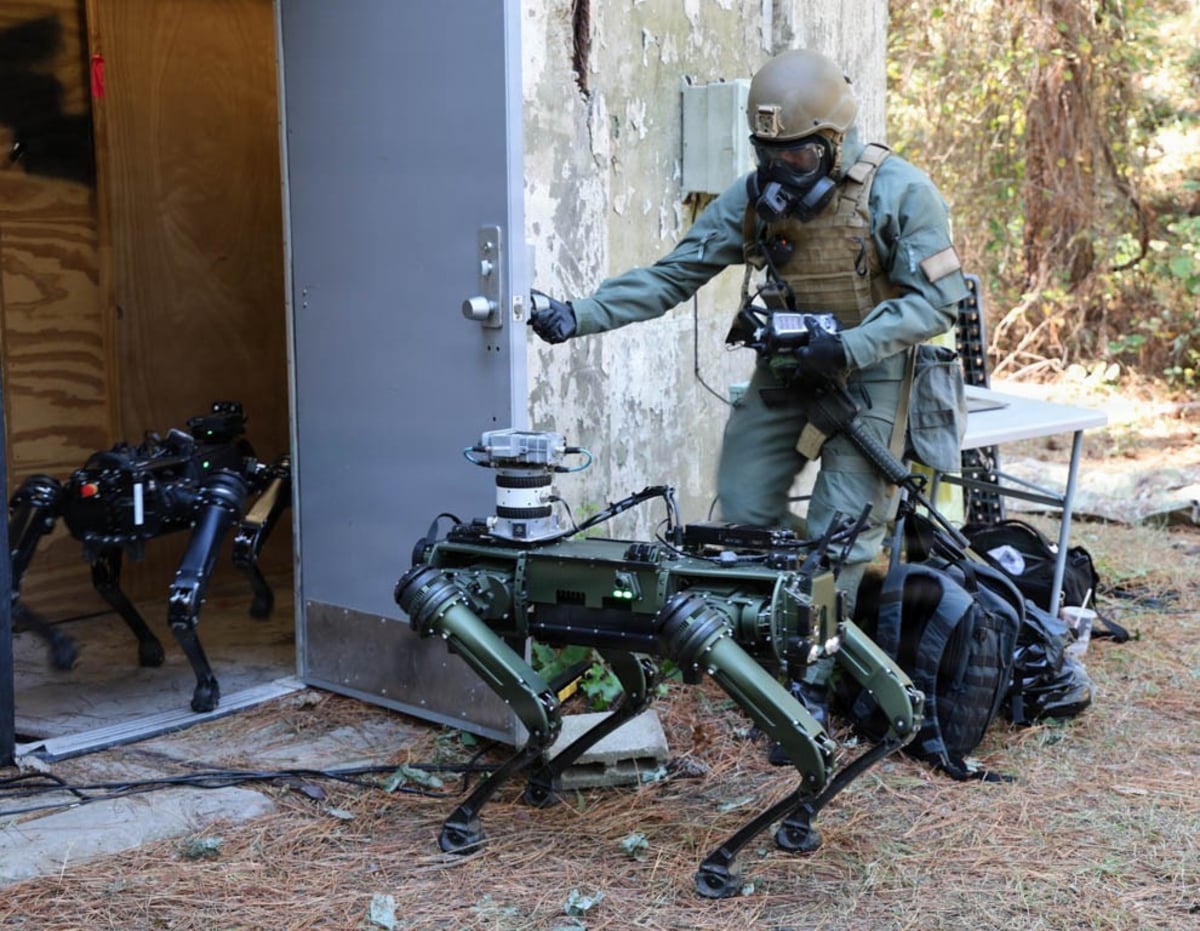
The Defense Threat Reduction Agency plans to pay a Utah company to build a prototype four-legged robot that can walk into hazardous areas on its own and produce a live 3D map of dangerous gases, according to a contract notice the agency posted on October 7.
DTRA, the U.S. Department of War agency responsible for countering chemical, biological, radiological and nuclear threats, said it intends to award a firm-fixed-price, sole-source contract to Rocky Mountain Unmanned Systems of Centerville, Utah, for a single prototype. The notice does not give a contract value or delivery date.
Under the plan, the government will supply a multi-gas chemical detector, and the contractor will provide a commercial quadruped robot, a survey-grade 3D lidar sensor and a tactical mesh networking radio, then fuse the data from all four into a single real-time “hazardous atmosphere map” showing operators where dangerous gases are inside the space the robot has scanned. DTRA called this software integration the core of the work but did not say which quadruped platform or chemical detector will be used.
The agency said market research found Rocky Mountain Unmanned Systems to be the only company that already has a proprietary software framework and demonstrated experience fusing these specific data streams into such a map. Although the hardware is commercial off the shelf, DTRA said no other source has shown the same pre-existing software capability and that the government does not own a technical data package it could use to hold a competition.
Because the notice is not a request for competing bids, other companies can only submit capability statements, proposals or quotes by noon MDT on October 22, and they must provide clear evidence that they already have the required data-fusion software. DTRA’s western contracting office at Kirtland Air Force Base, New Mexico, is handling the work, which is classified as applied research and development.
Rocky Mountain Unmanned Systems, founded in 2014, sells and integrates drones, public safety quadruped robots and gas imaging tools for government and commercial customers.
Robot dogs fitted with chemical and radiological sensors have seen limited military use for several years: in 2024, the U.S. Space Force said its CBRN detection robot, nicknamed CHAPPIE, was one of only two quadruped ground robots in the military dedicated to that mission, and the U.S. Air Force has tested a CBRN detector-equipped robot dog at Barksdale Air Force Base, Louisiana.
Content preview only. Full article available at source. View Full Article
The Defense Threat Reduction Agency (DTRA) plans to contract Rocky Mountain Unmanned Systems to develop a prototype quadruped robot capable of mapping hazardous gases in 3D. This initiative, announced on October 7, 2023, involves integrating a multi-gas chemical detector and a 3D lidar sensor to create real-time hazardous atmosphere maps. The project is classified as applied research and development, with DTRA indicating that no other company possesses the necessary software capabilities for this task.
- DTRA plans to contract Rocky Mountain Unmanned Systems for a prototype robot.
- The robot will map hazardous gases in 3D.
- The contract notice was posted on October 7, 2023.
- The robot will integrate data from multiple sensors.
- Rocky Mountain Unmanned Systems is the only company with the required software capability.