
Pentagon's 2026 NATO Review Gives Europe a Deadline, Not a Safety Net
 Alexandra Reeves
Pentagon's 2026 NATO Review Gives Europe a Deadline, Not a Safety Net
Europe has spent two months pretending that Washington's review of U.S. forces in Europe is mainly a messaging exercise. It is not. Reuters reported on 27 August that the Pentagon will hand Defense Secretary Pete Hegseth at least four force-posture options by 6 November, weeks ahead of the review's December deadline. That matters because deadlines change behaviour. Once options are on Hegseth's desk, the debate stops being theoretical and starts becoming a budget, basing and deterrence problem for every ally east of Germany.
The short answer is that NATO is not facing an American disappearance tomorrow morning. It is facing something more awkward: a U.S. administration that wants Europe to prove it can carry much more of the burden, and is now building a process that could turn that demand into real military choices. Europeans have heard this argument before. What is different now is that it has moved from campaign rhetoric and summit theatre into an institutional review with a near-term delivery date.
Brussels Just Got the Message in Writing
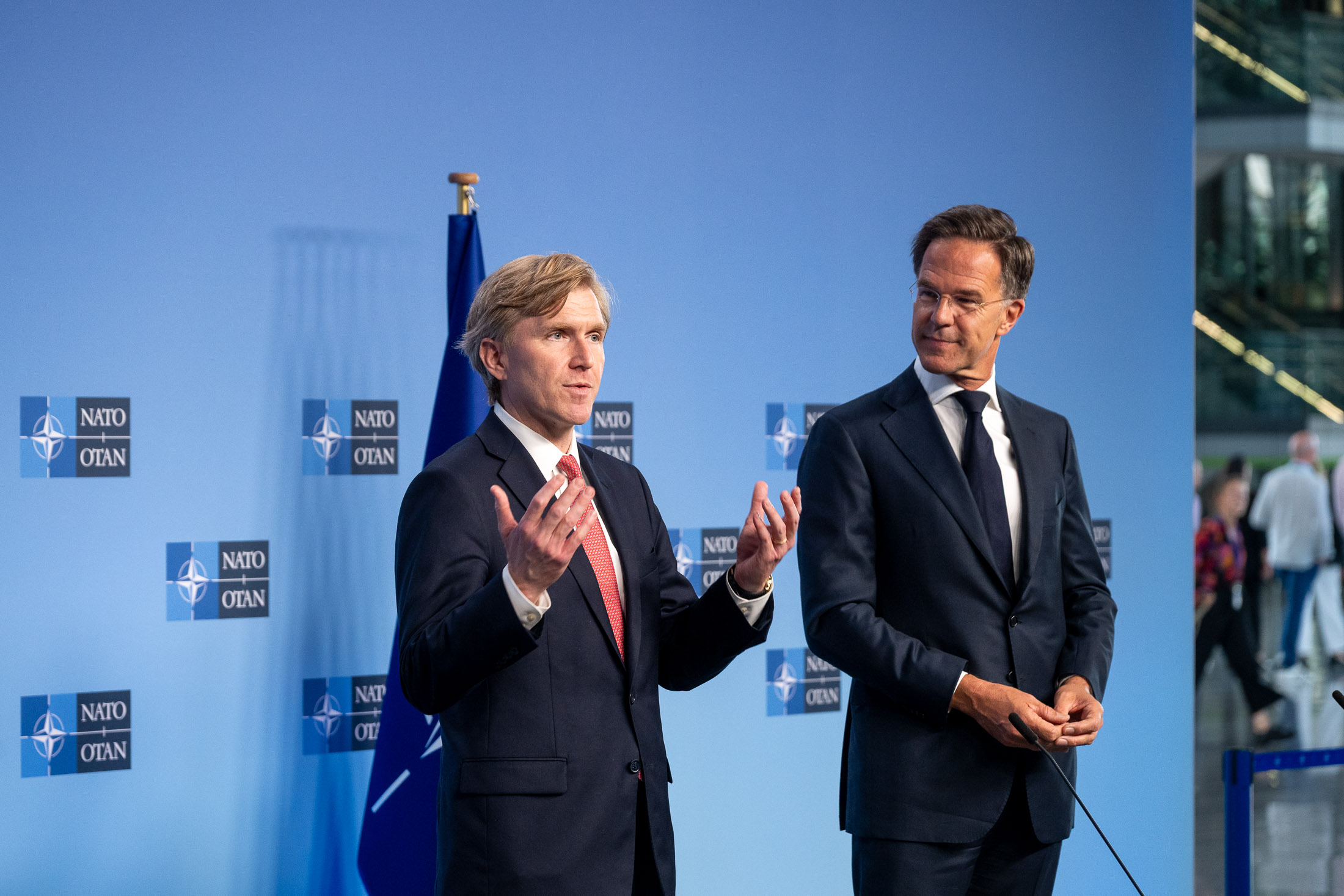
The clearest signal came in Brussels, not Washington. NATO said Elbridge Colby met the North Atlantic Council on 27 August to brief allies on the ongoing U.S. review of force posture in Europe. That alone is important. Reviews that are merely symbolic do not usually get this level of allied consultation. In remarks published by NATO, Secretary General Mark Rutte went out of his way to praise the idea behind the review rather than complain about it. He said Europe and Canada need to step up, called for a more honest and equitable burden-sharing arrangement with the United States, and cited an extra $139 billion in 2025 defence spending by European allies and Canada.
Rutte's tone was revealing. He was not arguing that the U.S. footprint should remain untouched forever. He was trying to show that Europe has finally understood the transaction on offer: spend more, field more, lead more, and maybe keep enough U.S. muscle in place to make deterrence credible. That is a worse political bargain than the old one, but it is still a bargain.
The Real Issue Is Not Numbers, It Is Enablers
Too much of the discussion still treats this as a headcount story. It isn't. Europe can replace some battalions over time. What it cannot quickly replace are the American military functions that make NATO's eastern flank believable in the first days of a crisis: long-range strike coordination, high-end intelligence fusion, air and missile defence depth, heavy-lift logistics, sustainment, and the command architecture that turns national contingents into a fighting coalition instead of a conference badge collection.
That is why even modest U.S. cuts can look larger than they are on paper. A thousand troops tied to air defence, munitions movement or headquarters functions can matter more than several thousand troops in a politically visible but militarily simpler deployment. Reuters' reporting suggests NATO diplomats already understand this. Their concern is not only whether Washington cuts forces, but whether the most difficult-to-replace capabilities are the ones that move first.
Here is the uncomfortable part. Europe loves to talk about strategic autonomy when the room is full of microphones. When the room contains an actual planning document, the conversation gets much narrower: which country pays for extra interceptors, who provides the lift aircraft, who fills the intelligence gaps, and who is willing to station forces far enough east to matter. That argument is now arriving faster than most European capitals expected.
Why Colby Is Pushing This Now
Colby has been unusually consistent on one point: the United States should push more responsibility for Europe's conventional defence onto Europeans so Washington can protect flexibility elsewhere, especially in the Indo-Pacific. You do not have to agree with all of his assumptions to see the logic. From his perspective, keeping large American commitments in Europe without a much bigger European effort is a bad allocation of finite capacity. The review is the mechanism for forcing allies to answer that critique with more than communiques.
That is also why the 6 November deadline matters politically. It creates pressure before Europe can hide behind another summit cycle. Allies now have roughly ten weeks to persuade Washington that new spending announcements, industrial plans and force commitments are serious enough to justify a continued U.S. backbone. If they fail, they should expect the next phase of this conversation to move from reassurance into redistribution.
What Europe Should Watch Next
Three indicators matter more than the inevitable public denials. First, watch whether eastern-flank allies start talking less about troop totals and more about specific enabling functions. That will tell you they believe real cuts are possible. Second, watch Germany, Poland and the Nordics for concrete moves on air defence, stockpiles and logistics infrastructure rather than generic spending headlines. Third, watch whether NATO headquarters starts framing the issue as adaptation rather than continuity. Once that language hardens, the alliance is preparing the politics of adjustment.
The key point is simple. Europe is no longer being asked whether it agrees that it should do more. Europe is being asked whether it can do more quickly enough to keep American risk tolerance from collapsing. Those are different questions, and the second one is much harder.
Conclusion
The Pentagon's review does not mean NATO is about to break. It means the alliance is entering a more explicit and less comfortable phase of burden-sharing, one driven by timelines instead of slogans. The central finding is that Washington is no longer content to subsidise European caution indefinitely, and Brussels knows it. The likely consequence is not a dramatic overnight withdrawal, but a steady test of whether Europe can replace enough U.S. enabling power to keep deterrence intact. What comes next is the part to watch: not the headlines about troop cuts, but the first signs that allies are finally building the military plumbing they have spent years talking about. If they don't, the review will not be the shock. The shock will be how thin NATO looks once America stops pretending Europe's procrastination is a strategy.
The Pentagon is set to deliver multiple force-posture options for NATO by November 6, 2023, signaling a shift in U.S. expectations for European defense responsibilities. NATO Secretary General Mark Rutte highlighted the need for increased European defense spending and capabilities. The review aims to ensure that Europe can adequately replace critical U.S. military functions, as the U.S. seeks to redistribute its military commitments.
- The Pentagon will provide at least four force-posture options by November 6, 2023.
- NATO Secretary General Mark Rutte emphasized the need for Europe to increase defense spending and capabilities.
- The review indicates a shift in U.S. expectations for European defense responsibilities.
- There is concern about the replacement of critical U.S. military functions in Europe.
- The review is seen as a mechanism to pressure European allies into making concrete defense commitments.