
PLA DF-61 Enters Routine Training, Nuclear Force Mobility Advances Another Step
 Li Minghui
PLA DF-61 Enters Routine Training, Nuclear Capability Mobility Advances Another Step
On November 5, Chinese state media reported that the Dongfeng-61 intercontinental ballistic missile has entered routine training with the PLA Rocket Force. The South China Morning Post subsequently noted that the missile had previously been showcased during a parade, but this information pushes it from "public appearance" to the "military use" stage. It must be stated accurately here: the public reports did not provide complete organizational structure, deployment numbers, or the date of initial duty, so "entering training" does not equate to having formed a large-scale combat readiness duty.
From Parade Equipment to Training Equipment
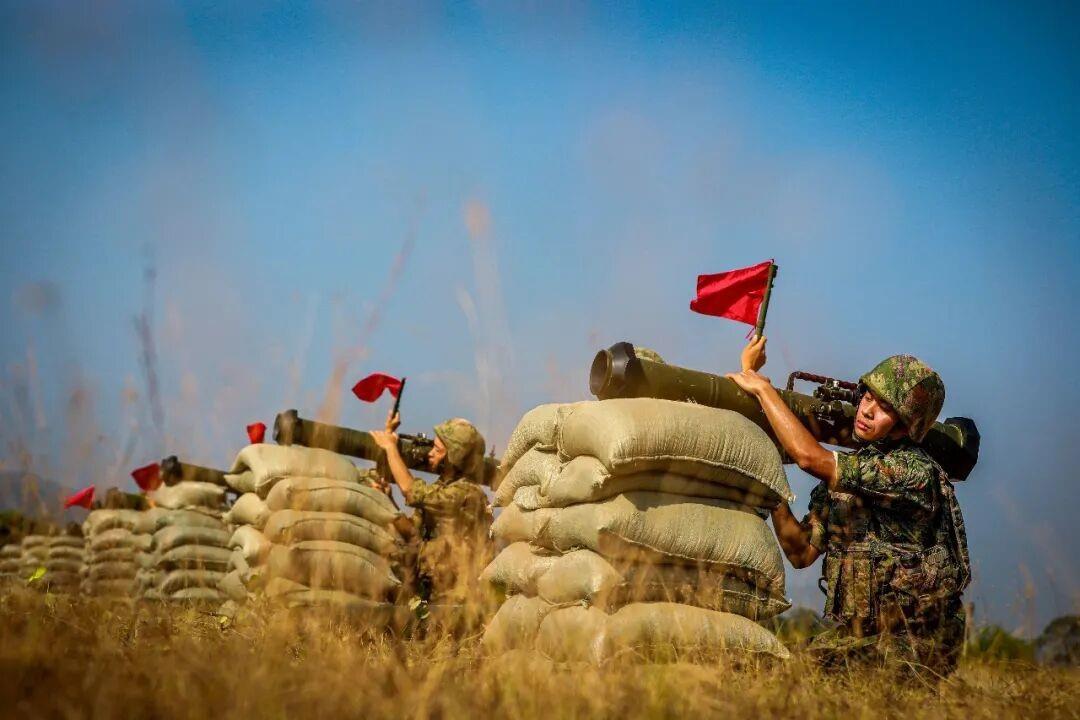
The most intuitive feature of the DF-61 is its road-mobile launch platform. Observers generally regard it as China's new generation of land-based intercontinental missile based on vehicle proportions and public imagery, with an estimated range of about 15,000 kilometers, although this figure has not been officially confirmed by China; the number of warheads, penetration components, and terminal guidance methods also lack reliable public data. The Global Times' report used the term "routine training," emphasizing not the announcement of a parameter, but indicating that the new system is entering daily operational processes.
The value of this step lies in connecting testing, showcasing, and troop capabilities. Whether the missile can be launched is just the most visible aspect; what truly determines combat effectiveness is the covert movement of transport convoys, field power supply, communication anti-jamming, geodetic calibration, and post-launch mobility. In simple terms, the DF-61 is not just a truck equipped with a missile, but a complete system capable of operating under pressure.
Changes in China's Nuclear Capability Focus Beyond Range
In the past, discussions about China's nuclear modernization often focused on the number of silos, multiple independently targetable reentry vehicles (MIRVs), and sea-based nuclear capabilities. The DF-61 entering training indicates that another main line of land-based forces is also advancing: integrating greater range, stronger survivability, and faster response capabilities on the same platform. Mobile deployment will increase the difficulty for adversaries to detect, track, and strike, and will also force the U.S. and its allies to allocate more reconnaissance resources for continuous monitoring, rather than just focusing on fixed positions.
However, I do not agree with some reports that directly describe it as a weapon that "changes the global nuclear balance." Firstly, public data cannot prove that the DF-61 has reached a mature full-life assurance state; secondly, nuclear deterrence is a product of command control, early warning communication, warhead reliability, and personnel training, not just a single champion in range. China's real shortcoming may still lie in how to incorporate its rapidly expanding arsenal, launch forces, and sea-based capabilities into a stable and transparent crisis management mechanism.
Actual Impact on the Taiwan Strait and Sino-U.S. Military Planning
The DF-61 is not a weapon specifically aimed at Taiwan; its primary mission level is higher than conventional operations in the Taiwan Strait. However, it will indirectly change the contextual conditions of crises in the Western Pacific. When planning long-range strikes and reinforcement routes, the U.S. must simultaneously consider China's mobile nuclear capabilities, conventional missile forces, as well as anti-satellite and cyber capabilities. The coexistence of nuclear and conventional forces in the same theater is most dangerous because it may be difficult for outsiders to judge which red line is crossed by a reconnaissance or conventional strike.
Currently, what is most worth tracking is not the next photo of the DF-61, but three verifiable signals: whether training continues to appear in different theaters, whether there are new support and communication units accompanying it, and whether the Chinese authorities announce clearer organizational or duty information. If there is only showcasing and a single report, it remains a demonstration of capability; if we can see systematic rotational training, it would indicate that this missile has truly begun to change the daily operational processes of the PLA Rocket Force.
References
- South China Morning Post, November 6, 2026, report on China's display of DF series missiles and speculation about DF-61 testing.
- Global Times, November 5, 2026, report on DF-61 entering routine training with the Rocket Force.
- Interesting Engineering, November 6, 2026, compilation of public data on DF-61 range estimates and mobile deployment.
The DF-61 intercontinental ballistic missile has entered routine training with the PLA Rocket Force as of November 5, 2026. This marks a transition from public display to operational readiness, enhancing China's nuclear capabilities. The missile is estimated to have a range of approximately 15,000 kilometers, although this has not been officially confirmed. The training signifies a significant step in integrating the missile into the PLA's operational framework.
- DF-61 missile has entered routine training with the PLA Rocket Force.
- The missile is considered a new generation of land-based intercontinental missile.
- Its range is estimated at approximately 15,000 kilometers, though not officially confirmed.
- The training indicates a shift from public display to operational use.
- The missile's deployment enhances China's nuclear deterrent capabilities.