
PLA KJ-3000 Suspected to Enter Mass Production: 4 New Early Warning Aircraft Change the Perception Chain of Air Combat in the Taiwan Strait
 Li Minghui
PLA KJ-3000 Suspected to Enter Mass Production, 4 New Early Warning Aircraft Change the Perception Chain in Taiwan Strait Air Combat
At the end of October, satellite images and publicly available photos showed that at least 4 new early warning aircraft based on the Y-20B platform appeared near production facilities in the Xi'an area. They are widely identified as the KJ-3000. The South China Morning Post on October 26 cited relevant images to conclude that they "may have entered production," and The War Zone subsequently noted the increase in the number of airframes. On November 2, SOFREP took the issue a step further—if these aircraft are not prototypes, the PLA is not just supplementing one type of aircraft, but rather establishing a new production line for airborne sensors.
What the 4 Aircraft Reveal
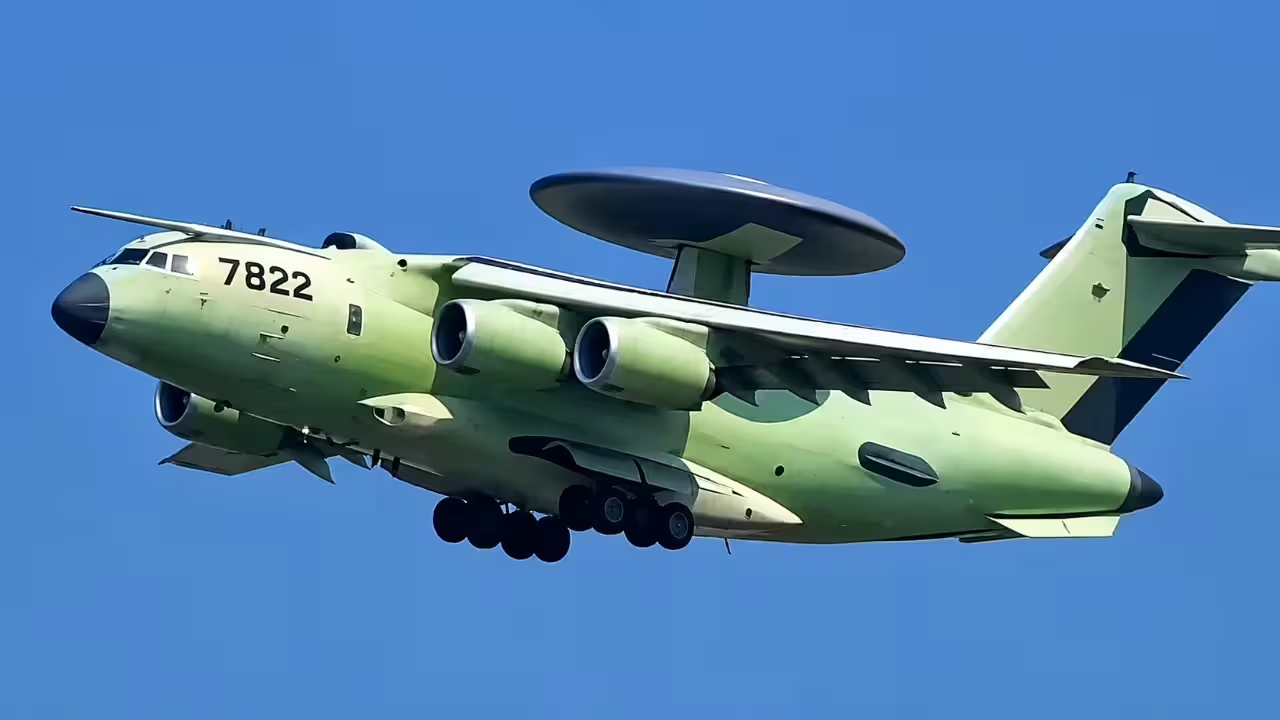
The most distinct feature of the KJ-3000 is that it is based on the large Y-20B transport aircraft, with a large fixed radar dome mounted on its back. Compared to the earlier KJ-2000, which was based on the Il-76 platform, the Y-20B offers a larger airframe space, more modern avionics, and greater electrical and cooling capacity. There is still insufficient public information regarding radar frequency bands, detection ranges, and the number of targets that can be tracked simultaneously; precise parameters found online should not be taken as definitive conclusions.
However, the platform itself indicates the issue. The value of a large early warning aircraft lies not in how far it can "see" individually, but in its ability to stably connect to the command networks of fighter jets, ground air defense, naval vessels, and long-range missiles. If the 4 aircraft are merely a test batch, their significance is limited; if some of them are close to delivery status, it indicates that China's aviation industry is transitioning large special-purpose aircraft from a small number of high-end products to sustainable production.
Actual Impact on the Taiwan Strait
The air combat in the Taiwan Strait is primarily a competition of perception and communication. The J-20, J-16, and long-range air defense missiles need continuous updates on target locations, while Taiwan's mountainous terrain, the curvature of the strait, and electronic interference compress the visibility of ground radars. Once the KJ-3000 is airborne, it can push detection nodes further out to sea and provide fighter jets with higher quality situational awareness. It may not directly increase missile range, but it could reduce the time fighters need to activate their own radars, lowering the probability of exposing the strike formation.
This also explains why the U.S. and its allies view large early warning aircraft as high-value targets. SOFREP points out that as the number of China's new early warning aircraft increases, intercept weapons targeting long-range support and node aircraft will also become a complementary development direction. In other words, the emergence of the KJ-3000 will not unilaterally change the aerial balance but will further push the Taiwan Strait conflict towards a system confrontation of "first targeting sensors, then targeting shooters."
The Real Bottleneck is Production and Support
The author believes that the most noteworthy aspect is not the promotional parameters of the KJ-3000, but whether it can establish a stable delivery rhythm. Large early warning aircraft involve phased array radars, mission computers, electronic warfare equipment, satellite communications, and high-reliability power systems; any one of these links' yield rates could slow down final assembly. Early warning aircraft also require high-intensity maintenance and specialized crews, and cannot simply scale up like ordinary transport aircraft.
If the 4 aircraft appearing in Xi'an continue to increase in the coming months, and there is evidence showing they are entering unit training, then the PLA's airborne early warning system will have greater redundancy and a longer deployment radius. Conversely, if these airframes remain in a testing state for an extended period, it indicates that China's military industry still has latent shortcomings in the integration and support of large mission systems. There is currently no publicly available information to answer this question. The true test of the KJ-3000 is whether it can not only make its debut but also form a fleet that can be rotated and sustainably deployed before 2027.
References
- South China Morning Post, October 26, 2026, report on the KJ-3000 suspected to have entered production
- The War Zone, October 22, 2026, image analysis on the changes in the number of China's new airborne radar aircraft
- SOFREP, November 2, 2026, analysis on the KJ-3000 and the development of anti-early warning aircraft weapons
Four KJ-3000 early warning aircraft were spotted near production facilities in Xi'an, indicating they may have entered mass production. This new aircraft, based on the Y-20B transport platform, enhances China's aerial sensor capabilities in the Taiwan Strait. The development suggests a shift in China's military aviation towards sustainable production of advanced aircraft.
- At least 4 KJ-3000 aircraft spotted near production facilities in Xi'an.
- The KJ-3000 is based on the Y-20B transport aircraft.
- The aircraft enhances China's aerial sensor capabilities in the Taiwan Strait.
- The production of KJ-3000 indicates a shift towards sustainable production of large special aircraft.