
PLA Liaoning Aircraft Carrier Approaches Japan 250 Kilometers During 2026 High-Seas Training, Carrier Strike Group Enters Normalized Verification Phase
 Li Minghui
The PLA Liaoning Aircraft Carrier's 2026 Far-Sea Training Approaches Japan by 250 Kilometers, Carrier Group Enters Normalized Verification Phase
On October 14, the Chinese Navy's Liaoning aircraft carrier led a fleet to conduct training in the Western Pacific. By October 23, Japan reported that the Liaoning was spotted approximately 250 kilometers south of Ishigaki Island, with observations of carrier-based aircraft taking off and landing. This distance itself does not necessarily indicate an increased risk of conflict, but it signifies that the PLA's aircraft carrier far-sea activities have shifted from "occasional displays" to a repeatable training process.
What Exactly is the Liaoning Practicing on This Voyage?
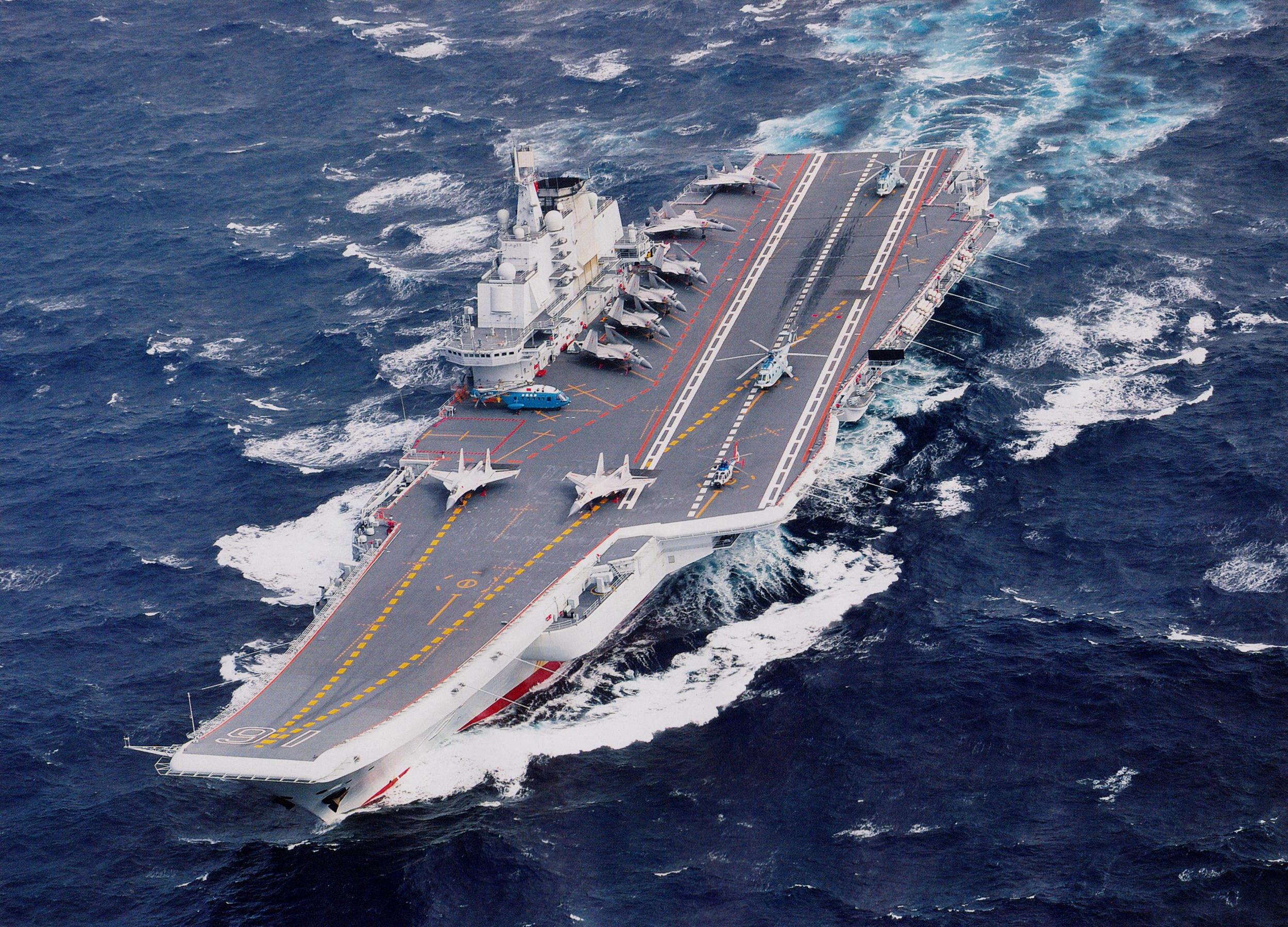
The Liaoning is approximately 305 meters long and employs a ski-jump takeoff and arrested landing method, with a technological platform that predates the Shandong and Fujian carriers. Public reports indicate that this fleet includes at least two large destroyers and one missile destroyer, focusing not on having the Liaoning undertake frontline combat alone, but on utilizing the older platform for high-frequency flights, sensor integration, and fleet command verification. The Liaoning acts like a maritime testbed, allowing new technologies and tactics to be repeatedly refined on a relatively mature hull.
This also explains why outsiders associate it with the Shandong and Fujian. Singaporean scholar Colin Koh believes that the Shandong can gain experience from the Liaoning's flight support, sensor usage, and testing of new aviation equipment. In simple terms, the combat capability of an aircraft carrier depends not only on deck area but also on the operational rhythm of carrier-based aircraft, maintenance efficiency, and whether the escort fleet can keep up consistently.
From a Single Voyage to a Systematic Training Model
Over the past 14 years, the Liaoning has conducted at least six long-distance deployments, with the October 2026 operation showing a stronger regularity. Japan's defense department stated that its carrier-based aircraft took off and landed within Japan's exclusive economic zone; this activity is not merely a transit but includes comprehensive training involving aerial operations, maritime formations, and far-sea resupply. Meanwhile, the timing of the operation coincides with the U.S.-Japan "Sword-27" exercise starting on October 19, naturally amplifying political signals among neighboring countries.
However, I believe that not every aircraft carrier sortie should be directly equated with a "Taiwan Strait combat rehearsal." The Liaoning is the oldest of China's three aircraft carriers, and in the event of a high-intensity crisis, it is more likely to undertake training, deterrence, and resupply tasks, while the Fujian is the one to watch for technological leaps. What is truly important is that the PLA is turning its aircraft carrier far-sea deployments into an annual plan, thereby accumulating experience in cross-sea area command and carrier-based aircraft support.
Can Production Capacity Advantage Be Transformed into Sustained Combat Power?
The Euronaval "World Naval Shipbuilding Report" released in October shows that the total displacement of combat vessels built by China from 2024 to 2025 is approximately 636,208 tons, more than double the U.S. figure of 270,509 tons; however, as of early 2026, the total displacement of U.S. combat vessels over 200 tons remains around 3.11 million tons, while China's is about 1.44 million tons. This comparison is crucial: China’s shipbuilding speed is fast, and the fleet's expansion has an industrial foundation, but the number of new ships does not automatically equate to mature blue-water combat capability.
The value of the Liaoning's training lies precisely in connecting "being built" with "being proficient." In the future, what needs to be observed is not whether it approaches Japan again, but whether the carrier group can maintain aircraft sortie rates, resupply rhythms, and multi-ship coordination over a longer period. The PLA has already proven it can send aircraft carriers into the Western Pacific; the next challenge is whether it can turn this presence into stable, low-failure, and sustainable combat power.
References
- Defense News, October 23, 2026, report on the Liaoning's far-sea voyage and activities around Japan.
- Relevant reports from Xinhua News Agency, stating that the Liaoning fleet conducted routine training in the Western Pacific on October 14.
- Defense News, October 20, 2026, citing data from the Euronaval "World Naval Shipbuilding Report."
The People's Liberation Army Navy's Liaoning aircraft carrier conducted training exercises in the western Pacific from October 14 to October 23, 2026, observed approximately 250 kilometers south of Ishigaki Island, Japan. The exercises included aircraft takeoffs and landings, indicating a shift to regular training operations. This deployment coincided with the U.S.-Japan 'Sword-27' exercise, amplifying political signals in the region.
- The Liaoning aircraft carrier conducted training exercises in the western Pacific.
- The carrier was observed approximately 250 kilometers south of Ishigaki Island, Japan.
- The exercise included aircraft takeoffs and landings.
- This deployment marks a shift to regular training operations for the carrier group.
- The training coincided with the U.S.-Japan 'Sword-27' exercise.