
PLA nuclear submarine test-fires submarine-launched missile, 7000 km trajectory brings second nuclear counterattack to the forefront
 Li Minghui
PLA Nuclear Submarine Test-Fires Submarine-Launched Missile, 7000 km Trajectory Brings Second Nuclear Retaliation to the Fore
At 12:01 PM on July 6, Xinhua News Agency disclosed that a nuclear-powered submarine of the PLA launched a test missile into the Pacific Ocean, with the simulated warhead "accurately landing in the designated sea area." The timing and wording of this announcement are quite interesting. Beijing did not package it as a debut of a new missile type, nor did it disclose the launching submarine, missile type, or landing coordinates, only emphasizing that this was a routine arrangement for annual military training. However, from the publicly available information, this is not an ordinary launch training.
The South China Morning Post cited public reports stating that this is the first known test launch of a submarine-launched ballistic missile by China since 1982, and also the first known test of this kind executed by a nuclear-powered submarine. Defense News quoted trajectory maps released by Taiwan, indicating that the missile flew approximately 7000 kilometers, crossing the Pacific Ocean to the southeast, ultimately landing near the waters of Nauru and Tuvalu. If this figure is accurate, it suggests that the focus of the test is not on "whether it can be launched," but on demonstrating to the outside world that sea-based nuclear capabilities have developed a relatively mature long-range launch and command control process.
The Real Signal Lies in the Platform, Not the Warhead
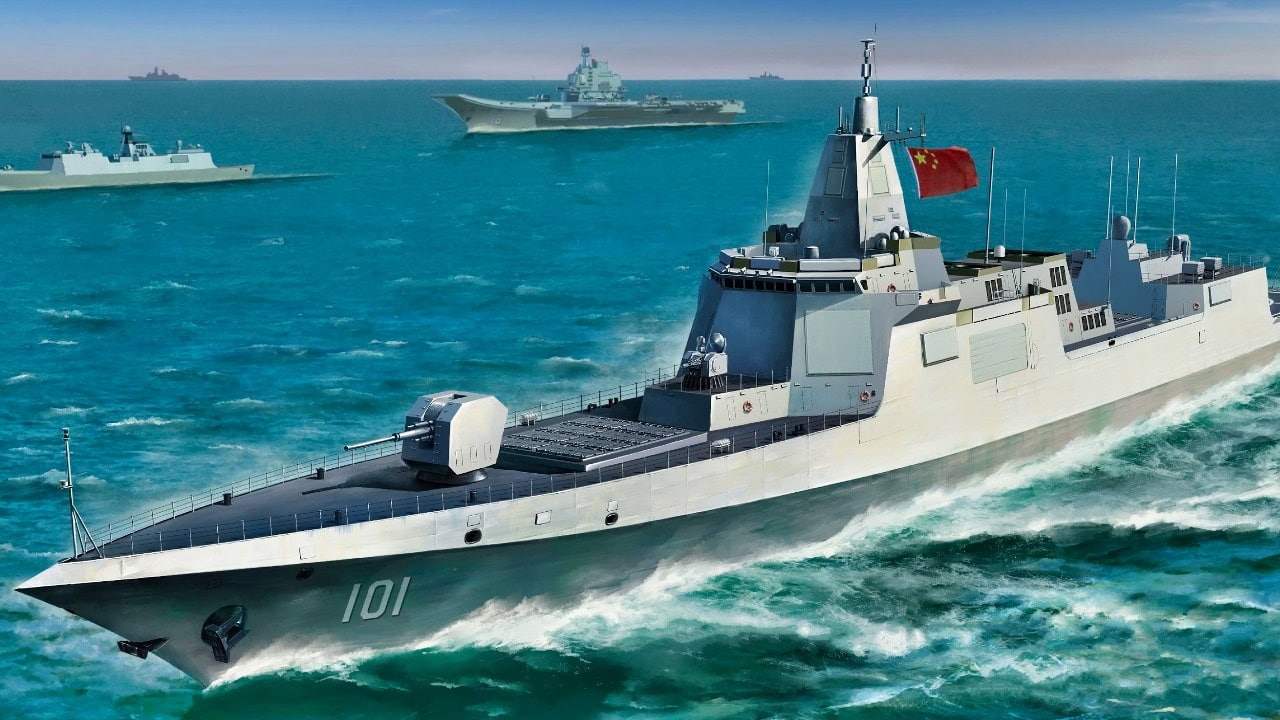
Regarding the launch platform and missile type, public information remains scarce, and cautious speculation is all that can be made. The outside world typically associates China's current sea-based nuclear deterrence with the Type 094 strategic nuclear submarine and the JL-2 and JL-3 series of submarine-launched ballistic missiles. The publicly estimated range of the JL-2 is generally between 7000 to 8000 kilometers, while the JL-3 is believed to have an even longer range, potentially covering targets beyond the second island chain. However, this test launch has not been officially confirmed with a specific model, and I do not recommend directly labeling it as a "service validation" of a certain missile type.
A more reliable judgment is that the PLA is showcasing a system capability this time: the submarine enters launch status from a concealed position, the Rocket Force or Navy strategic forces complete the authorization link, and space, ocean measurement and control, and offshore landing area monitoring are coordinated, ultimately requiring prior notification to relevant countries. In simple terms, a submarine-launched ballistic missile is not just about a single missile, but a long chain from the dock, base, communication buoys, satellites to the operational duty room. The longer the chain, the more easily the shortcomings are exposed.
Two Technical Issues Raised by the 7000 km Trajectory
If the approximately 7000 km range claimed by Taiwan is close to the truth, then this test has at least answered two questions. First, the PLA's sea-based nuclear capabilities are no longer satisfied with a symbolic presence within the near-sea "fortress zone," but are verifying the ability to signal to a larger Pacific space. Second, the ballistic trajectory, re-entry area selection, and landing area safety notification have entered a more complex international environment, especially as the South Pacific nuclear-free zone will immediately become a focal point of diplomatic controversy.
- Time: July 6, 12:01 PM, with officials stating the simulated warhead landed in the designated sea area.
- Distance: Defense News quoted Taiwan's illustration stating approximately 7000 kilometers, with the specific trajectory pending confirmation.
- Monitoring: The South China Morning Post reported that Taiwan's Leshan AN/FPS-115 long-range early warning radar tracked the launch in the initial phase.
- Controversy: Australia, New Zealand, and others are concerned about the relationship between the landing area and the spirit of the Rarotonga Treaty.
There is a detail that is easily overlooked. Taiwan claims that the Leshan Pave Paws radar completed tracking during the missile's initial flight phase; this radar is deployed at an altitude of about 2600 meters in Hsinchu, with publicly available data stating a detection range of up to 5000 kilometers. This indicates that even if China's long-range test launch is initiated from a more distant sea area, it is difficult to completely avoid the early warning systems surrounding the first island chain. For the PLA, the challenge of sea-based nuclear deterrence is not only the quietness of the submarine but also the risks of being detected, located, and pressured by anti-submarine forces before and after launch.
The Shortcomings of the Nuclear Triad Still Lie Underwater
China's land-based intercontinental missile forces have signaled more publicly in recent years, and in 2024, they also launched a land-based intercontinental ballistic missile into the Pacific. In contrast, the sea-based component has remained more low-key. The reason is not complicated: land-based missiles can rely on silos, road mobility, and underground facilities to disperse risks; strategic nuclear submarines must address a whole set of engineering issues, including noise, cruising areas, supply maintenance, long-range communication, and crew training.
The stability of U.S. and Russian sea-based nuclear deterrence relies not on the performance of a single submarine, but on sustained operational readiness and patrol capabilities. In other words, being able to launch once and maintaining a routine second-strike capability at sea are two different matters. If China wants its sea-based nuclear forces to truly become the most difficult component of the nuclear triad to destroy, it requires not only new missile types but also quieter next-generation strategic nuclear submarines, more mature deep-sea communication systems, and more stable offshore anti-submarine cover.
Beijing stated that the test launch was "safe, standardized, and professional," emphasizing that it does not target any specific country or objective. While this statement is necessary diplomatically, what is more noteworthy militarily is that the PLA is willing to publicly showcase its sea-based nuclear launch capabilities for the first time.
I believe the greatest significance of this test launch lies not in "who it deters," but in the subtle change in the transparency of China's nuclear capabilities. In the past, Beijing preferred to maintain ambiguity, allowing the outside world to speculate about capability boundaries; now it is beginning to selectively disclose key nodes, using limited transparency to create deterrence. This approach will enhance the credibility of deterrence and increase the motivation of neighboring countries to build missile defense, anti-submarine, and early warning systems.
What to Watch Next
What is truly worth tracking next is not the speculation about missile types on social media, but three more concrete indicators: first, whether there will be a second or third long-range submarine-launched test in the coming year; second, whether there will be more frequent strategic submarine escorts and anti-submarine drills in the South China Sea, Yellow Sea, and Western Pacific; third, whether China's military-industrial system will release signals for the next generation of strategic nuclear submarines or new types of submarine-launched missiles.
Sea-based nuclear deterrence is most afraid of "model projects." A successful test launch can prove the existence of capability, but it cannot prove that the readiness cycle has matured. The real unanswered question is: can the PLA turn this public test launch into a long-term, low-noise, repeatable maritime duty capability for a strategic nuclear submarine force?
The People's Liberation Army Navy conducted a test launch of a submarine-launched missile in the Pacific Ocean on July 6, 2023, at 12:01 PM. The missile reportedly traveled approximately 7000 kilometers, landing near Nauru and Tuvalu. This marks the first known test of such a missile by China since 1982, demonstrating advancements in its nuclear capabilities. The launch was monitored by Taiwan's radar systems and is part of routine military training, although it raises concerns regarding regional security and international diplomatic implications.
- The PLA Navy conducted a test launch of a submarine-launched missile on July 6, 2023.
- The missile reportedly traveled approximately 7000 kilometers across the Pacific Ocean.
- This is the first known test of a submarine-launched ballistic missile by China since 1982.
- The launch was part of routine military training, according to official statements.
- The missile's trajectory and landing area were monitored by Taiwan's radar systems.