
PLA's 2026 Anti-Drone Training Fully Sinks: Can the Triangular System Support a Taiwan Strait Landing Operation?
 Li Minghui
PLA's 2026 Counter-Drone Training Fully Integrated: Can the Iron Triangle System Support a Landing Operation in the Taiwan Strait?
A recent change that is easily overlooked is that the counter-drone training reported by the PLA has shifted from being an "add-on" for a few specialized teams to a basic subject that all personnel in battalion-level units must master. The American Enterprise Institute and the Institute for the Study of War pointed out in their November 17 report titled "China and Taiwan Update" that CCTV reported on November 9 that a certain infantry battalion of the PLA has expanded counter-drone training to all personnel, rather than just training a few operators. This detail is more worthy of analysis than yet another showcase of new drones.
From Small Teams to All Personnel in Counter-Drone Operations
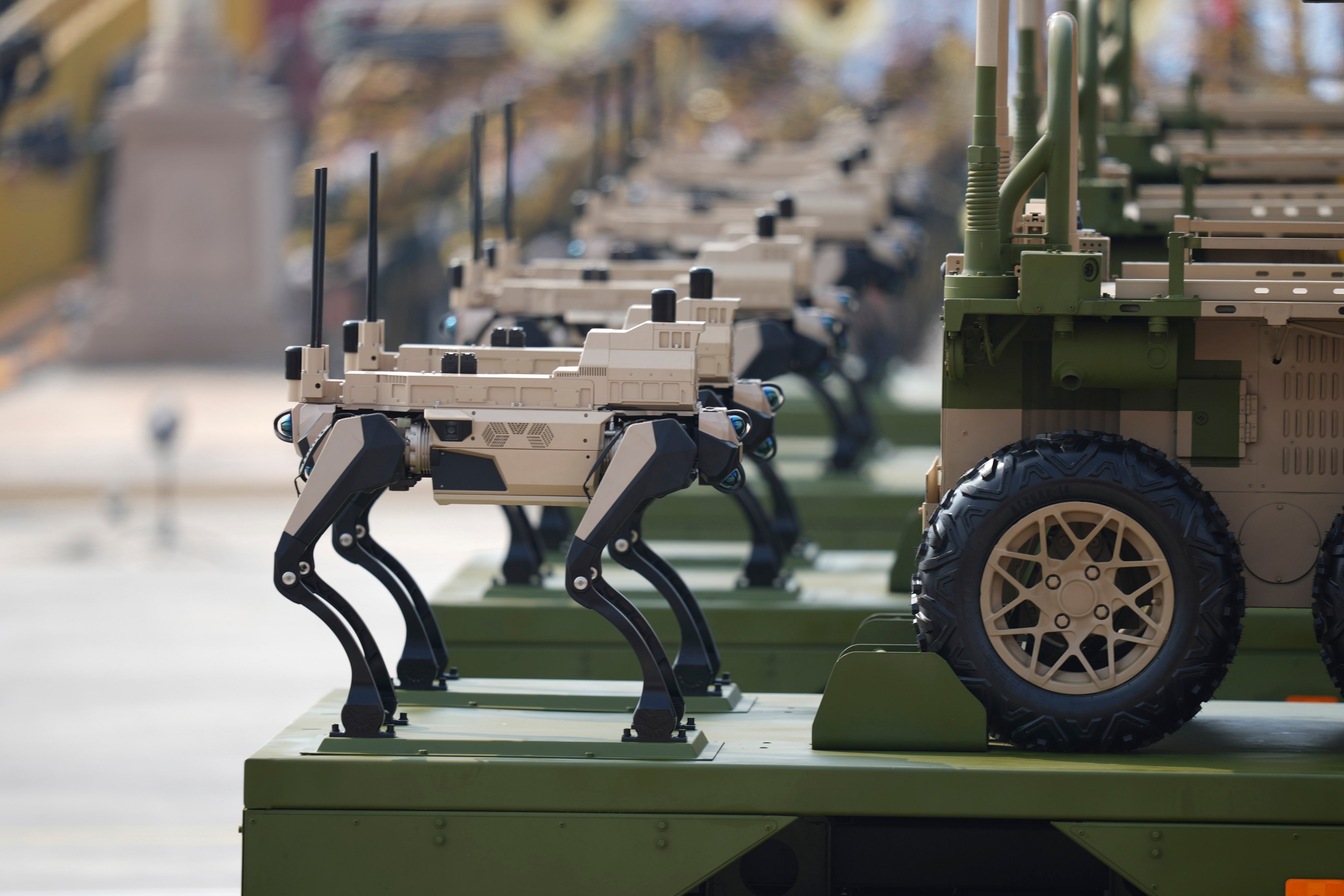
The same report mentioned that a drill conducted by the PLA on October 22 employed small-scale infiltration teams to carry out attacks, with the process being "longer" than before. This is not simply a slowdown in training pace, but a direct response to battlefield experiences in Ukraine. Inexpensive FPV drones, reconnaissance drones, and loitering munitions make it difficult for large armored formations to maintain concealment; even if the attacking side breaches the first line of defense, they may still face continuous detection and strikes while trying to expand the breach.
Therefore, the PLA is attempting two things: first, to reduce personnel and equipment losses during the initial assault phase by using more dispersed small teams; second, to decentralize counter-drone capabilities to squads and companies, allowing troops to protect themselves even when communications are disrupted and rear support is unstable. In simple terms, it no longer assumes that there will always be a complete and smooth command network on the battlefield.
The "Iron Triangle" is Not a Weapon but a Network
The "Iron Triangle" concept introduced by CCTV on October 4 is not centered on a specific new piece of equipment, but rather on combining hard kill, soft kill, and redundant detection. Early warning drones, helicopters, and fixed-wing aircraft are responsible for expanding the detection range for low-altitude targets, while electronic jamming and other soft kill methods suppress links, and artillery, missiles, or short-range weapons undertake final interception. Multiple sensors and interception nodes back each other up, theoretically avoiding the blindness of the entire defense line if one radar or jamming device fails.
This approach is suitable for the Taiwan Strait, but it cannot be packaged as an automatic solution. Low-altitude targets across the Taiwan Strait may come from civilian-modified drones, loitering munitions, and decoys; as the number of targets increases, identification, allocation, and ammunition consumption will become bottlenecks. Using high-end interceptors to target inexpensive drones is like using a truck to deliver express packages; it may be tactically effective, but not necessarily cost-effective in the long run. What truly determines the quality of the system is whether the PLA can equip low-cost electro-optical, radio frequency, and firepower nodes on a large scale and establish a unified data link.
Real Implications for the Taiwan Strait
In early November, the PLA conducted unannounced drills in the western Pacific and around Taiwan, with Taiwan reporting that over 100 PLA naval and coast guard vessels were active in the relevant waters. Reuters and The Diplomat described it as an operation characterized by "silent intimidation" and noted that the range of troop activities is no longer limited to Taiwan's coastal waters. The deployment of large forces far at sea and the land-based counter-drone training may seem like two separate lines, but they actually point to the same issue: the PLA aims to transform its operational system from "concentrated breakthroughs" to a network capable of sustained operations in multiple directions under a strong reconnaissance environment.
The author believes that the biggest shortcoming is not whether there is an "Iron Triangle," but whether grassroots innovation can truly spread. The PLA's highly centralized and hierarchical organizational structure facilitates unified orders but may not encourage frontline troops to quickly experiment and learn from mistakes. AEI and ISW also warn that grassroots tactical innovations akin to those in Ukraine may be confined to individual units and unable to be promptly converted into army-wide standards. Longer breakthrough battles will also give the defending side time to rebuild a second line of defense.
Thus, the full integration of counter-drone training is an important signal, but it is not a pass for landing operations. What is more worth observing next is whether the PLA will publicly demonstrate the actual production capacity of low-cost interceptors, grassroots drone formations, and cross-service data links—can it turn a beautiful concept into a battlefield system capable of continuously resupplying ammunition, repairing equipment, and updating algorithms for several weeks?
References
- Institute for the Study of War and American Enterprise Institute, China & Taiwan Update, November 17, 2026
- Reuters, China stages unannounced Pacific drills in “silent intimidation” of Taiwan, November 13, 2026
- The Diplomat, Beyond a Taiwan Blockade, November 2026
The People's Liberation Army (PLA) expanded anti-drone training to all personnel in a battalion as part of its military strategy in the Taiwan Strait. In November 2026, the PLA conducted unannounced drills in the Western Pacific, involving over 100 naval vessels. The exercises reflect lessons learned from the Ukraine conflict, emphasizing the need for decentralized operations and enhanced anti-drone capabilities. However, the effectiveness of these strategies remains uncertain without the development of low-cost interceptors and a unified data network for operations.
- PLA has expanded anti-drone training to all personnel in a battalion.
- Recent exercises involved small infiltration units responding to battlefield experiences from Ukraine.
- The 'Iron Triangle' concept integrates various detection and interception methods.
- PLA conducted unannounced drills in the Western Pacific with over 100 naval vessels.
- The effectiveness of the PLA's anti-drone capabilities remains uncertain without low-cost interceptors.