
Poland's 47 Billion SEK A26 Contract Reveals NATO's Underwater Gap Until 2038
 Dr. Klaus Weber
Poland's 47 Billion SEK A26 Order Highlights NATO's Underwater Gap Until 2038
47 billion Swedish kronor for three submarines sounds like a determined response to Russia's pressure in the Baltic Sea region. The contract signed by Poland's Armaments Agency with Saab on June 29 in Gdynia is indeed the most significant Polish naval order in years. However, the crucial number appears at the end of Saab's announcement: the final deliveries are scheduled for 2038. Thus, there are twelve years between political signal and military effect.
A European Procurement Success with Long Delays
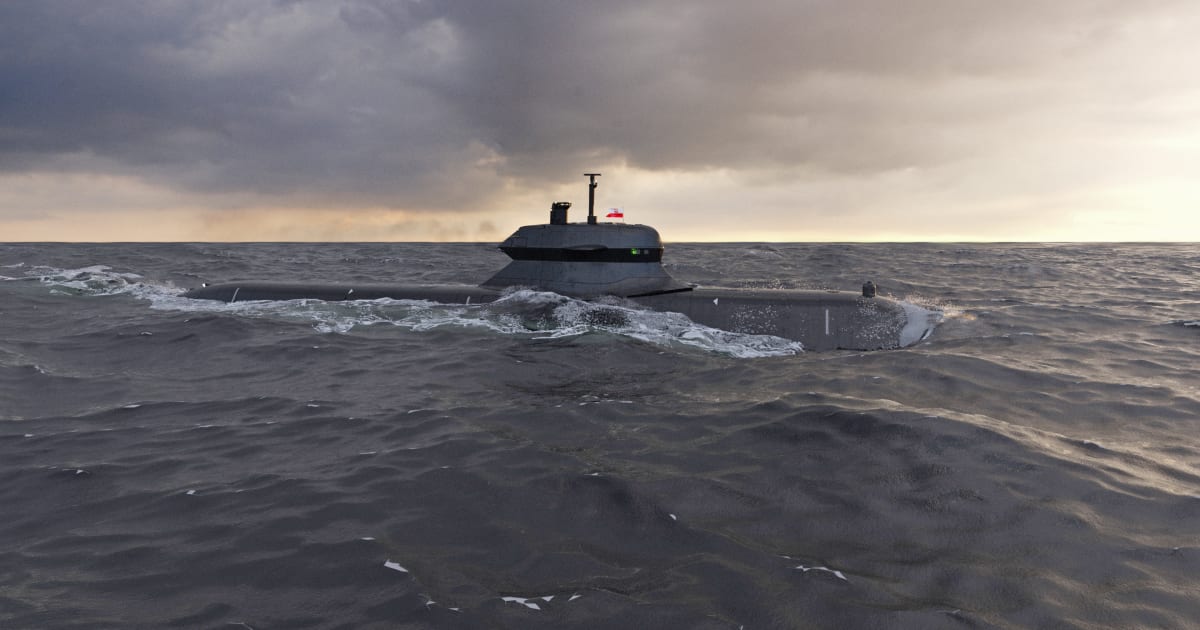
According to Saab, the order includes the production and delivery of three A26 submarines, a weapons package, and a training and support package. The value corresponds to approximately SEK 47 billion, or about 4.8 billion US dollars. The ships are to be delivered continuously, but the final deliveries will not occur until 2038. In parallel, Saab commits to establishing maintenance, repair, and overhaul capabilities in Poland. This is not just an industrial footnote; it is an attempt to avoid fully binding Polish operational capability to a foreign shipyard logic.
For Warsaw, the choice is politically cleaner than many other options. Sweden has been a NATO member since 2024, is part of the EU, views the Baltic Sea as an immediate operational area, and builds submarines not as an export add-on but as a core component of its own deterrence. The A26 is designed for shallow, narrow, and acoustically challenging waters. Saab emphasizes stealth, mobility, reconnaissance, and multi-domain operations. Poland's Defense Minister Władysław Kosiniak-Kamysz even mentioned, according to Defense News, the possibility of drone swarms being deployed from the submarines to secure critical infrastructure and the coastline.
Why the Baltic Sea is No Longer a Secondary Theater of War
The old Polish naval question was whether Warsaw even needs a serious underwater capability when the main threat comes from Belarus, Kaliningrad, and the Ukraine front. This question is outdated. Since the attacks on Nord Stream, the repeated incidents involving cables and pipelines, and Russia's ability to connect civilian and military gray zone operations, the Baltic Sea is no longer a backyard. It is an infrastructure space, a reconnaissance space, and a political coercion space.
This also explains why the contract should not only be viewed as a naval project. Poland is acquiring a capability with the A26 that lies between classic naval warfare, intelligence gathering, special forces support, and protection of critical infrastructure. This is precisely where NATO Europe has a gap. The alliance can decide on higher spending in summit declarations; it can shift land brigades eastward; it can prioritize air defense. However, underwater, sensors, availability, personnel, and shipyard capacities remain scarce. A submarine arriving in 2038 primarily serves as a political promise in 2026.
The Södermanland Interim Step Reveals the Real Problem
Particularly revealing is not only the A26 order but also the separate agreement regarding HMS Södermanland as a transitional solution. Poland needs a boat to train sailors and establish procedures before the actual class is available. This is reasonable. However, it also shows how deep the capability gap is. A navy that first requires an older Swedish boat as a training platform is not simply acquiring modern equipment. It is reconstructing a capability that has been politically underinvested for years.
Here, naval procurement differs from many land programs. A tank battalion can be relatively quickly reintegrated into a unit through accelerated delivery, training abroad, and spare parts packages. Submarines require a different institutional density: crews, shipyard cycles, confidentiality procedures, torpedo and mine logistics, secure communication, national and allied rules of engagement. Anyone wanting credible underwater presence by 2038 must start training and infrastructure in 2026. This is precisely why the Södermanland solution is not a marginal detail but the most honest part of the entire package.
Industrial Policy Without French-German Symbolic Disputes
The order is also interesting from an industrial policy perspective because it does not fit the usual German-French pattern. FCAS, MGCS, and other large programs suffer from the fact that division of labor, system leadership, and national technology policy are debated as substitutes for strategic priority. In the Polish-Swedish submarine project, the logic is simpler: Poland needs a capability for the Baltic Sea; Sweden has a suitable design; the industrial counterpart lies in Polish MRO capacities, not in an artificially equal system architecture.
This does not automatically make the contract a model for all of Europe. Saab remains the prime contractor, the core technology remains Swedish, and Poland will not overnight become an underwater system integrator. But compared to many European cooperation programs, the institutional construction is more honest. It does not promise European sovereignty in the abstract sense but national operational capability with regional industrial involvement. For a continent that too often wavers between protectionism and dependency, this is a sober, perhaps even better formula.
NATO Gains No Capability Through Contract Signatures
The strategic benefit now hinges on three questions. First: Can Saab stabilize the supply chain so that 2038 does not become the new 2042? Second: Will Poland actually build the MRO infrastructure so that it is more than a political offset? Third: Will NATO integrate the future Polish submarines into a common Baltic Sea situational picture, or will each navy remain with national data islands?
Particularly the third question is central. Underwater deterrence does not work through prestige platforms but through uncertainty in the opponent's mind. Russia does not need to know where a Polish A26 operates; but Poland and its allies must know how this submarine interacts with Swedish, Finnish, German, and Danish sensors. Without common procedures, three modern submarines become a national niche capability. With common procedures, they can become a building block for credible Baltic Sea deterrence.
The Actual Finding
Poland's A26 decision is therefore neither merely a procurement success nor an industrial policy success report. It is a precise test case for Europe's defense problem. The money is available, the threat is obvious, the supplier is European, and the operational necessity is hardly disputable. Nevertheless, the actual capability will only emerge in the late 2030s.
This is the uncomfortable truth behind the contract from Gdynia. Europe can today decide much faster to spend more than it can generate capabilities. Without such contracts, the Baltic Sea remains vulnerable. With such contracts, it will remain so for a long time. More money does not immediately solve the capability gap; without money, however, it would become permanently institutionalized.
Source basis: Saab press release from June 29, 2026; Defense News report from June 29, 2026; public statements from the Polish Ministry of Defense regarding the contract signing in Gdynia.
Poland signed a contract with Saab in Gdynia on June 29, 2026, for the production and delivery of three A26 submarines, valued at 47 billion SEK. The final deliveries are scheduled for 2038, reflecting a long-term commitment to enhancing Poland's naval capabilities amid regional security concerns. This procurement aims to address NATO's underwater capability gap and includes a weapons package and training support.
- Poland signed a contract worth 47 billion SEK for three A26 submarines with Saab.
- The final deliveries of the submarines are scheduled for 2038.
- The contract includes a weapons package and training support.
- Poland aims to enhance its underwater capabilities in response to regional threats.
- The procurement is seen as a significant step in addressing NATO's underwater capability gap.