
Poland's Patriot PAC-3 Maintenance Center Strengthens NATO 2026 — But Not Europe's Missile Autonomy
 Dr. Klaus Weber
Poland's Patriot PAC-3 Maintenance Center Strengthens NATO 2026 — But Not Europe's Missile Autonomy
A Maintenance Center as a Symptom of the Bottleneck
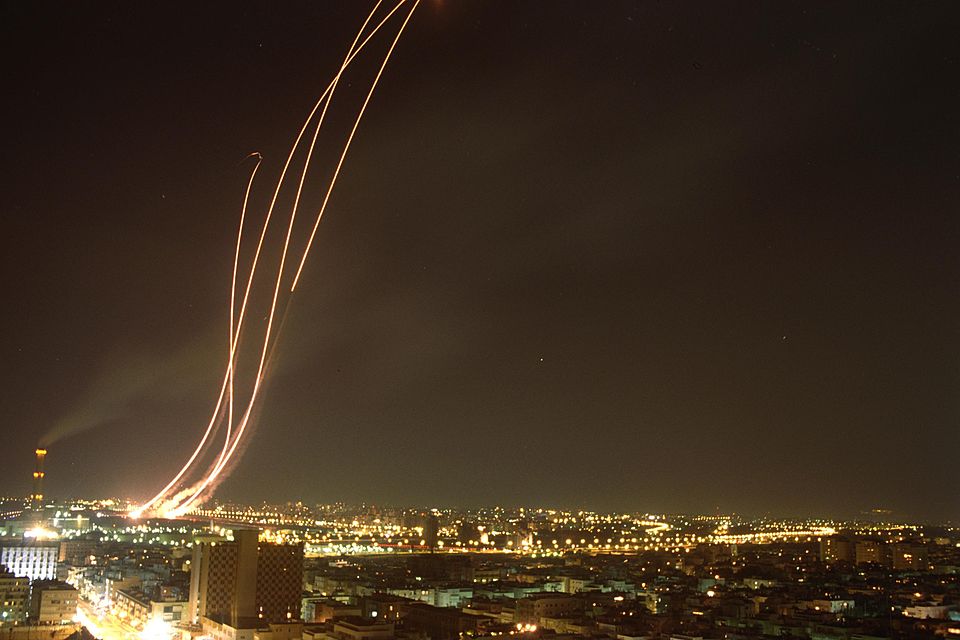
The United States selected Poland at the end of October 2026 as the site for a major European maintenance center for Patriot PAC-3 missiles. Germany and the Netherlands had also competed for the facility. The decision is an industrial policy success for Warsaw and a practical gain for NATO's eastern flank. However, it does not answer the more uncomfortable question of why Europe must respond to an American bottleneck regarding its most important interceptor missiles.
According to reports from Defense News and Stars and Stripes, the facility is intended to centralize the maintenance of PAC-3 MSE missiles for European NATO users. The exact capacity and timeline have not yet been fully disclosed. This is important: An announced site is not the same as additional missile production.
What Makes PAC-3 Technically Special
The Patriot PAC-3 MSE is not an ordinary missile for area bombardment, but a highly specialized interceptor missile for air and missile defense. It destroys its target fundamentally through direct collision, that is, through hit-to-kill, and therefore must synchronize target acquisition, fire control, missile, and command post in fractions of a second. Its military effect arises not from the missile alone, but from the entire system chain.
- Interceptor Task: Protection against ballistic short-range missiles as well as certain aerodynamic targets.
- System Dependency: Radar, launch device, fire control computer, spare parts, and certified software must work together.
- Logistical Consequence: An unserviceable missile is not a theoretical loss, but a gap in the daily availability of a battery.
For this reason, the maintenance decision is strategically relevant. It can shorten turnaround times, consolidate spare parts inventories, and bring European operators closer to technical support. Poland is also located on the most important military transit axis of the eastern NATO and has a political and logistical location advantage with its growing defense industry.
Poland Gains Infrastructure, Washington Retains the Keys
However, Poland's selection is not a step towards European missile autonomy. Maintenance is not manufacturing. Even extensive repairs on-site do not mean that Poland or the European Union control the central technology, the combat software, the certification, or the production decisions. The crucial difference is: Europe can better manage the lifespan of an American system, but it cannot determine its industrial availability itself.
This also explains the political value of the facility for Washington. A European maintenance hub stabilizes demand for Patriot without relinquishing American control over the technology chain. For the U.S., this is efficient. For Europe, it is an improvement in dependence, not its overcoming. The formulation sounds harsh, but it is analytically precise.
Europe gains more responsibility for readiness, but not automatically more sovereignty over the capability.
The Bottleneck is Larger than the Workshop
Several current reports also point to tight PAC-3 stocks and delayed deliveries to NATO states and Ukraine. The political pressure to release existing interceptor missiles is increasing, while the American production base can only be expanded gradually. A maintenance center can bring defective missiles back into the inventory. However, it cannot conjure additional interceptors if the industrial capacity, semiconductors, and approved components are lacking.
This highlights Europe's well-known投入-versus产出 problem in its most military form. European states are increasing budgets, purchasing Patriot systems, and financing joint infrastructure. Nevertheless, the most limited part of the capability remains outside Europe. The continent is thus paying for more availability within a supply chain whose strategic conditions it does not set.
The EU cannot simply resolve this contradiction with SAFE loans either. Loans can finance a factory, but they do not replace technical rights, years of certification, or secured orders. Anyone wanting European missile autonomy would need to promise not only final assembly but also sensors, warheads, propulsion, software, testing facilities, and supply planning into a robust European program. This would be an industrial policy project of years, not a quick response to a NATO bottleneck in the fall of 2026.
Strategic Importance for NATO and the EU
For NATO, the Polish site is sensible in the short term. It strengthens the eastern flank, shortens logistical routes, and makes maintenance less dependent on transatlantic transports. For Poland, it is further evidence that security policy weight today also arises from repair, training, and munitions infrastructure. Warsaw will thus not only be a consumer but a node in the European defense network.
However, the EU faces an uncomfortable institutional task. NATO needs immediately available defense. The EU wants long-term industrial independence. Both are not identical. If European programs only manage American systems more efficiently, this cannot be sold as strategic autonomy. It is alliance solidarity, and alliance solidarity is valuable. But it remains something different from independent capability.
Conclusion
Poland's Patriot PAC-3 center is good news for NATO and a warning for Europe. It shows that the alliance can organize its existing systems more professionally. But it also shows that Europe's air defense still depends on American production and approval decisions. The workshop can repair the missile; it cannot repair Europe's dependence. This is precisely the paradox of European rearmament in 2026: The continent is building more infrastructure to secure a capability whose industrial foundation it still does not possess.
The U.S. selected Poland to host a major maintenance center for Patriot PAC-3 missiles, set to be operational by the end of October 2026. This center will centralize maintenance for European NATO users, enhancing logistical support on the eastern flank. However, it does not grant Europe autonomy over missile production, as the technology and production decisions remain under U.S. control. The decision highlights ongoing challenges with PAC-3 stockpiles and delayed deliveries to NATO states and Ukraine.
- The U.S. selected Poland for a major European maintenance center for Patriot PAC-3 missiles.
- The center aims to centralize maintenance for European NATO users.
- Poland's location is strategically significant for NATO's eastern flank.
- The establishment does not equate to European missile production autonomy.
- Current PAC-3 stockpiles are low, affecting NATO states and Ukraine.