
Pressure mounts on US defense executives to boost weapons production
CARLISLE, Pennsylvania — President Donald Trump is expected to urge top defense executives on Wednesday to accelerate weapons production and expand manufacturing capacity as wars in Ukraine and the Middle East strain U.S. stockpiles and expose bottlenecks in the nation’s industrial base.
Trump is scheduled to participate in a roundtable discussion capping a two-day Defense and Innovation Summit hosted by Republican Senator Dave McCormick at the U.S. Army War College in Pennsylvania. The event gathers senior military leaders, defense contractors, investors and technology executives to discuss strengthening the U.S. industrial base and speeding the delivery of advanced weapons systems.
Trump’s appearance underscores a broader focus by the administration on defense production as prolonged conflicts have consumed large quantities of missiles, interceptors and other weapons, while highlighting the limits of the U.S. military supply chain and production capacity. Trump is expected to make several Pennsylvania-based defense investment announcements.
Joint Chiefs of Staff Chairman General Dan Caine urged defense companies on Tuesday to accelerate production and innovation, saying the military needs industry partners to help deliver capabilities faster as warfare evolves.
“What I need you to know, and I know this is simple for me to say, but hard to do, is to go faster. Please go faster. Think bolder,” Caine said.
Broader industrial strategy
For Trump, expanding defense manufacturing has become part of a wider economic strategy to revive U.S. industrial capacity, with the Pentagon increasingly viewed as a catalyst for factory investment, advanced manufacturing and domestic supply chains.
In late June, Trump met with munitions makers at the White House to urge the industry to move faster.
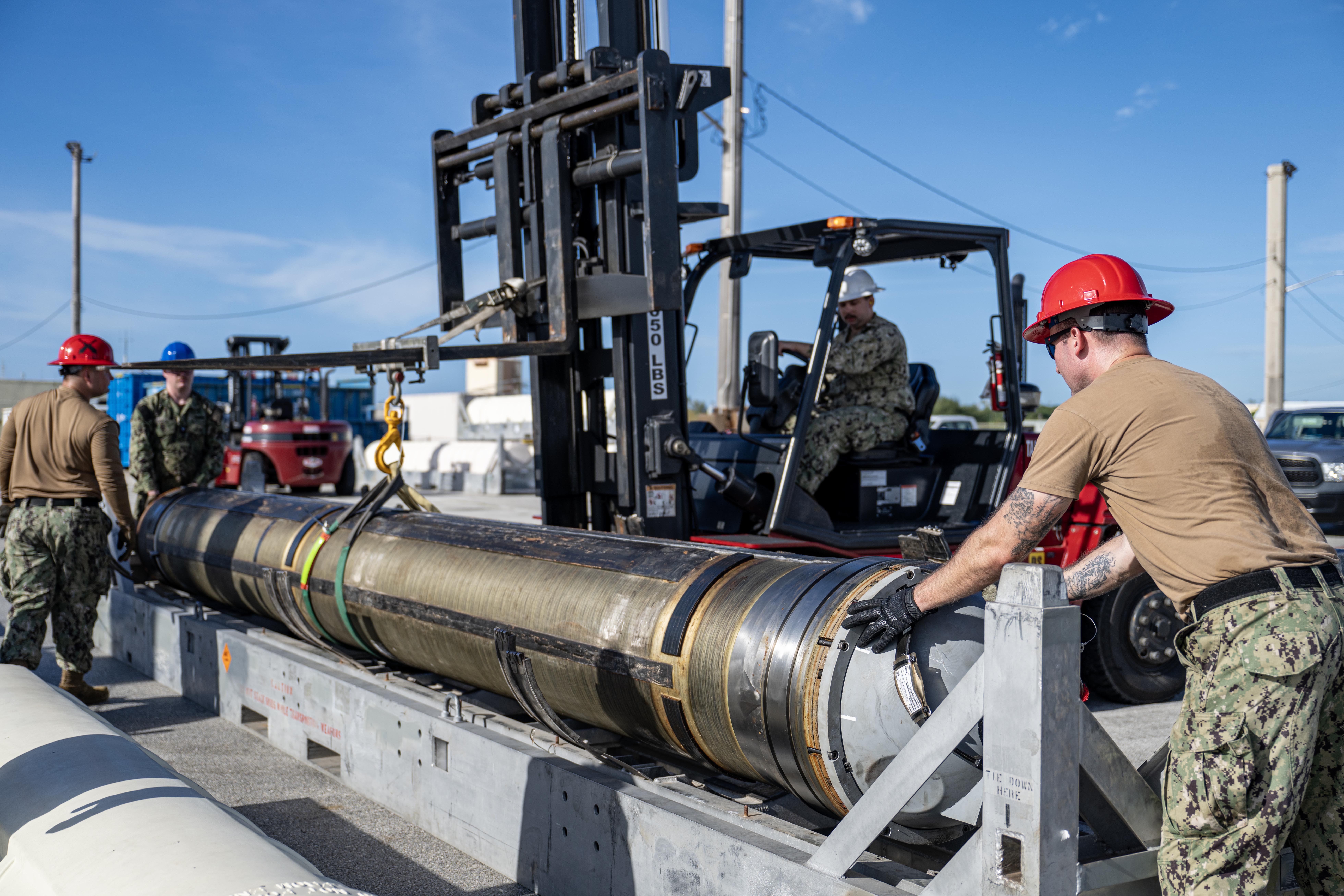
The United States has supplied large quantities of weapons to allies while also using munitions in its own military operations, raising concerns about inventories of key air-defense and precision-guided weapons and increasing pressure on contractors to boost output. Soaring demand for rocket motors used to power missiles and other weapons has spurred new thinking about supply chains.
Seeking big returns, Silicon Valley-style startups are now taking on defense companies that have long dominated the industry, pulled into the competition by a need for production speed, high volume and lower costs. Legacy solid rocket motor makers Northrop Grumman and L3Harris say they have been pushing their own research and development to pull in new technologies like 3D printing and new mixing technologies.
Michael Duffey, who oversees buying for the Pentagon, told the summit audience that the department is using long-term procurement contracts to give defense companies the confidence to invest billions of dollars in expanding factories, citing roughly $20 billion in private investment tied to plans to boost production of Patriot missiles and other high-demand weapons.
“The global environment now demands that we produce at this scale, at this speed, at this volume,” he said.
President Trump urged defense executives in Carlisle, Pennsylvania, to accelerate weapons production and expand manufacturing capacity amid strains on U.S. stockpiles from ongoing conflicts. The roundtable discussion highlighted the need for faster delivery of advanced weapons systems and the importance of strengthening the U.S. industrial base. The Pentagon is encouraging defense companies to invest in expanding factories to meet soaring demand for military equipment.
- President Trump is expected to urge defense executives to boost weapons production.
- The U.S. military supply chain is under strain due to ongoing conflicts.
- Defense contractors are being pressured to increase output of advanced weapons systems.
- The Pentagon is using long-term contracts to encourage investment in production capacity.
- There is a rising demand for rocket motors and new technologies in defense manufacturing.