
Record 637 Drones Over Moscow — Capital Air Defense at the Limit of Its Capabilities
 Dmitri Volkov
Record 637 Drones Over Moscow — The Capital's Air Defense at the Limit of Its Capabilities
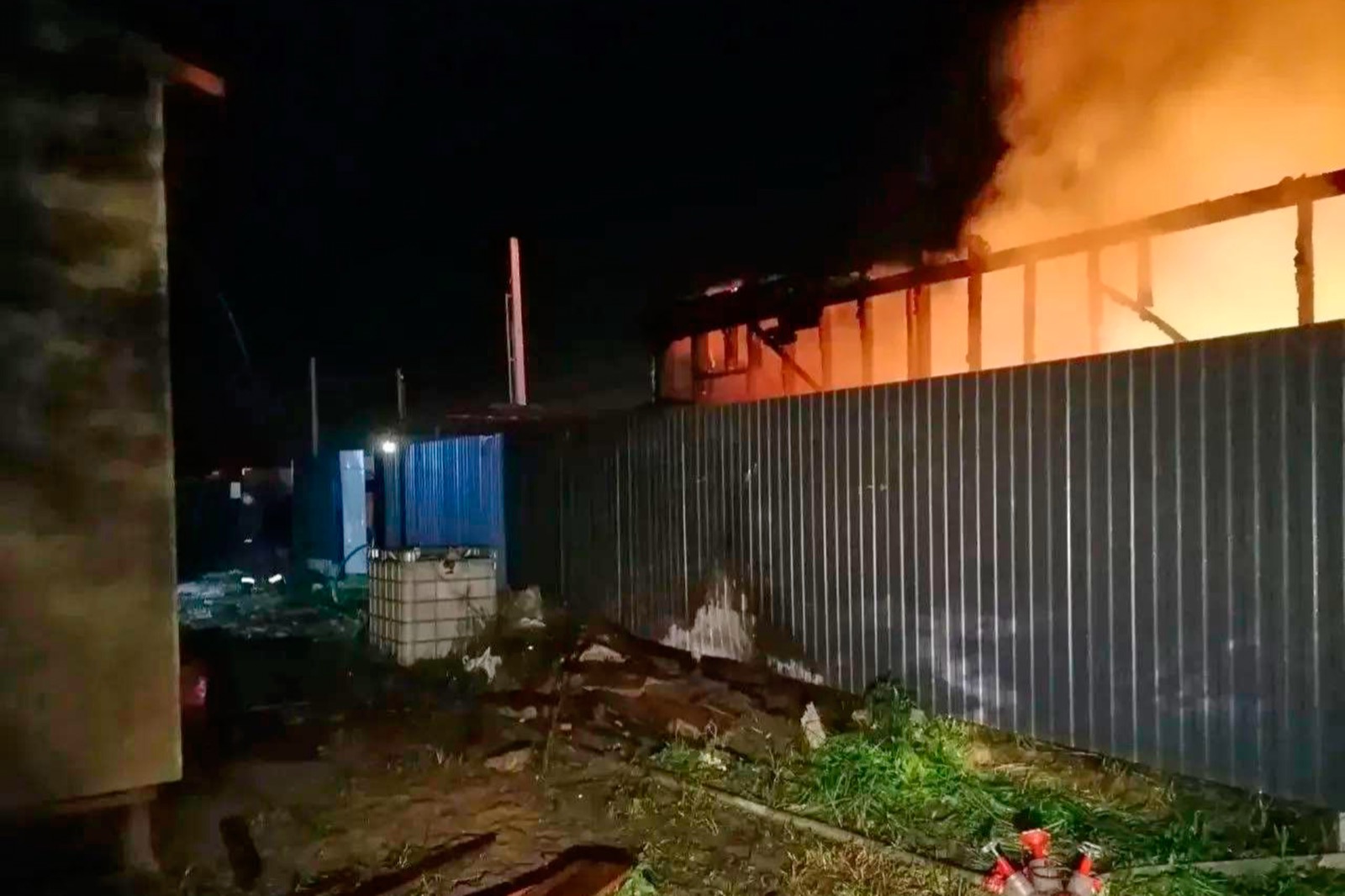
The Russian Ministry of Defense reported 791 intercepted drones during the night of August 18 to 19. Moscow Mayor Sergey Sobyanin cited his figure — 637 drones launched at the capital. Governor of the Moscow Region Andrey Vorobyov reported three injuries and a fire at a construction site. According to Associated Press estimates, this is the second largest raid since January 2025 — just four days after the previous massive strike. Add these three figures together — and you get the most accurate picture of the state of Russian air defense throughout the war.
Arithmetic That Doesn't Add Up
Let's start with a simple subtraction that official reports diligently avoid. If 637 drones were heading for Moscow, and 180 were shot down over the Moscow region — where did the other four and a half hundred go? Some were intercepted at long approaches: the Ministry of Defense counted 791 downed aircraft over various regions, Crimea, the Black Sea, and the Sea of Azov. Some, judging by the fires, reached their targets. The Wildberries warehouse in the industrial zone was on fire again — the company, however, called the damage "insignificant," which has already become a ritual formula after the seventh strike on its largest logistics centers since July (ISW, August 16). The outcome of the night: there are no casualties in the capital region, but three injured and burning objects in the suburbs are what remains outside the victorious report.
The Doctrine of the Invulnerable Capital and the Reality of the Swarm
To understand the scale of what happened, a historical perspective is needed. Soviet, and later Russian military thought built a unique system of layered air defense around Moscow: S-300 and S-400 rings, "Pantsir" complexes for point defense, the A-135 missile defense system, and finally — the very principle that the capital is inviolable. This is the legacy of the country's air defense doctrine, where Moscow has always stood apart as the center of state control and a symbol of military power. The raid of 1941, when the Luftwaffe broke through to the capital, became a canonical story for the Soviet military school about how the air defense system "does not let" the enemy in. Today, 637 aircraft in one night — and this is no longer a breakthrough of "individual planes," but a swarm that tests the system's resilience in all directions at once.
What did the raid show? First, the deeply layered air defense works — 791 interceptions confirm this. Second, it works with leaks: the share of those that broke through to the target is growing along with the scale of the raid. This is a classic saturation problem: a system designed to repel a limited number of high-precision means is choking under a mass flow of cheap devices. I note without malice — the same logic applies to both the Ukrainian air defense system and NATO's, only now Russia has its own, costly testing ground for this theory.
The Economics of Interception
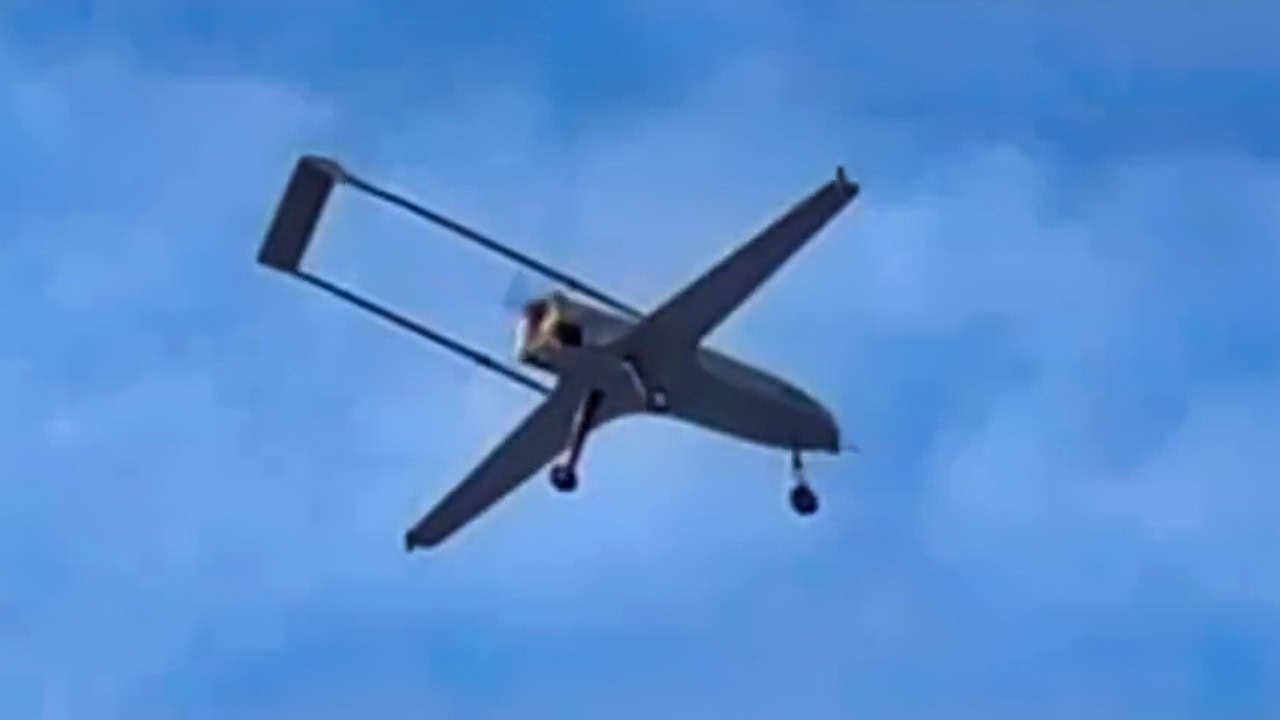
Now — the figures that concern me as an analyst the most. About 60% of Ukrainian strike drones are produced by a private company, Fire Point, and its director Irina Terekh publicly promises ballistic missiles by the end of the year (CBS, August 18). The cost of a Ukrainian long-range drone is tens of thousands of dollars. The cost of an S-400 or "Pantsir" surface-to-air missile is an order of magnitude higher. Even if all 791 reported interceptions are accurate, the exchange rate of "drone to missile" works against the defender. At the current pace of strikes — and Kyiv conducted two massive raids in four days — the question is not about the availability of missiles at all, but about the speed of their replenishment. This resembles the situation with Ukrainian Patriots: the system exists, but the ammunition is the question.
The Logic of Escalation and the Price of the Issue
Behind this raid lies not only tactics but also doctrine. The Ukrainian command has long formulated the principle: the war must come to the rear of Russia so that the population feels it. Strikes on Wildberries are an attack on the "civilian rear" in the most literal sense: a marketplace serving millions of households, which the Ukrainian Ministry of Defense considers part of military logistics. Seven out of ten largest warehouses of the company have been rendered inoperable since July — and each new fire in the Moscow region confirms this (ISW). The choice of target is not accidental: Wildberries is not a military factory, but a hub of civilian infrastructure through which the everyday life of the country flows, and that is why its destruction has an effect on society that a strike on a military facility would not provide.
At the same time, Russia is delivering retaliatory strikes: on the night of August 18, a missile hit the village of Pechenegi in the Kharkiv region — ten dead, 17 injured, according to the head of the regional administration. Zelensky promised to respond. London also received its share of threats: the Russian embassy in the UK stated that British drones in the wreckage are the "price" that London will have to pay for supporting Kyiv. Thus, a classic escalation spiral is forming: each new scale of strike on the rear justifies the next step from the other side.
While Moscow spends expensive surface-to-air missiles to intercept cheap devices, the question is not whether the air defense shoots down drones, but how many such nights the defense economy can withstand. The raid on the capital is not a system failure; it is its new mode of operation.
What’s Next
I will not predict the fall of air defense — the system remains one of the densest in the world, and 791 interceptions prove this. But a doctrinal shift has already occurred: Moscow has ceased to be an unattainable rear. With the current pace of Ukrainian drone production and their application, Russia will face a choice between the economics of interception and the economics of production — and this is not a question of technology, but of industrial policy. It is telling that the Ukrainian defense industry is not only increasing volumes but also changing its structure: Fire Point alone provides about 60% of all Ukrainian strike drones, and its leadership publicly announces its own ballistic missiles by the end of the year (CBS). Russia is responding to this by increasing the production of air defense means — but the price of a missile and the price of a drone will never align in this ratio.
The condition for stabilization is one: either Russian air defense finds a cheap asymmetric response (electronic warfare, lasers, mass cheap interceptors), or each subsequent record night will cost more and more. For now, however, official rhetoric prefers to call 791 downed drones a victory — and does not notice that this is precisely the essence of the Ukrainian strategy: not to destroy Moscow, but to make it pay for every flight of a cheap device at the cost of an expensive missile. A war of attrition against air defense is a war that Ukraine can afford to wage longer than it seems.
A mass drone attack involving 637 drones targeted Moscow on the night of August 18-19, 2025, with Russian air defense intercepting 791 drones. Three injuries were reported, and civilian infrastructure sustained damage, including a fire at a logistics center. This incident highlights the challenges faced by Russian air defense systems in countering large-scale drone assaults.
- 791 drones intercepted by Russian air defense systems overnight
- 637 drones launched towards Moscow
- 3 injuries reported in the Moscow region
- Significant damage to civilian infrastructure, including a fire at a logistics center
- This incident marks the second largest drone attack since January 2025.