
Rheinmetall launches joint venture with Destinus for cruise missile output
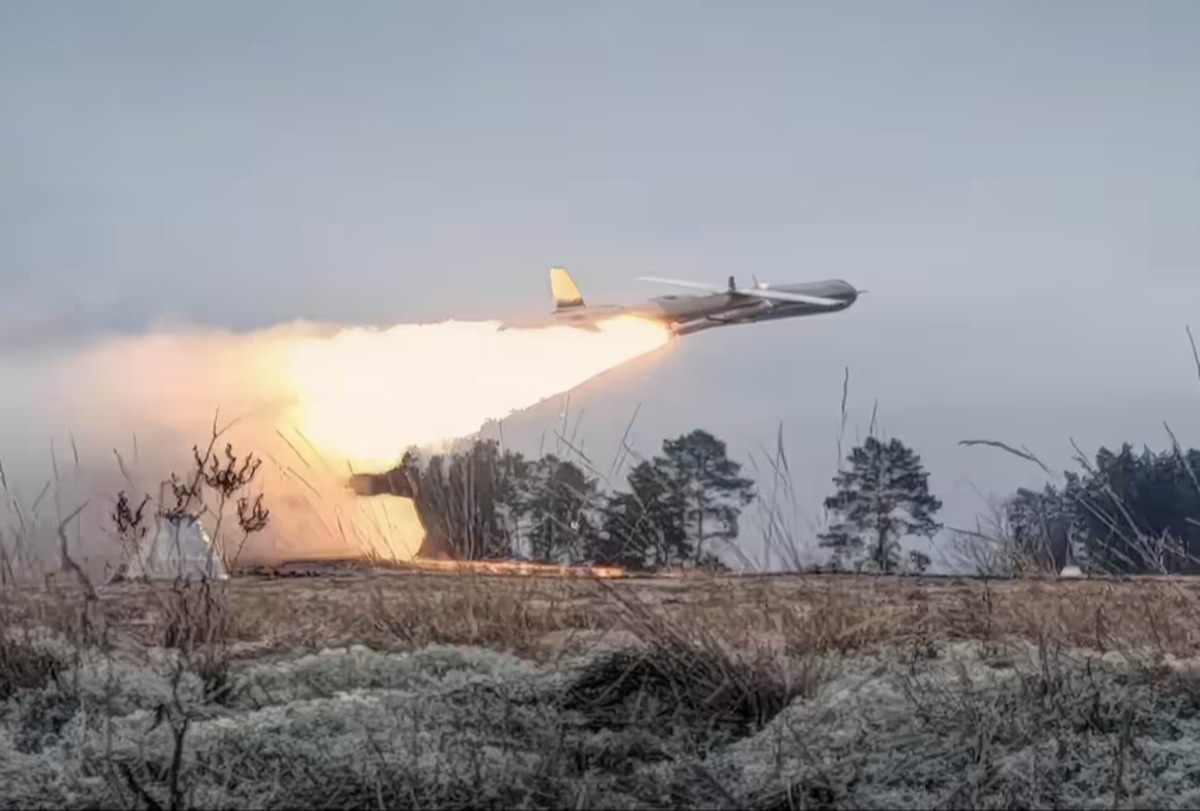
German defense conglomerate Rheinmetall and European aerospace and defense company Destinus have agreed to establish a joint venture focused on the production of advanced cruise missiles and ballistic rocket artillery, with the new company set to be operational in the second half of 2026.
The venture, to be named Rheinmetall Destinus Strike Systems, will be based in Unterlüß, Lower Saxony, Germany, and will manufacture, market, and deliver missile systems to European and NATO-aligned customers. Rheinmetall, headquartered in Düsseldorf, will hold a 51 percent stake in the new entity, with Netherlands-based Destinus retaining the remaining 49 percent. The transaction remains subject to regulatory approvals.
The structural logic of the deal is straightforward: Rheinmetall brings industrial scale and a track record managing large-scale defense programs from within Germany’s defense manufacturing base, while Destinus contributes system architecture, product design, and an already-running serial production program. Destinus currently produces over 2,000 cruise missile systems per year through its European manufacturing footprint and has developed turbojet engines alongside its missile platforms. The company will remain headquartered in the Netherlands and continue developing and manufacturing core systems and components across its Dutch and broader European facilities. The joint venture adds Germany-based qualification and serial production capacity within Rheinmetall’s industrial infrastructure at Unterlüß.
Rheinmetall CEO Armin Papperger was direct about the necessity driving the agreement. “We must expand the industrial base for modern defence systems in Europe,” he said. “This joint venture reflects this necessity. We are combining Rheinmetall’s production capacities and experience in managing large-scale programs with Destinus’s specific technology and system design. By doing so, we are laying the foundations for scalable, operational missiles that are tailored to the current requirements of the European and allied armed forces.” Destinus co-founder and CEO Mikhail Kokorich framed the partnership around an industrial capacity argument rather than a technology one. “Europe is entering a new phase of scaling missile production,” Kokorich said. “Modern conflict is defined by volume and cost-per-effect. Missile systems are evolving from limited-production assets into industrial products. The real constraint in Europe today is not demand, but industrial capacity.”
The new venture will target a broad international market across Europe, as well as selected partner countries within the NATO alliance. For individual key markets, the involvement of local industrial partners may be considered. Both Rheinmetall and Destinus will contribute regional expertise and market knowledge to define suitable sales structures for relevant segments.
Cruise missiles are long-range, jet-powered weapons that fly at low altitudes to avoid radar detection and deliver warheads against fixed or time-sensitive targets with high precision. Unlike ballistic missiles, which follow an arcing trajectory, cruise missiles navigate aerodynamically and can be programmed to follow terrain-hugging flight paths, making them significantly harder to intercept. Ballistic rocket artillery, the second product category the joint venture will address, refers to large-caliber rocket systems — typically truck-mounted — that fire unguided or precision-guided munitions along high-arcing trajectories to strike targets at ranges well beyond conventional tube artillery. Both categories have seen extraordinary demand in recent years as the scale of industrialized warfare has reasserted itself on the European continent.
Recent conflicts, including in Ukraine and the Middle East, have demonstrated that demand for scalable strike systems is no longer measured in limited batches but increasingly in thousands of systems per year, with the potential to grow to tens of thousands over time as European and allied procurement continues adapting. The companies describe the near-term market opportunity as hundreds of millions of euros annually, with the potential to reach the low billions over time. Destinus’s existing systems are described as operationally validated and already in use in Ukraine, giving the company a battlefield-proven architecture as the foundation for the joint venture’s product line.
Rheinmetall Destinus Strike Systems represents a concrete European industrial response to the gap between what NATO-aligned nations require and what the continent’s defense industry has historically been structured to deliver. European defense production for high-demand munitions categories was built around assumptions of limited peacetime demand and long replenishment cycles — assumptions that the war in Ukraine has rendered obsolete. By combining a running production line with Rheinmetall’s capacity for qualification and serial manufacturing at German industrial scale, the joint venture is designed to close that gap at a tempo consistent with current operational realities rather than Cold War-era procurement rhythms.
Content preview only. Full article available at source. View Full Article
Rheinmetall and Destinus established a joint venture, Rheinmetall Destinus Strike Systems, in Unterlüß, Germany, to produce advanced cruise missiles and ballistic rocket artillery. The venture will be operational in the second half of 2026, with Rheinmetall holding a 51% stake. This initiative aims to enhance Europe's industrial capacity for modern defense systems, responding to the growing demand for scalable strike capabilities.
- Rheinmetall and Destinus are forming a joint venture named Rheinmetall Destinus Strike Systems.
- The joint venture will focus on producing advanced cruise missiles and ballistic rocket artillery.
- The new company will be operational in the second half of 2026 and based in Unterlüß, Germany.
- Rheinmetall will hold a 51% stake, while Destinus will hold 49%.
- The venture aims to meet the increasing demand for scalable strike systems in Europe.