
Romania’s €2 Billion SPYDER Buy Fixes NATO’s Black Sea Blind Spot
 Alexandra Reeves
Romania’s €2 Billion SPYDER Buy Fixes NATO’s Black Sea Blind Spot
Romania did not buy SPYDER because air defence is fashionable. It bought it because the Black Sea flank has become a live-fire laboratory for the problem NATO still talks about too politely: cheap drones, cruise missiles and precision weapons are now testing allied airspace almost every week.
Rafael announced on June 29 that Romania’s Ministry of National Defence selected the SPYDER short and very short range air defence system under a strategic framework agreement valued at more than €2 billion. European Security and Defence reported that the first order was signed last week, with deliveries expected to begin within 36 months and initial operational capability tied to industrial cooperation and local production in Romania.
That sounds like procurement language. It is actually a political signal. Bucharest is no longer treating the Danube delta and Black Sea approaches as a rear area. It is building a layered shield where Russian spillover is already visible.
The Deal Is Bigger Than One Battery
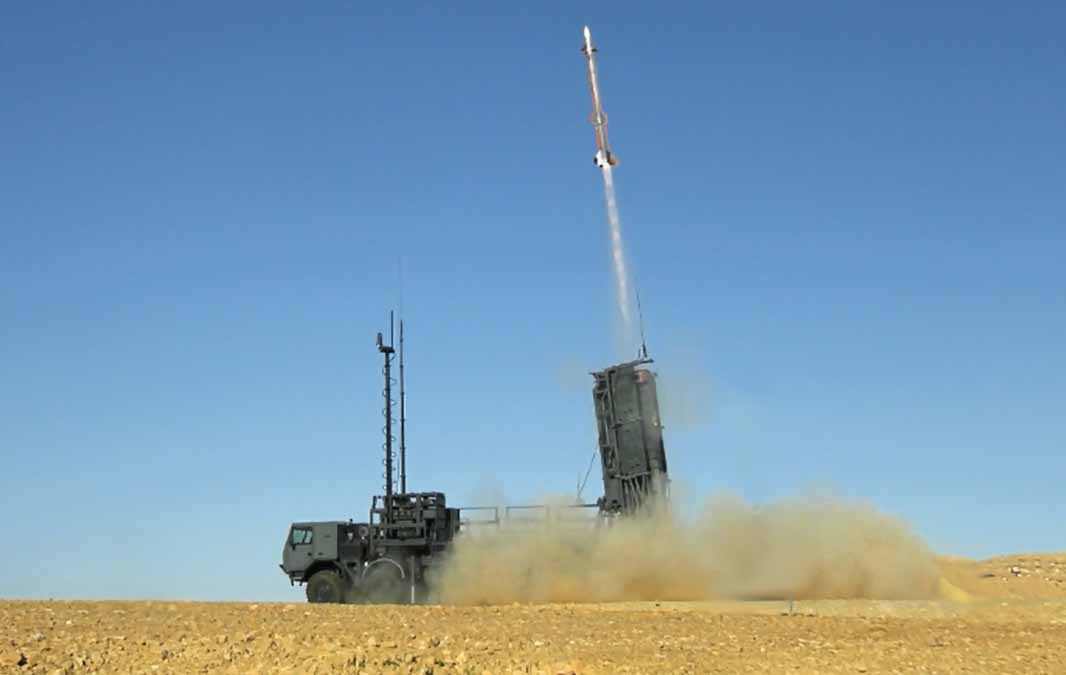
The announced package is not just launchers. According to the Rafael statement carried by European Security and Defence, it includes launchers, interceptors, radar systems, training arrays and logistical support. That matters because eastern flank air defence has often been discussed as if one spectacular system can solve the problem. It cannot.
SPYDER is built around Rafael’s PYTHON and DERBY air-to-air missiles adapted for ground launch. The system is mobile and modular, designed to intercept aircraft, helicopters, unmanned aerial vehicles and precision-guided munitions. In practical terms, Romania is buying a short-to-medium layer that sits below high-end systems such as Patriot and above the very short-range counter-drone tools now being rushed into service.
The timing is blunt. On June 24, Romania’s defence ministry said the US-provided Merops counter-UAS system had been fully operationalized and integrated into the Romanian Armed Forces air defence architecture. The ministry described Merops as an AI-based system for detecting, tracking and neutralizing small, low-altitude aerial targets. Two days later, the same ministry reported that Russia launched another wave of drone attacks against Ukrainian civilian infrastructure near the river border with Romania. A Romanian IAR 330 Puma helicopter was scrambled at 03:57 to monitor aerial targets 31 kilometres east of Sulina, while a RO-Alert warning went out in northern Tulcea County.
No unauthorized Romanian airspace intrusion was reported in that incident. That is the good news. The uncomfortable part is that Romania still had to alert civilians before dawn because Russia’s war keeps pushing aerial threats toward a NATO border.
Why Romania Is the Right Place to Watch
Everyone in Brussels likes to say NATO’s eastern flank runs from the Baltic to the Black Sea. True, but the threat is not distributed evenly. The Baltic states worry about airspace violations, sabotage and rapid ground pressure. Romania faces something different: a war next door, a vulnerable river frontier, Black Sea surveillance pressure, and the awkward reality that Russian drones aimed at Ukrainian ports can generate emergency procedures inside NATO territory.
NATO’s own eastern flank summary says the Alliance deployed additional ships, aircraft and troops after Russia’s full-scale invasion in 2022, including the first deployment of the highest-readiness element of the NATO Response Force to Romania. It also notes that the Alliance established a multinational battlegroup in Romania after the March 2022 extraordinary summit. That ground presence is useful, but it does not answer the low-altitude air problem by itself.
Here is the thing: deterrence on the Black Sea flank is no longer only about tanks and battlegroups. It is about whether allied radar, command networks and interceptors can make sense of a messy sky at 4 a.m. without turning every Russian attack on Odesa or Izmail into a Romanian civil defence event.
The Israeli Connection Is Not Accidental
Romania’s choice of Rafael also says something about Europe’s procurement mood. European capitals are talking more about European sovereignty, but when the requirement is urgent and operationally proven air defence, they often buy from whoever has a credible system now. Israel has spent years building systems under real missile and drone pressure. Ukraine has made the same point in a harsher way: laboratory-perfect systems are less persuasive than equipment that can survive saturation, clutter and operator stress.
Rafael called this the largest deal in company history and framed Romania as another NATO customer for SPYDER. That is marketing, but it is not empty marketing. For Bucharest, the appeal is not just the missile. It is the package: sensors, launchers, training, sustainment and Romanian industrial participation. For NATO, that local production element may be as important as the interceptor itself, because the Alliance keeps discovering that air defence without production depth is just a shortage waiting to happen.
The limitation is also clear. SPYDER will not create an impenetrable dome over Romania. No short-range system can. It will have to be integrated with national radars, NATO command channels, counter-UAS systems like Merops, existing allied air policing, and higher-tier interceptors. The real test will be whether Romania can turn separate acquisitions into a coherent kill chain.
The So What
This is a bigger story than a Romanian shopping list. The €2 billion SPYDER framework is a sign that NATO’s southeastern flank is finally being armed for the war it is actually watching, not the cleaner war it used to plan for. Russia’s drones may not be deliberately attacking Romania, but they are already shaping Romanian procurement, Romanian alerts and NATO consultations in real time.
There is a tendency in Washington and parts of western Europe to treat Black Sea air defence as a regional detail. That is a mistake. If Romania becomes the place where NATO learns to combine counter-drone systems, mobile short-range interceptors, allied surveillance and local production, the lessons will matter far beyond Tulcea County.
The next things to watch are concrete: how many batteries Romania actually orders under the framework, how fast local production starts, whether SPYDER plugs cleanly into NATO air command networks, and whether other Black Sea allies follow the same path. The uncomfortable judgment is this: Romania is not overreacting. It is buying the kind of air defence NATO should have been scaling before Russian drones started waking up Romanian civilians.
Romania selected the SPYDER air defense system on June 29, 2023, under a €2 billion agreement to bolster its military capabilities against aerial threats in the Black Sea region. The system includes various components such as launchers and interceptors, and is part of a broader strategy to address increasing drone activity from Russia. The Romanian Armed Forces have also integrated the Merops counter-UAS system to enhance their air defense architecture.
- Romania signed a €2 billion agreement for the SPYDER air defense system.
- The SPYDER system includes launchers, interceptors, radar systems, and logistical support.
- Romania's defense ministry operationalized the Merops counter-UAS system.
- Russia launched drone attacks near the Romanian border, prompting military alerts.
- Romania is enhancing its air defense capabilities in response to regional threats.