
Romania's F-16 Cannon Kill at Neptun Deep Is Moscow Testing NATO
 Alexandra Reeves
Romania's F-16 Cannon Kill at Neptun Deep Is Moscow Testing NATO
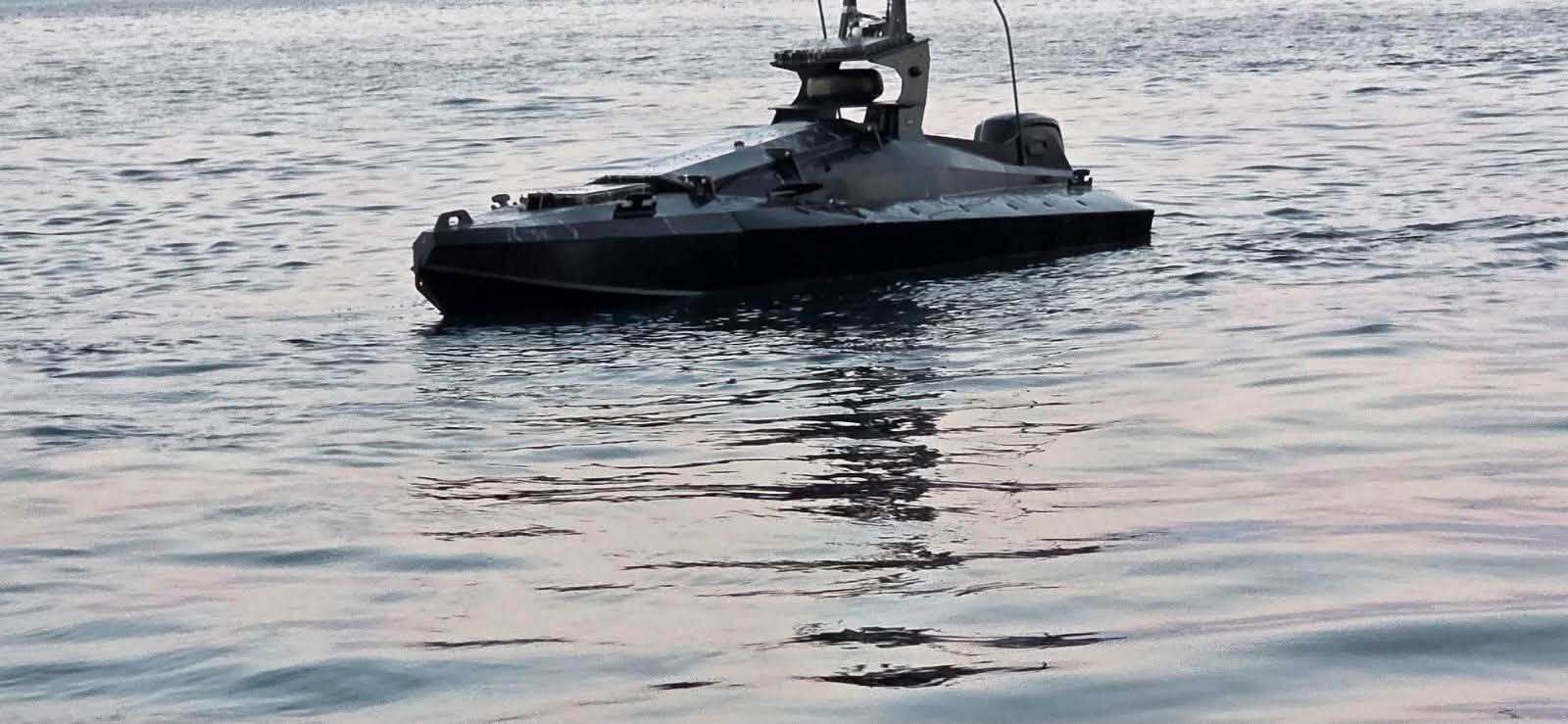
A few hundred meters from Romania's most expensive energy bet, a small black boat with explosives on board was closing on a gas platform in the Black Sea. Bucharest's answer was an F-16 diving out of the morning sky, cannon blazing. The video is already all over social media: a Romanian Fighting Falcon lining up on a low, faceted hull and stitching it with 20mm fire until it stopped moving.
Defence Minister Radu Miruta confirmed on August 20 that two Romanian Air Force F-16s were scrambled "with orders to fire" after the Coast Guard spotted a marine drone roughly 80 nautical miles east of Constanta, in Romania's exclusive economic zone, near the Neptun Deep extraction works. The drone was carrying explosives. The strafing run disabled it, and Coast Guard bomb disposal teams finished the job. Through a direct communication channel recently opened with Kyiv, Bucharest got official confirmation the drone was not Ukrainian. President Nicusor Dan skipped the diplomatic hedging and blamed Russia outright.
Why Neptun Deep Is the Target
This was not a random drone adrift. Neptun Deep, jointly developed by OMV Petrom and state-owned Romgaz, holds an estimated 100 billion cubic metres of recoverable gas across two offshore fields — around 4 billion euros of investment, with production slated to start in 2027 at roughly 8 billion cubic metres a year. That would nearly double Romania's domestic gas output and make the country the EU's largest gas producer, at the exact moment Brussels is desperate to replace Russian energy.
In other words: this is the project designed to break Europe's dependence on the country that just sent a bomb to visit it. The symbolism is not subtle.
This Isn't the First Drone Near the Platform
On August 11, Romanian army divers destroyed two Gerbera-type drones drifting in the same stretch of the Black Sea near Neptun Deep. In recent weeks Romania has shot down four drones violating its airspace, and on Thursday morning — the same day as the sea drone incident — NATO F-18s scrambled after an unidentified drone flew 13 kilometres over Romanian territory before crashing in an uninhabited area. The incursions track the intensification of Russian strikes on Ukrainian maritime facilities along the Danube, right on Romania's border.
Von der Leyen called it what it is. "An escalating campaign of threats is underway, unsettling our citizens and seeking to divide our Union," the European Commission president said. "This is hybrid warfare."
The Cannon Is the Interesting Part
Notice what Bucharest did not do. It did not launch a missile at a drone worth a fraction of an AIM-120. It sent a fighter to shoot a boat with a gun — the cheapest, most direct option available, chosen deliberately to protect the hundreds of people working on the platform. That is a practical choice, but it is also a signal: NATO members are now willing to use kinetic force against Russian drones in the gray zone, and they are calculating the exchange rate.
"Through the direct communication channel recently created with the Ukrainian side, I received the official confirmation that it is not of Ukrainian origin." — Romanian Defence Minister Radu Miruta
The response architecture mattered just as much as the gun. A command cell was stood up in the Defence Ministry, NATO was asked to assume command, and the decision to destroy the drone was coordinated with the president. That is Article 5-adjacent muscle memory being built in real time: a European ally treating a drone a few hundred meters from critical infrastructure as a national security event requiring alliance coordination.
Ukraine Already Wrote This Playbook
Here is the uncomfortable part no one in Brussels wants to say out loud. Ukraine spent 2023 through 2025 turning cheap sea drones into the weapon that chased the Russian Black Sea Fleet out of Sevastopol and sank or crippled dozens of Russian warships. Now the same concept — a small, hard-to-detect hull carrying a warhead — is bobbing up next to NATO's energy infrastructure. You do not need to be a strategist to figure out who has been taking notes.
Moscow does not need to sink the Neptun Deep platform to win this round. It only needs to make the cost of protecting it painful enough that European insurers, investors and politicians start pricing in the risk. Every scramble, every sortie, every million euros of naval escort is the point. The drones cost tens of thousands of dollars. The response costs millions. That arithmetic is the attack.
What to Watch
Three things matter now. First, whether this becomes a pattern — another drone next week, another strafing run, another statement from Brussels. Second, whether NATO shifts from reactive scrambling to preventive posture: persistent maritime surveillance, armed escort vessels, cheap counter-drone systems at sea, the kind of layered defense Ukraine had to build under fire. Third, whether Moscow escalates from drones to something that actually endangers the platform and the workers on it — because a warhead drifting toward a gas platform does not stay "hybrid" forever.
Everyone will call this another day of hybrid warfare noise. It is not noise. It is the first time a NATO fighter has gunned down a sea drone aimed at the alliance's energy future, and Moscow designed the test. The real question isn't whether Romania can shoot down drones — it just proved it can, with impressive economy. The real question is whether NATO treats Neptun Deep as infrastructure or as the front line it already is. Because the next drone Moscow sends won't be a test. It'll be the one that got through.
Romanian F-16s scrambled on August 20 to intercept and destroy a marine drone carrying explosives near the Neptun Deep gas platform in the Black Sea. The drone was neutralized by cannon fire, and Romanian authorities confirmed it was not of Ukrainian origin. This incident highlights escalating tensions and military responses in the region, particularly concerning critical energy infrastructure.
- Romanian F-16s were scrambled to intercept a marine drone carrying explosives.
- The drone was destroyed by cannon fire from the F-16s.
- The incident occurred near the Neptun Deep gas platform in the Black Sea.
- Romania confirmed the drone was not of Ukrainian origin.
- This incident is part of a pattern of increasing drone activity near Romanian territory.