
Romania's F-16 Deployment at Neptun Deep Highlights Europe's Regulatory Gap for Critical Offshore Infrastructure in 2026
 Dr. Klaus Weber
Romania's F-16 Deployment at Neptun Deep Reveals Europe's Regulatory Gap for Critical Offshore Infrastructure in 2026
Two F-16s against a single sea drone 80 nautical miles from Constanta initially seem like a success story. That is precisely the problem. When a NATO economy has to protect its most important future gas platform with fighter jets and onboard cannons, not only is one object threatened, but an entire security policy assumption is called into question. Europe's critical infrastructure in the Black Sea has long been treated like a front line, but its protection logic remains institutionally improvised.
The incident on August 20 near the Neptun Deep field is therefore strategically more significant than the spectacular headline about the downing of a maritime drone might suggest. According to the Romanian Ministry of Defense, a civilian ship reported the target at 06:28 local time near the platform. Two Romanian F-16s were launched, and one aircraft opened fire with its onboard cannon. Only after that was a coast guard ship dispatched with explosive ordnance disposal experts to destroy the damaged target definitively. Defense Minister Radu Miruta referred to it as a drone loaded with explosives; through a direct channel, Ukraine officially confirmed that it was not of Ukrainian origin. President Nicusor Dan explicitly condemned the incident as a Russian provocation.
A Tactical Success with a Strategically Bad Aftertaste
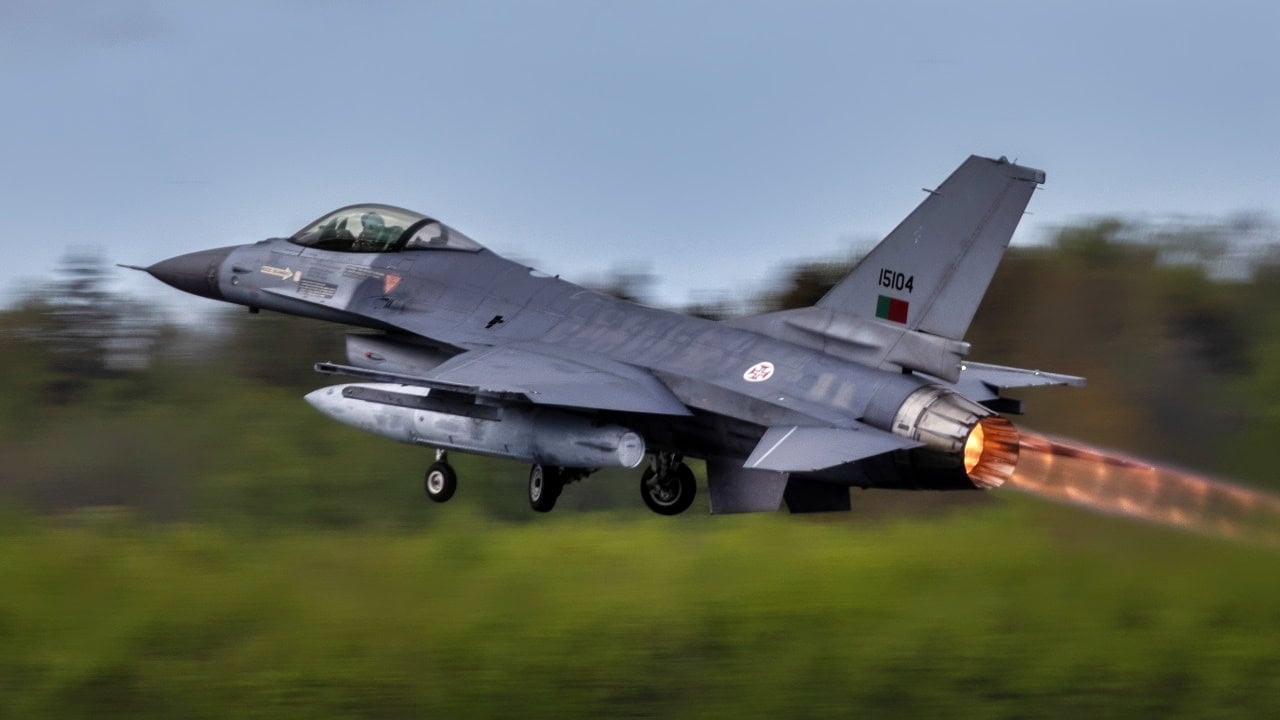
Tactically, Bucharest can sell the operation as a success. The platform was protected, several hundred employees remained safe, and Romania demonstrated its ability to act. But is that enough? No, because the incident primarily shows how costly and politically sensitive Europe's response to cheap, hard-to-attribute systems has become. A sea drone costs a fraction of what an alert scramble, flight hour, armament, command decision, and subsequent clearance cost. The known imbalance from the air war against cheap disposable drones has now jumped to maritime energy infrastructure.
Additionally, there is the institutional weakness. According to Miruta, command authority had to be transferred from NATO to the Romanian armed forces before the use of force was authorized. That is precisely where the Weber point lies. While the alliance has aircraft, radars, and readiness forces, it lacks a robust, politically relieving framework for the protection of critical infrastructure in the gray zone between war, sabotage, and airspace violations. Article 5 was designed for clear aggressions. Neptun Deep shows the opposite: the likely threat is not a large attack, but a repeated, deliberately limited test below the escalation threshold.
Neptun Deep is No Longer an Energy Project but a Security Policy Test
That is why the location is crucial. Neptun Deep is expected to massively increase Romanian gas production starting in 2027, making Romania the largest natural gas producer in the EU. Anyone threatening such a facility is not just attacking a national economic project but a building block of European resilience. Since the Russian invasion of Ukraine, Brussels has constantly spoken about strategic autonomy, diversification, and critical infrastructure. In the Black Sea, it is now evident what these terms are worth in practice. An infrastructure that is supposed to be central to Europe's energy security is being protected with nationally improvised military measures, while the institutional burden-sharing remains unclear.
Moreover, the repetition is concerning. On August 11, Romanian marine divers destroyed two drifting drones near the same field through controlled detonation. On August 16, a drone wing was recovered about 83 nautical miles east of Constanta. On the same August 20, there was also another drone incident near Galati hours earlier, where Spanish F-18s took off as part of NATO airspace monitoring. This is no longer an anomaly. A pattern is emerging. Anyone still speaking of isolated incidents confuses clustering with coincidence.
The Real Gap is Political, Not Technical
Europe will reflexively want to respond to this development with more platforms: more radars, more drone defense, more readiness flights, more protection ships. None of this is wrong, but everything remains inadequate if the political decision-making architecture remains unchanged. The core problem is not that Romania lacks F-16s. The core problem is that Europe has not defined a common threshold for critical offshore infrastructure, determining when an incident is treated as national defense, alliance provocation, or hybrid attack. Capability without clear responsibility remains expensive symbolic politics.
The incident also exposes an old European self-deception. One can invest billions in energy projects, connectivity, and defense and still remain vulnerable at the same point if the decision-making rules stem from the pre-crisis era. More spending does not automatically mean more security. In this case, it initially only means that there are more valuable targets. Concentrating energy in the Black Sea also concentrates incentives for attack.
What Bucharest and NATO Must Learn Now
From Romania's perspective, the downing was necessary. From a European perspective, it should serve as a warning signal. First, NATO needs predefined response chains for maritime and air-based gray zone attacks on critical infrastructure so that not every operation appears as an ad-hoc exception. Second, the EU must understand that infrastructure policy and deterrence policy in the Black Sea can no longer be thought of separately. Third, the debate should not stop at the origin of the drone. Even if the attribution were clear, it would not change the structural realization that Europe is protecting its strategically most important facilities with tactical stopgap solutions.
Neptun Deep thus represents a paradox of the European security order. Europe invests in resilience to become more independent but simultaneously makes itself more dependent on improvised military protection measures for that very resilience. The Romanian F-16s hit the drone. Europe's institutions were also hit in the process. However, the damage there is not immediately visible.
Two Romanian F-16s engaged a maritime drone near Neptun Deep on August 20, 2023, at 06:28 local time. The drone was reported to be explosive-laden and confirmed not to be of Ukrainian origin. This incident underscores the vulnerabilities in Europe's defense of critical offshore infrastructure, as Romania's response involved significant military resources to protect a key gas platform.
- Two Romanian F-16s engaged a maritime drone near Neptun Deep.
- The incident occurred on August 20, 2023, at 06:28 local time.
- The drone was confirmed not to be of Ukrainian origin by Ukrainian officials.
- Defense Minister Radu Miruta described the drone as explosive-laden.
- The incident highlights vulnerabilities in Europe's defense of critical infrastructure.