
Romania's Sea Drones and EU Naval Operation 2026 — Europe's Maritime Security Gap Becomes Visible
 Dr. Klaus Weber
Romania's Sea Drones and EU Naval Operation 2026 — Europe's Maritime Security Gap Becomes Visible
On October 23, the European Parliament urged the European Union to consider a maritime operation in the Black Sea. The trigger was new attacks on shipping off the coast of Romania and Bulgaria, as well as political pressure from Kyiv. This is not yet a decided mission, let alone a European naval blockade. However, the demand reveals an uncomfortable fact: the EU is discussing maritime deterrence without having a common maritime situational awareness, an operational mandate, or a clearly defined command structure.
This is precisely where the difference lies between political determination and military capability. A parliamentary resolution can generate attention. However, it can neither clear mines nor protect a merchant convoy.
An Operational Proposal Without an Operational Plan
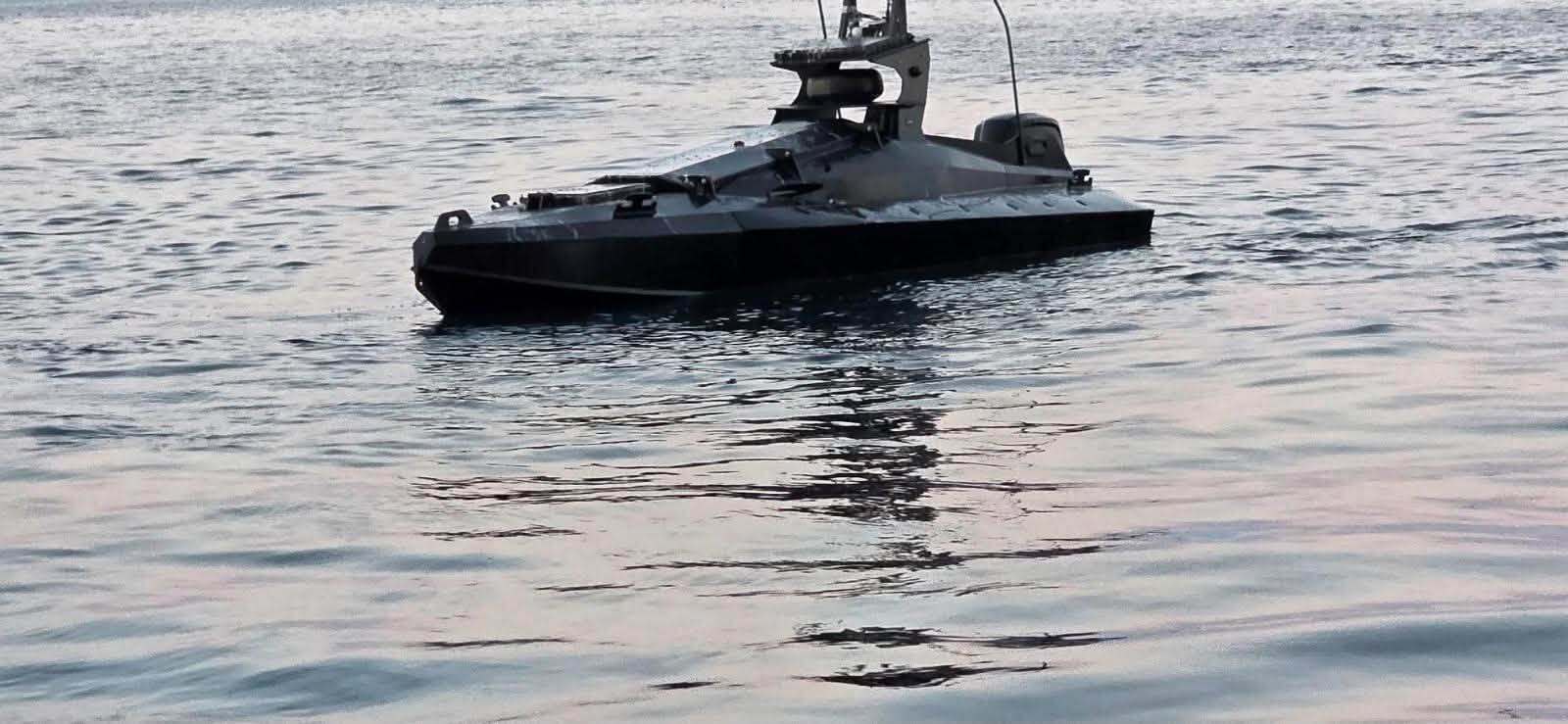
Reports from EU Today, NavalToday, and EU Neighbours East describe the same political impetus: Following attacks off the Romanian and Bulgarian coasts, Brussels is to examine whether an EU mission can improve shipping security. The Ukrainian Foreign Minister has simultaneously called for a joint response from Black Sea states. This is strategically understandable. Russia is using missiles, drones, naval mines, and threats against port and energy infrastructure to politically increase the costs of civilian maritime traffic.
The military response would therefore need to combine several capabilities. These include mine countermeasure vessels with modern sonar systems, frigates for air and drone defense, maritime reconnaissance aircraft, satellite intelligence, and unmanned surface systems. Romanian Sea-Drones can serve as a cost-effective surveillance tool but cannot replace a protected escort. An unmanned boat can report contacts or monitor a suspicious route; it cannot defend a merchant convoy against a coordinated missile attack.
The Montreux Convention Limits Europe's Options
The Black Sea is not an ordinary operational area. Turkey controls the access of warships through the Bosporus according to the Montreux Convention. Tonnage and stay limits for non-resident navies, as well as the special treatment of coastal states, complicate a classic EU fleet rotation. A mission primarily based on French, Italian, or Spanish major combatants would therefore be politically and legally much more difficult than an operation in the Mediterranean.
A more realistic model would be a regional framework led by Romania and Bulgaria, with Turkish approval and support from EU states outside the Black Sea. This sounds modest, but it is the crucial point. A mission for mine clearance, monitoring critical sea routes, and protecting civilian infrastructure would have a limited objective. In contrast, a mission to deter Russian forces would be a military confrontation architecture. Brussels must not obscure these two things with the same political formula.
Why the Demand is Still Important
The debate shifts Europe's security thinking from the map of the Baltics to the maritime southeastern flank. Until now, European support for Ukraine has primarily been measured in artillery ammunition, air defense, and land forces. However, the Black Sea shows that Europe's economic security depends on sea routes that cannot be automatically protected by Patriot batteries alone or by higher defense budgets.
For the EU, this would be a test of its new defense instruments. SAFE loans, PESCO projects, and national procurement programs can mobilize funds. However, they do not automatically create common operational rules, compatible data links, or a responsible command chain. The European Defence Agency can promote standards; it cannot order an operation. The European External Action Service can coordinate diplomatically; it does not have a navy.
This also explains why the Parliament's demand is politically more attractive than its implementation. It signals solidarity with Ukraine, reassures Romania and Bulgaria, and demonstrates capability against Russia. However, as long as member states do not determine who protects a civilian ship in a crisis, who responds to an attack, and who bears the escalation risk, the demand remains symbolic politics.
The Real Test Lies in Deterrence
A credible maritime mission would need to cover three levels simultaneously. First, it requires a permanent situational picture from satellites, aircraft, drones, and coastal radars. Second, it needs robust protective measures against drones, cruise missiles, and mines. Third, it must politically define what response will occur in the event of an attack. Without the third level, the first two are merely surveillance in uniforms.
The EU should therefore not start with the name of a new operation but with a list of capabilities. What mine countermeasure capacities are immediately available? Which Romanian and Bulgarian ports can serve as logistical hubs? What data can NATO and the EU share? And who takes the lead if a ship under EU protection is hit? These questions are less media-friendly than a new mission, but they determine its value.
The Black Sea exemplifies Europe's fundamental problem: The Union has political ambitions, industrial programs, and financial instruments, but still lacks a unified maritime responsibility.
The demand for an EU Naval Operation is therefore neither superfluous nor already a breakthrough. It is a warning signal. Europe cannot permanently secure its sea routes through declarations, but it can begin with a limited, regionally led mine clearance and surveillance mission. More would initially be risky; less would be incredible in light of the attacks. The paradoxical conclusion is: Europe's strategic autonomy does not begin in the Black Sea with a large warship, but with the decision of who takes responsibility for a small merchant ship in a crisis.
Sources
- EU Neighbours East, report on the demand from Members of the European Parliament to consider an EU naval operation, October 23, 2026.
- NavalToday, report on the possible EU mission in the Black Sea, October 23, 2026.
- European Pravda, report on the demand for an EU operation following attacks off Romania and Bulgaria, October 23, 2026.
- United24 Media, Ukrainian demand for a joint response in the Black Sea, October 23, 2026.
The European Parliament urged the EU to consider a maritime operation in the Black Sea on October 23, 2026, following recent attacks on shipping near Romania and Bulgaria. This call highlights the EU's lack of a unified maritime strategy and operational capabilities. Ukraine's Foreign Minister has also called for a coordinated response from Black Sea nations. The Montreux Convention poses challenges for military operations in the region, complicating the EU's response to maritime threats.
- The European Parliament urged the EU to consider a maritime operation in the Black Sea.
- Recent attacks on shipping near Romania and Bulgaria prompted this call.
- The EU lacks a unified maritime situational awareness and operational mandate.
- Ukraine's Foreign Minister called for a joint response from Black Sea states.
- The Montreux Convention complicates military operations in the Black Sea.