
Russia Sets 1.535 Million Troop Ceiling for a Longer War
 Alexandra Reeves
Russia Sets 1.535 Million Troop Ceiling for a Longer War
Vladimir Putin just made a small personnel change with a large strategic message. On July 27, according to the Institute for the Study of War, the Russian president signed a decree setting the authorised strength of the Russian Armed Forces at 2,426,130 total personnel, including 1,535,000 military personnel. That is only 25,000 more uniformed billets than the previous June decree. It is not mobilisation on the scale of 2022. It is something more durable and, for Europe, more awkward: Russia is still building the institutional shell for a bigger army after nearly four and a half years of war.
The easy interpretation is to dismiss the number as Kremlin theatre. Russia can authorise as many troops as it likes; filling units with trained soldiers, officers, vehicles, radios, drones, medics and ammunition is harder. That is true. It is also too comforting. Authorised end strength matters because it tells ministries, military districts, defence enterprises and regional officials what the state intends to normalise. Moscow is not planning around a short emergency anymore. It is planning around permanent force expansion.
The decree is small because the trend is not
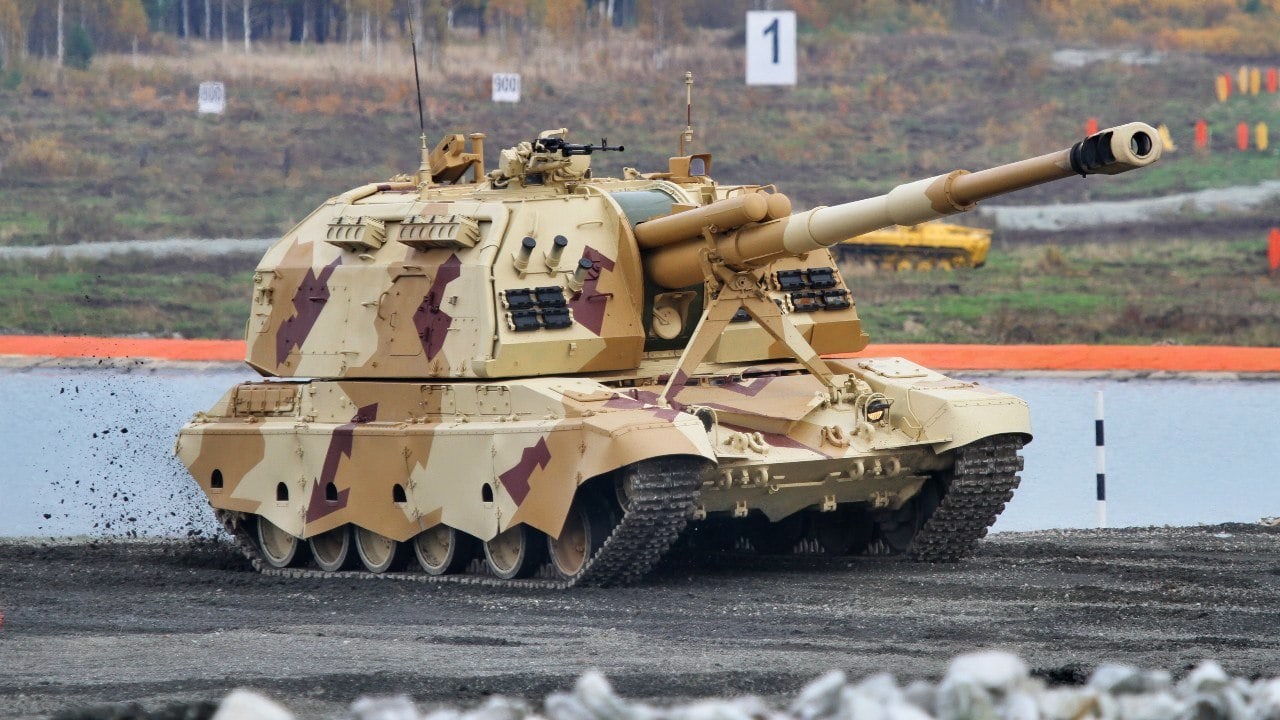
ISW notes that Russia has expanded authorised armed forces strength nearly every year since the full-scale invasion of Ukraine began: by 137,000 personnel in 2022, 170,000 in 2023 and 180,000 in 2024. The 2026 increments are smaller, including the latest 25,000 military personnel increase. But the point is the cumulative direction. Russia is not reducing the wartime state. It is regularising it.
The July 27 decree also aims to create military construction units within the armed forces, according to ISW's reading of the Russian decree. That detail sounds bureaucratic, which is why it matters. Construction units are not glamorous. They do not make good parade footage. They build bases, depots, fortifications, training ranges, roads and support infrastructure. In other words, they make force expansion stick.
Everyone in Brussels likes to talk about Russian losses. They should. Ukraine has forced Moscow to consume men and equipment at a rate no peacetime Russian planner expected. But losses do not automatically equal strategic exhaustion. A state can be battered and still be dangerous if it is willing to accept waste, lower standards and a long mobilisation of society. Russia has been doing exactly that.
Putin is selling permanence at home
The personnel decree did not appear in isolation. ISW assessed on July 27 that Putin is trying to militarise Russian society and shift responsibility for the war onto the State Duma and the broader population. In a Navy Day speech on July 26, Putin emphasised national unity around the war effort. The following day, he praised Duma deputies for passing nearly 3,000 bills over five years, with many framed as support for the armed forces, defence industry and occupied Ukrainian territories.
That is not just domestic messaging. It is strategic insulation. Putin wants the war to look less like his personal project and more like a national programme. If the Russian public, parliament, schools, industry and regional governments are made shareholders in the war, then reversing course becomes harder. The war becomes infrastructure.
This is where NATO's problem begins. The alliance has spent much of the last two years debating whether Russia can reconstitute after Ukraine. The better question is whether Russia is already reconstituting during Ukraine, in degraded but usable form. A poorly trained larger Russian force is still a problem for the Baltic states, Finland, Poland and Romania if it can generate pressure, absorb losses and keep firing.
The navy detail points to a broader adaptation
Russian force expansion is not only about infantry numbers. Interfax reported on July 26 that Russian Navy commander Admiral Alexander Moiseyev said the navy has formed unmanned systems regiments, including one in the Northern Fleet from July 1. He described these units as an existing reality rather than a plan, with surface and underwater components in the regimental structure.
That should catch NATO's eye. The Northern Fleet is not a sideshow. It sits at the junction of Arctic access, bastion defence for Russian nuclear submarines, long-range strike assets and pressure against northern Europe. If Moscow is embedding unmanned systems into fleet structures while also expanding army manpower ceilings, the pattern is not simply more bodies. It is a battered military trying to absorb lessons from Ukraine across services.
There is a temptation in Western analysis to treat Russian adaptation as either fake or miraculous. It is neither. Russian systems adapt messily, often after catastrophic failure, and often by throwing people at institutional problems. But messy adaptation can still produce dangerous capability when backed by a state willing to spend, coerce and accept casualties.
NATO's eastern flank is moving, but slowly
NATO has not been asleep. Its own eastern flank posture has changed dramatically since 2014. NATO says Russia is the most significant and direct threat to Allied security in the Euro-Atlantic area. The alliance now maintains forward land forces from the Baltic to the Black Sea, and in June 2026 established Forward Land Forces Finland, its ninth multinational battlegroup, led by Sweden. Germany's brigade in Lithuania is scheduled to become fully operational with up to 5,000 troops by 2027. Canada is scaling its Latvia presence toward brigade-level capabilities.
Those are serious moves. They are also still mostly tripwires and reinforcement frameworks, not a fully solved defence problem. Russia's latest decree is a reminder that NATO is building deterrence against a moving target. The alliance cannot only count battlegroups. It has to count ammunition production, reserve mobilisation, rail capacity, air defence density, electronic warfare, drone attrition and the political ability to sustain high readiness after the news cycle moves on.
Here is the uncomfortable part: Russia does not need a pristine 1.535 million soldier army to stress Europe. It needs enough mass to threaten multiple axes, enough missiles and drones to complicate mobilisation, enough air defence to protect key nodes, and enough domestic coercion to keep feeding units. That is a lower bar than many Europeans prefer to admit.
What to watch next
The next indicators are not just headline troop numbers. Watch whether Russia expands training capacity, builds new depots near reconstituted military districts, increases officer output, standardises drone units beyond Ukraine-specific formations, and funds construction units at scale. Also watch whether Moscow keeps pressuring 2022 mobilised personnel into contract service, a trend ISW has repeatedly flagged. Retaining those men would allow Russia to preserve wartime experience even if the Kremlin avoids another politically risky mobilisation wave.
For NATO, the answer is not panic. It is arithmetic. If Russia is treating this war as the foundation for a larger permanent military, Europe cannot treat defence spending increases as temporary crisis management. The July 27 decree may be only 25,000 more military billets on paper. But paper is where force structures start. The question now is whether Europe builds faster than Russia can institutionalise the war it started.
Russia has set a troop ceiling of 1,535,000 military personnel as part of a strategic shift towards a longer-term military engagement. This decision, made by President Putin on July 27, 2023, includes plans to create military construction units to support force expansion. The Russian Armed Forces are adapting by integrating unmanned systems into their naval structure, indicating a broader military reconstitution during the ongoing conflict in Ukraine.
- Russia has authorized a troop ceiling of 1,535,000 military personnel.
- The decree aims to create military construction units within the armed forces.
- Russia has expanded its authorized armed forces strength nearly every year since the full-scale invasion of Ukraine began.
- Putin is attempting to militarize Russian society and shift war responsibility onto the State Duma and the population.
- The Russian Navy is forming unmanned systems regiments as part of its military adaptation.