
Russia will sign a memorandum with ECOWAS — Lavrov mediates between Abuja and the AES
 Marie Dubois
Russia to Sign a Memorandum with ECOWAS — Lavrov as Mediator between Abuja and the Sahel Alliance
Moscow, August 17. In the press room of the Russian Ministry of Foreign Affairs, Sergey Lavrov announced the main point in one sentence: Russia will "soon" sign a memorandum of cooperation with ECOWAS, "particularly in the field of security." The announcement came at the end of his talks with Ghanaian Foreign Minister Samuel Okudzeto Ablakwa, who was received in Moscow that day.
This is not just another letter of intent. It is the first time Moscow is institutionalizing military cooperation with the regional organization that Mali, Burkina Faso, and Niger left in January 2025 to join the Sahel Alliance (AES). The Russian calculation, as outlined by Lavrov himself, is clear: "to build bridges and develop concrete measures between ECOWAS and AES," in the name of the "current daily security needs of the populations of West Africa." Moscow claims to be "ready to contribute."
A Two-Tier Memorandum
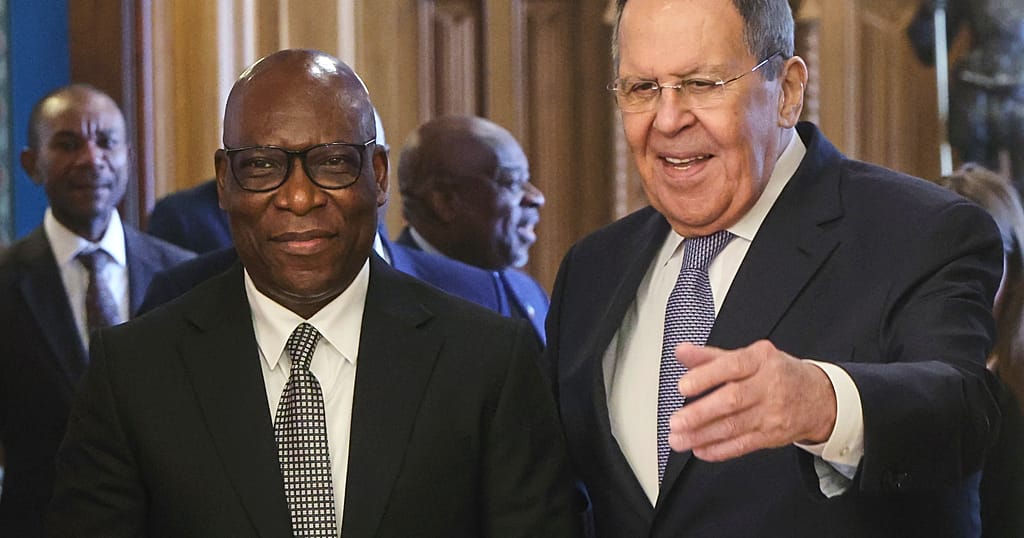
The text would cover, according to the minister, "concrete measures" with the remaining twelve member states of ECOWAS — from Cape Verde to Nigeria, including Ghana, Togo, and Benin. Lavrov emphasized that strengthening West African security requires cooperation from all states in the region and praised Ghanaian President John Dramani Mahama for his "particular attention" to the ECOWAS-AES normalization, a position that Moscow "fully shares."
Operational translation: Russia is no longer choosing between the Sahelian juntas and the coastal capitals. It is playing both sides at once — the instructors of the Africa Corps in Bamako, Ouagadougou, and Niamey, and an institutional memorandum signed in Abuja. Since Barkhane, I have never seen Moscow so explicitly courting both camps of the same regional fracture.
Ghana, the Gateway
The choice of interlocutor is not trivial. Accra has established itself as the mediator of the ECOWAS-AES normalization, and Lavrov paid strong tribute to Mahama in this matter. Ghana is also one of the coastal states most exposed to jihadist contagion: seven Ghanaian traders were killed in February in Titao, northern Burkina Faso, during an offensive by JNIM, and the threat is approaching the border areas of northern Togo and Benin.
This dual role — regional negotiator and potential victim — explains Accra's openness. For the coastal capitals, the Russian memorandum is an assurance against a security vacuum that neither Abuja nor Paris is filling anymore. The 200 American instructors deployed in Nigeria in the spring are not enough to reassure armies that look enviously at the drones and air support available to the Malian FAMa.
What Moscow Can Really Offer
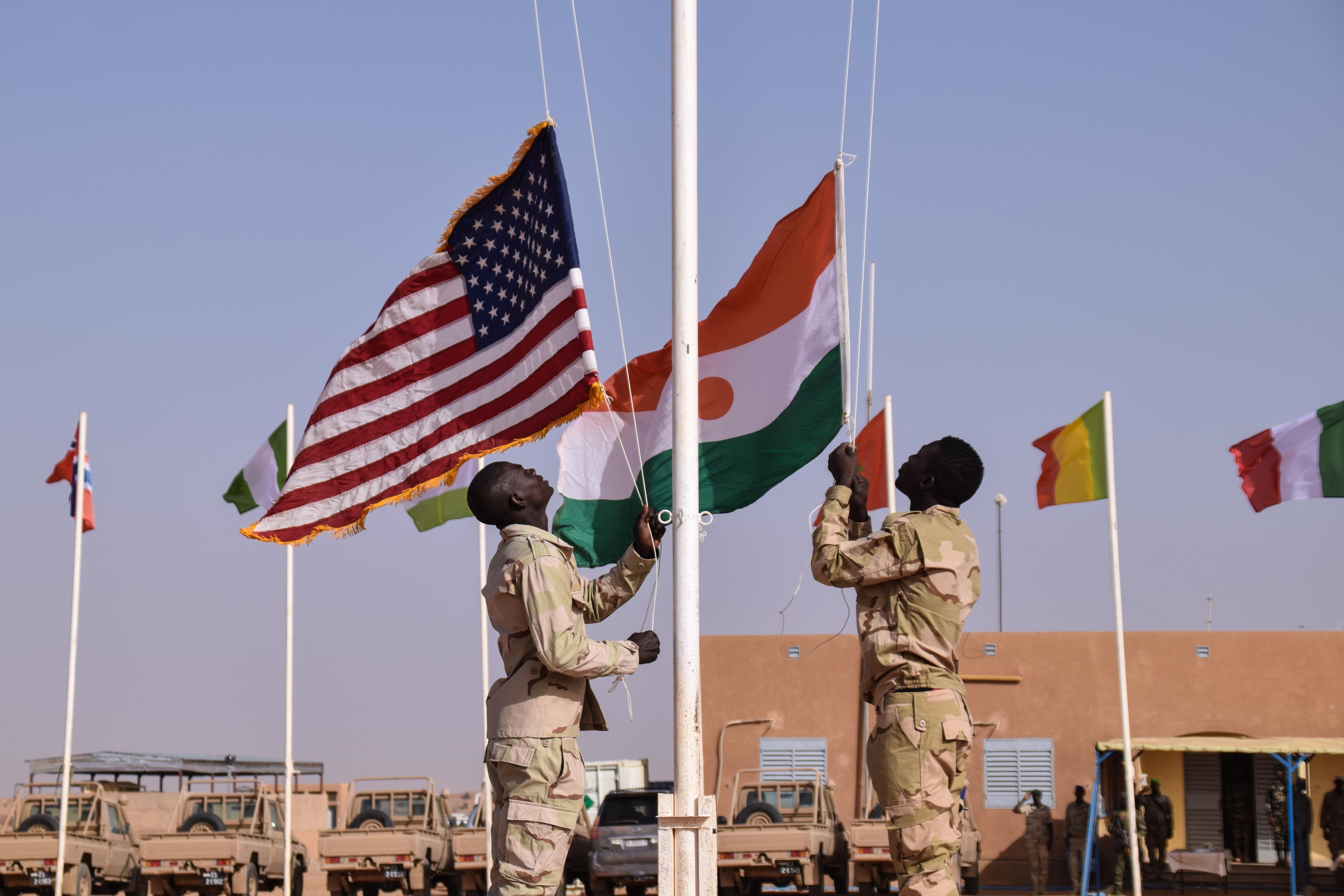
On paper, the Russian offer is clear: training, weapons, and the presence on the ground of the Africa Corps, which is already operating in Mali, Burkina Faso, and Niger alongside national armies — even participating in joint offensives like those conducted this summer around Kidal and Tinzawatène. For the coastal states, the appeal is real: their armies lack drones, aerial intelligence, and fire support.
But one must think like a former Barkhane member. An institutional cooperation with ECOWAS does not equate to a deployment. The Russian troops present in the Sahel are there under bilateral agreements with juntas, not under the authority of a regional organization. The memorandum does not create any commitment obligations for Moscow — it is a statement of intent, not a defense pact.
"Russia sells influence at a low price: it secures a diplomatic foothold throughout the Gulf of Guinea without mobilizing a single soldier," summarizes a West African security observer.
The Dilemma of the Sahelian Juntas
The news poses a direct question to the three capitals of the AES. Goïta, Traoré, and Tchiani have built their legitimacy on a break with regional organizations and loyalty to Moscow. A Russian memorandum with ECOWAS weakens their negotiating position: they are no longer the only access channel for Russia to West Africa. It is difficult to predict their reaction — the Bamako junta has made no official comment at this stage.
Especially since the timing coincides with an attempt to bring AES and Abuja closer together, which Ghana has been pushing for months. Moscow is seizing this window — without abandoning its Sahelian allies. The Russian gamble is to become the arbiter of a regional system it has helped to fragment: to talk to everyone, commit to no one.
What This Changes on the Ground
In the short term, not much. The memorandum will need to be drafted, signed, and then translated into concrete projects — a process of several months, and ECOWAS remains divided on the appropriateness of opening the door to Moscow. In the medium term, it redraws the map of influences: Russia becomes an institutional interlocutor for the entire Gulf of Guinea, and not just for the states in rupture.
The real test will be in northern Togo, Benin, and Ghana, where the pressure from JNIM is approaching the borders. That is where we will see if the memorandum produces joint patrols and equipment deliveries — or if it remains just another document in Abuja's archives. One certainty, from experience: you do not sign a memorandum with Moscow out of generosity. The coastal capitals have understood this. The AES juntas are just beginning to realize what their loyalty will cost them.
Russia announced plans to sign a memorandum of cooperation with ECOWAS on August 17, focusing on security measures. This marks the first formal military cooperation between Russia and ECOWAS, as Lavrov mediates between Abuja and the Sahel States Alliance. The memorandum aims to enhance security collaboration among West African states, particularly in light of rising jihadist threats.
- Russia will sign a memorandum of cooperation with ECOWAS.
- The memorandum will focus on security cooperation.
- This is the first institutionalized military cooperation between Russia and ECOWAS.
- Lavrov emphasized the need for cooperation among all states in West Africa.
- The memorandum does not create binding military commitments for Russia.