
Russian "Geran-4" receives Chinese protection from electronic warfare and changes the balance of drone warfare in 2026
 Dmitri Volkov
Russian "Geran-4" Receives Chinese Protection from Electronic Warfare and Changes the Balance of Drone Warfare in 2026
Thirty-two elements in the new satellite navigation antenna — a figure that is more significant than yet another statement about "complete import substitution." According to Ukrainian defense technology advisor Sergey "Flash" Beskrestnov, the recently deployed Russian drones of the "Geran" type used against Kyiv have received 32-element antennas with Controlled Radiation Pattern Array (CRPA) instead of the previous 16-element ones. This is not a cosmetic upgrade. For the Ukrainian electronic warfare system, the number of channels that need to be jammed effectively doubles.
New Antenna and Old Dependency
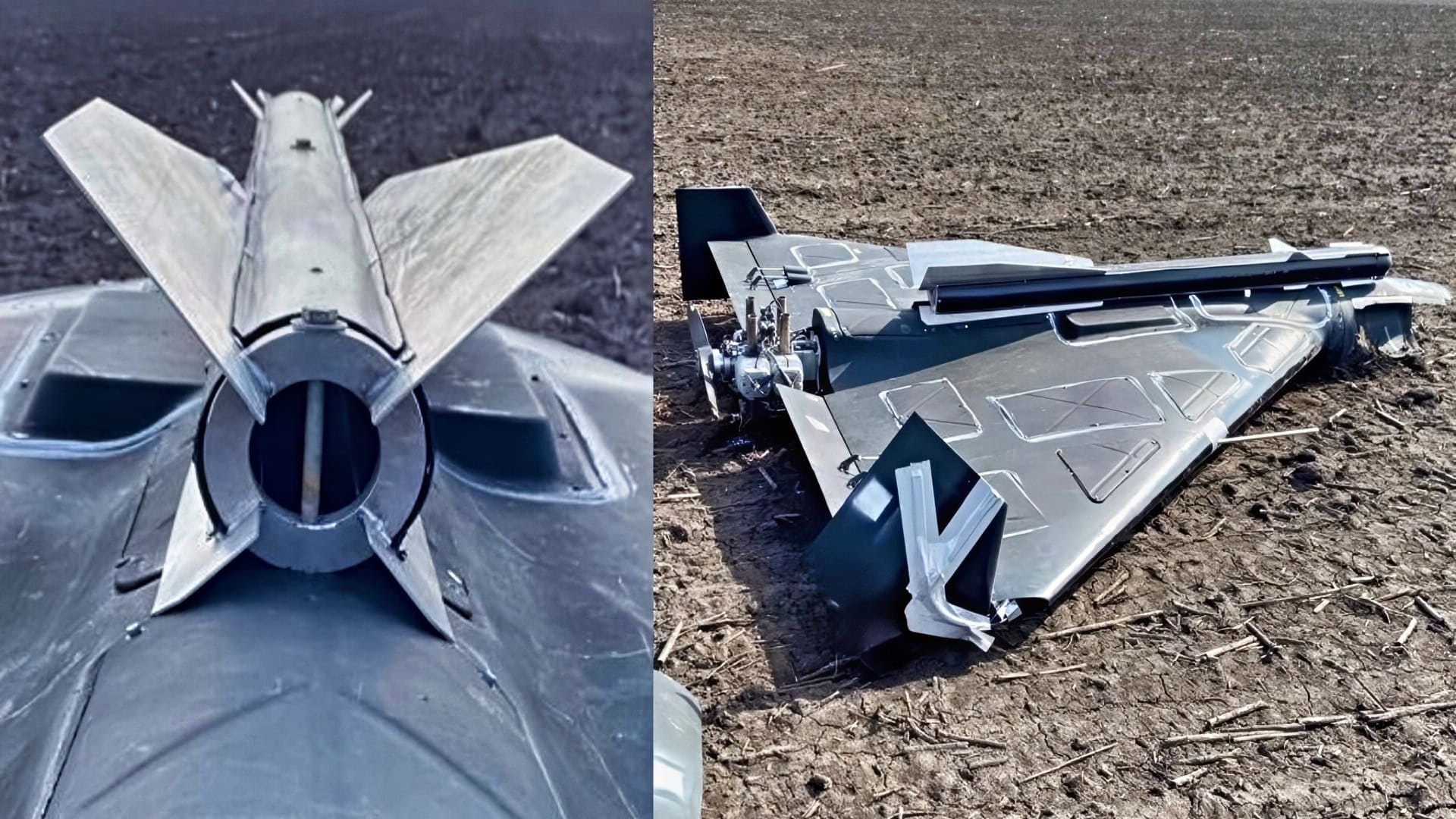
The Insider's investigation from October 9 links the antenna found on the "Geran-4" to products from the Chinese company Harxon. The body has markings "ALB," which, according to the investigators, indicate production or assembly in the special economic zone "Alabuga." It is important to distinguish between three concepts that Russian propaganda deliberately mixes: development, localization, and assembly. The presence of a Russian-language sticker on a Chinese-designed antenna does not yet mean the emergence of a Russian technological cycle.
CRPA does not work as a simple signal amplifier. The antenna array creates spatial "nulls" in the direction of the interference source while maintaining satellite navigation reception in other directions. The more elements there are, the harder it is to cover the entire working sector with jamming. Therefore, the 32-element configuration increases the demands on Ukrainian electronic warfare systems but does not make the drone invulnerable: effectiveness depends on algorithms, jamming power, flight altitude, receiver quality, and the availability of alternative navigation.
Alabuga Becomes an Industrial Node of War
According to the Institute for the Study of War's assessment from October 9, Russia is simultaneously trying to localize the production of key components for strike drones while maintaining a deep dependency on Chinese suppliers. In "Alabuga," not only CRPA but also turbojet engines Telefly TF-TJ2000A for the jet variants of "Geran-4" and "Geran-5" are already linked to Russian assembly. In the first half of 2026, the Chinese company supplied 46 tons of carbon fiber precursors to an enterprise associated with the zone. This information does not prove a complete transfer of technologies but shows a stable supply chain rather than a random purchase of individual batches.
It is here that the difference between the current model and the Soviet defense industry becomes apparent. The USSR sought to control the entire cycle within a closed block, even at the cost of low efficiency. The Russian military economy of 2026 builds a different outline: Chinese components, Russian assembly, hidden supply routes, and scaling production under the protection of underground workshops and passive air defense. This is not autarky, but a managed dependency. As long as Beijing maintains the political willingness to close critical technological niches, Moscow can call a product "domestic," a significant part of which was born outside of Russia.
What Changes on the Battlefield
- Electronic Warfare. Ukrainian units have to allocate more resources across a wide range of navigation channels, and local jamming becomes less predictable.
- Mass Strike. Even a moderate increase in the resilience of one drone gains operational significance when hundreds of devices are involved in a nighttime raid.
- Cost of Interception. If the upgraded "Geran" more frequently passes through jamming zones, Ukraine has to expend more expensive air defense resources or increase the density of mobile groups.
- Industrial Competition. A strike on production facilities must now consider not only airframes and engines but also supply chains for antennas, electronics, and composites.
However, this adaptation has its limits. A more complex antenna increases costs, complicates quality control, and increases dependency on microelectronics, which is difficult to quickly replace after a strike on production. Vulnerability was demonstrated on October 8-9, when Ukrainian forces struck two data processing centers of "Yandex" in the Ryazan and Kaluga regions. This is not a direct strike on "Alabuga," but the same principle is evident: modern warfare affects not only the platform but also the infrastructure without which the platform cannot scale.
According to ISW's formulation, the possible assembly of advanced components in "Alabuga" indicates ongoing technological cooperation between Russia and China, rather than completed import substitution.
Beijing Does Not Automatically Become an Ally of Moscow
It is a mistake to describe Chinese-Russian interaction as a full-fledged military-political alliance. For Beijing, it is primarily a commercial and industrial opportunity, allowing it to sell equipment through intermediaries while simultaneously observing which solutions withstand real warfare. For Moscow, it is a way to compensate for sanction-induced gaps and buy time. But such cooperation creates asymmetry: China controls more bottlenecks in the supply chain than Russia would like to admit.
In the short term, the 32-element CRPA will enhance the survivability of "Gerans" and force Ukraine to improve its electronic warfare capabilities faster than planned. In the medium term, the outcome will not be determined by the antenna itself, but by both sides' ability to produce it by the millions, maintain quality, and protect factories. The Russian drone complex does not collapse due to Chinese dependency, but it does not become independent either. If supplies continue, Moscow will obtain a more resilient strike system; if access to electronics narrows, the price of the model that Russia calls sovereignty, but in practice is an assembly of foreign components, will become apparent.
Sources: Institute for the Study of War, Russian Offensive Campaign Assessment, October 9, 2026; The Insider, investigation on the CRPA antenna on "Geran-4," October 9, 2026; statements by Ukrainian President's advisor on defense technologies Sergey Beskrestnov, October 9, 2026.
Russian Geran-4 drones have been upgraded with 32-element antennas, enhancing their electronic warfare capabilities. This development, linked to Chinese technology, complicates Ukrainian electronic warfare efforts. The ongoing reliance on Chinese components highlights Russia's logistical challenges in drone production. Recent Ukrainian strikes on Russian data centers further expose vulnerabilities in their military infrastructure.
- Russian Geran-4 drones upgraded with 32-element antennas for improved electronic warfare capabilities.
- The new antennas are linked to Chinese manufacturer Harxon.
- Increased complexity in Ukrainian electronic warfare response due to the new technology.
- Russia is localizing production while remaining dependent on Chinese components.
- Recent strikes on data centers indicate vulnerabilities in Russian infrastructure.