
Russian "Geraniums" Transition to Underground Production — 28,000 Drones Change the War in 2026
 S.W
S.WRussian "Gerans" Transition to Underground Production — 28,000 Drones Changing the War in 2026
500 tons of carbon fiber per year — this is how much Russia intends to expand the production of material for strike UAVs at the "Alabuga-Fiber" site by 2029. In terms of finished products, this could mean up to 28,000 additional "Gerans," representing an increase of about 78 percent compared to the current annual output (according to the Institute for the Study of War, September 21, 2026). This is not another promise of "wonder weapons." It is an attempt to turn drone warfare into industrial arithmetic, where the ability to replenish the expendable fleet over years is more important than single-hit accuracy.
Alabuga is Building More than Just a Workshop
Satellite images referenced by ISW show the construction of about 42,000 square meters of underground facilities as part of a larger site covering approximately 500 hectares. The project is linked to the expansion of polyacrylonitrile carbon fiber production at the "Rosatom" enterprise. In this case, the Russian state structure plays a role not only as a supplier of energy or nuclear technologies: it becomes part of the mass production chain of combat drones.
The logic is clear. Ukraine has already proven capable of striking remote targets in the Russian rear. Therefore, Moscow is trying to move the most vulnerable operations underground and is creating passive cover from lattice structures around the new production lines. This does not make Alabuga invulnerable, but it increases the cost of reconnaissance and striking the target. For the Russian industrial system, accustomed to separating production and defense, the very architecture of the factory becomes an element of military doctrine.
"Geran" is Evolving into a Family of Systems
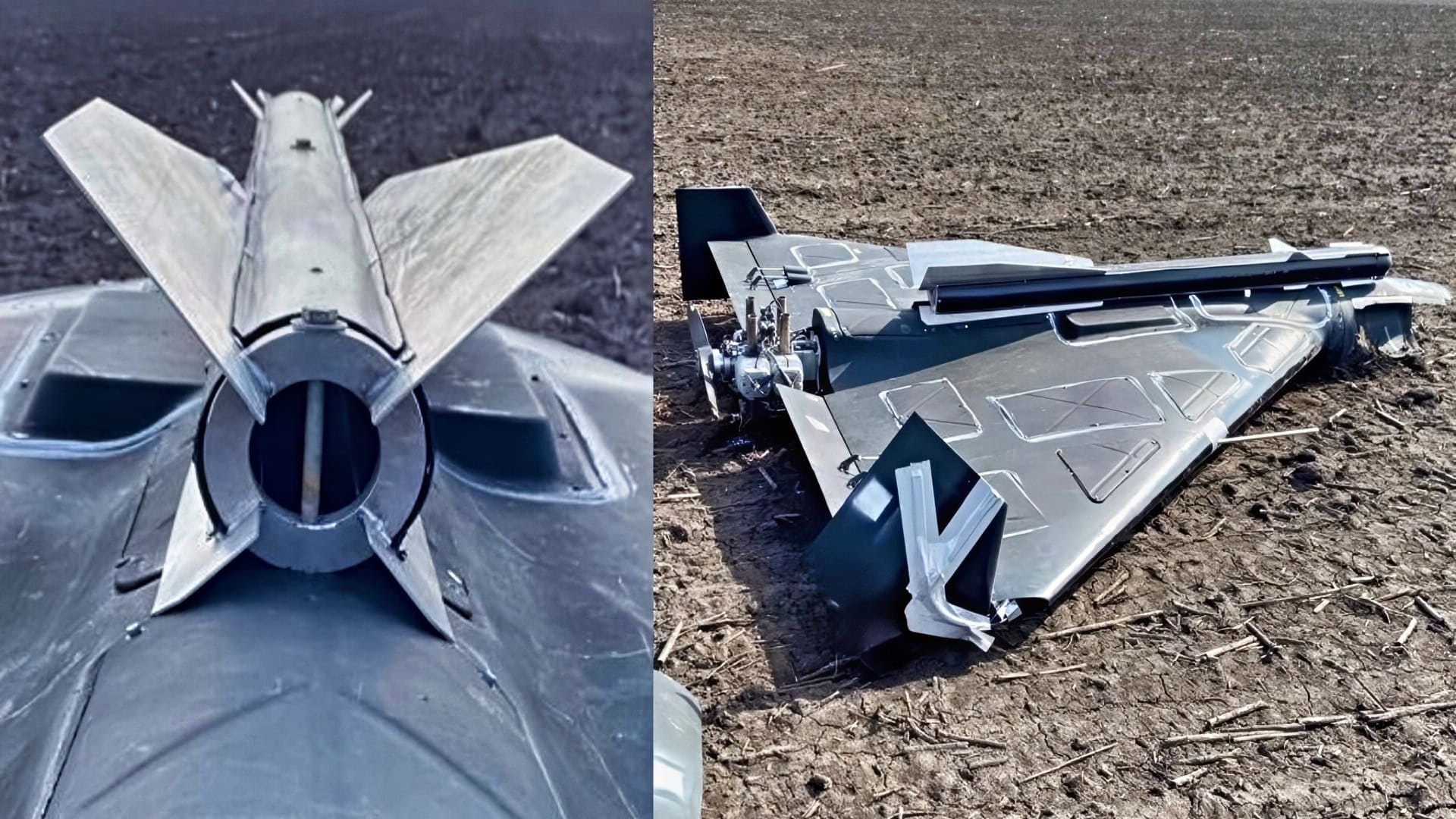
It is no longer sufficient to simply call all these devices "Shaheds." The Russian lineup includes "Geran-1," "Geran-2," "Geran-3," and "Geran-4" with delta-shaped fuselages, as well as the jet-powered "Geran-5." Carbon fiber is used in the power set and fuselage skin, wings, and tail assembly. At the same time, not only the material is changing, but also the electronic components.
Analysis from the Center for Strategic and International Studies shows an accelerated race between Russian navigation systems and Ukrainian electronic warfare. After Iranian four-element antennas, Russian modules "Kometa-M4" appeared, followed by more complex variants with eight, twelve, and sixteen elements. The more elements a controlled antenna has, the more directions of interference it can suppress. In some batches, Chinese modules are used, demonstrating the dependence of the Russian serial system on external suppliers even when Moscow speaks of "complete technological independence."
Another important shift is the transition from a predetermined route to in-flight data exchange. 3G/LTE modems, telemetry, cameras, and network radio modules allow individual devices to transmit information about routes and the operation of Ukrainian air defense. This is still not a fully autonomous reconnaissance-strike system, but it is no longer a primitive "fire-and-forget" munition. Russian engineers are learning from each downed device — sometimes faster than the bureaucratic procurement cycles of the West.
Scale is More Important than Impressive Interception Statistics
On the night of September 21, Russian forces launched 172 drones and loitering munitions at Ukraine, including jet variants of "Shahed" and "Banderole/Dan-T." The Ukrainian Air Force reported the destruction of 147 devices and one Dan-T munition. These figures are useful, but they do not answer the main question: how many new devices can Russia produce after expanding production, and how quickly can Ukraine ramp up cheap interception means?
If the claimed increase of 28,000 units is realized, it will mean about 77 additional drones per day on average. Of course, production will not be uniform, and carbon fiber is not the only limitation. Engines, electronics, explosives, operators, transport, and secure launch routes are needed. But this is why the project in Alabuga is important: it alleviates one of the bottlenecks and simultaneously protects it from strikes. The war is gradually shifting from a competition of individual samples to a competition of supply chain resilience.
Political Effect for the Kremlin
The expansion of production occurs after the elections to the State Duma, which the Kremlin is already presenting as confirmation of support for the war. ISW notes that preliminarily "United Russia" received 355 out of 450 seats, and a significant group among the elected deputies consists of veterans. This creates a convenient political linkage: the military-industrial complex receives additional resources, while society is prepared for a longer conflict and possibly new forms of mobilization.
For the Kremlin, "Geran" is simultaneously a weapon, an industrial project, and an argument for domestic policy.
But mass production does not equal effectiveness. The more drones Russia sends, the more noticeable the demands for navigation quality, electronic countermeasures, and warheads become. Ukraine is already adapting its air defense and electronic warfare means; Russia responds with new antennas, routes, and jet modifications. This resembles the late Soviet race for quantitative indicators: the factory plan may grow, but the actual output of each unit may decrease.
Forecast
In the coming months, the expansion of Alabuga will likely increase the density of Russian strike waves and force Ukraine to expend more expensive missiles and cheap interceptors. However, underground workshops do not solve the problem of Chinese components, skilled labor, and logistical vulnerabilities. The Russian model can withstand individual strikes and maintain a high production pace if Beijing continues to supply critical components. But if Ukraine can systematically strike energy facilities, transport hubs, and supply channels, the promised 28,000 drones will remain a projected figure. In this war, victory will not go to the one with the loudest production report, but to the one who can endure the industrial cycle the longest — from raw materials to interception.
Sources
- Institute for the Study of War, Russian Offensive Campaign Assessment, September 21, 2026.
- Center for Strategic and International Studies, From Shahed to Geran: How Russia Continues to Reinvent the One-Way Attack Drone.
- Ukrainian Air Force, report on the air attack of September 21, 2026.
- Politico Europe, materials on the expansion of strike drone production in Alabuga, cited by ISW.
Russia is transitioning to underground production of Geran drones at the Alabuga facility, aiming to increase output by 28,000 units by 2029. This expansion is a response to Ukraine's capability to strike Russian targets and involves significant enhancements in drone technology and production methods. The initiative reflects a strategic shift in Russia's military capabilities, focusing on sustaining drone warfare over time.
- Russia plans to produce 28,000 additional Geran drones by 2029.
- The production facility in Alabuga is expanding to include 42,000 square meters of underground space.
- The production increase is part of a strategy to enhance drone warfare capabilities.
- Ukraine has demonstrated the ability to strike deep into Russian territory, prompting this shift.
- The report indicates a shift in drone technology and production methods.