
Russia's Tu-95MS Flight Tests Indo-Pacific Air Defenses in 2026
 Marcus Chen
Russia's Tu-95MS Flight Tests Indo-Pacific Air Defenses in 2026
Four Russian Tu-95MS strategic bombers operating around Japan, Taiwan and Vietnam are a more useful warning about geography than about Russian combat power. The aircraft did not create a new Russian front in Asia. They demonstrated that Moscow can place long-range aviation inside the decision cycle of several U.S. allies while Beijing hosts the political theater.
The Flight Pattern Matters
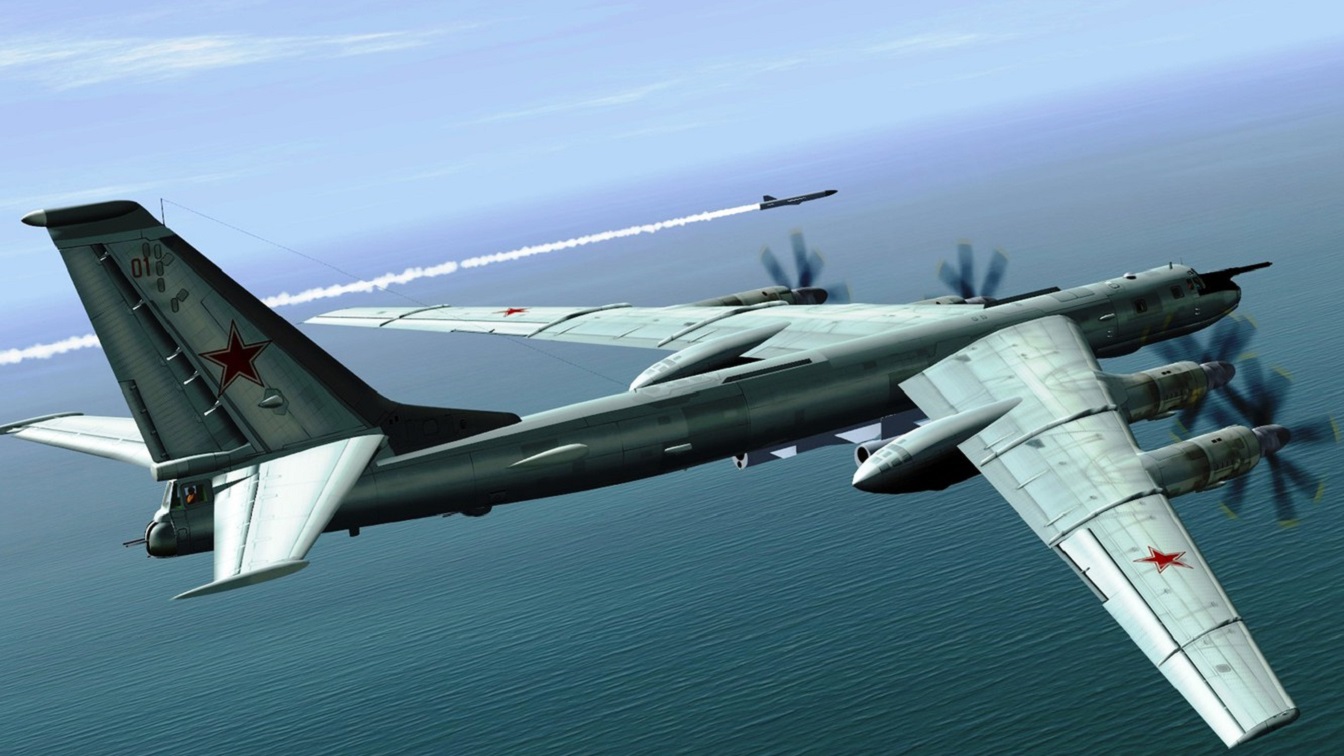
Reuters reported on November 18 that Russian military aircraft had made a rare regional deployment as President Vladimir Putin travelled to China for the APEC summit. A related Reuters report described Russian aircraft flights that prompted Japan and Taiwan to respond, while South Korea also scrambled fighters after Russian aircraft entered its air defense identification zone. The flights were not an attack. An air defense identification zone is not sovereign airspace, and an intercept is not automatically a crisis.
But the pattern is still operationally significant. The aircraft were not simply flying from Russia to a distant exercise area. They were forcing multiple governments to detect, classify, track and communicate about the same Russian presence across Northeast and Southeast Asia. That is a rehearsal of the region's seams: Japan's air defense network, Taiwan's warning architecture, South Korea's response procedures and Vietnam's political space all became part of the message.
What the Tu-95MS Brings
The Tu-95MS is an old airframe with a modern mission. Its four turboprop engines are not fast, and the bomber is not designed to survive inside a dense fighter-and-surface-to-air missile network. Its value is endurance, range and the ability to launch cruise missiles from well outside the target's immediate defenses. Depending on configuration and mission profile, the Bear can cover roughly 7,000 kilometers in combat operations and has a published ferry range of around 15,000 kilometers.
That distinction matters. The aircraft does not need to penetrate Japanese or Taiwanese airspace to matter in a contingency. The Kh-101 conventional cruise missile and the nuclear Kh-102 are designed to extend the bomber's reach; open sources commonly put the Kh-101's range in the thousands of kilometers, although exact performance is classified and varies by launch profile. A bomber that remains outside the defended zone can still threaten air bases, ports, fuel storage and command nodes if it has targeting data and a survivable launch position.
In a war, four bombers are not a theater strike force. They cannot substitute for tankers, escorts, maintenance crews, satellites or a secure command network. The point is the generating capacity behind them. Russia's Pacific aviation units can make an appearance, consume interceptor attention and create uncertainty without sustaining a carrier strike group at sea.
Why Taiwan and Japan Had to React
For Tokyo, the immediate problem is not that a Tu-95MS is invisible. It is that repeated long-range flights consume the same scarce resources needed for Chinese activity. Fighters must be launched, airborne controllers must maintain tracks, and commanders must decide whether an aircraft is conducting routine signaling or collecting information about response times. Every scramble costs fuel, airframe hours and readiness.
Taiwan faces a sharper version of the same problem. Its air force already manages daily pressure from the People's Liberation Army around the island. A Russian bomber flight near its air defense zone adds ambiguity without requiring Moscow to coordinate openly with Beijing. Taiwan must watch the Russian aircraft, preserve a track on Chinese aircraft and avoid turning every identification into a politically escalatory encounter. That is a command-and-control burden, not a headline number.
The Korea Herald reported that South Korea deployed fighters after Russian military aircraft entered its ADIZ. The episode shows why the western Pacific's air picture is becoming harder to compartmentalize. Russian and Chinese flights can be separate operations, but the defending side still has to solve them in one airspace, with one finite inventory of aircraft and missiles.
China Gains Ambiguity Without Owning the Risk
Beijing does not need to claim control of this operation for it to be useful. Russian aircraft near Taiwan and Japan during a high-level China-hosted summit create a second axis of attention around China's military and political activity. They complicate attribution: is the flight a Russian diplomatic signal, a bilateral demonstration with China, a training mission or intelligence collection? The answer may be all four.
The Institute for the Study of War's November 17 China and Taiwan update placed the flight activity in a broader environment of pressure around Taiwan. That context is more important than the diplomatic photographs from the summit. Taiwan is trying to determine whether the next warning is a Chinese rehearsal, a Russian message or a coordinated pattern. The defender's uncertainty is itself an operational effect.
Still, analysts should resist calling this a new Sino-Russian air alliance. Russia has limited conventional aviation capacity after years of war in Ukraine, and Vietnam is not a Russian military outpost in the sense that bases in Russia are. A visit or overflight demonstrates access and political signaling; it does not prove that Moscow can sustain regular bomber operations from Southeast Asia under wartime conditions.
The Real Test Is Persistence
The next question is simple: can Russia repeat the flight with more aircraft, tankers, support crews and useful training objectives? A single deployment tests detection and political reactions. A recurring pattern would test whether Russia can impose an enduring readiness tax on Japan, Taiwan and South Korea. Those are very different claims.
The United States should treat the event as a sensor-and-interceptor problem. Washington needs to know how quickly allied networks fuse tracks, how many fighters are required for a bomber escort or intercept, and whether the region can sustain simultaneous Chinese and Russian activity without exhausting its air forces. Japan and Taiwan also need to distinguish between flights that require a visible response and those better handled by passive tracking and distributed sensors.
The Tu-95MS is not returning the Russian Air Force to the Pacific as a dominant force. It is doing something cheaper and more effective: forcing the Indo-Pacific to spend attention. If Moscow can repeat that maneuver while China raises pressure around Taiwan, the value will not be measured in bombs dropped. It will be measured in how many fighters launch, how many hours they lose and how much uncertainty commanders carry into the next alert. That is the gap Russian long-range aviation is testing.
Four Russian Tu-95MS strategic bombers conducted flight tests around Japan, Taiwan, and Vietnam in November 2026, prompting responses from Japan, Taiwan, and South Korea. The flights demonstrated Russia's ability to influence regional air defense dynamics without direct confrontation. This operational presence complicates the air defense coordination for U.S. allies, as they must manage multiple threats simultaneously.
- Four Russian Tu-95MS bombers conducted flights around Japan, Taiwan, and Vietnam.
- The flights prompted responses from Japan, Taiwan, and South Korea.
- The Tu-95MS can launch missiles from outside immediate defenses.
- The operation complicates air defense coordination for regional allies.
- Russia's presence tests the readiness of U.S. allies in the Indo-Pacific.