
Saudi Arabia foils Houthi drone near Mecca in 2026 and reveals the fragility of three oil corridors
 Ahmed Al-Rashid
Saudi Arabia Intercepts Houthi Drone Near Mecca in 2026 and Reveals Vulnerability of Three Oil Corridors
On September 16, 2026, Saudi Arabia announced that coalition forces intercepted and destroyed a Houthi drone before it entered the vicinity of Mecca. The day before, Houthi attacks had hit three Saudi cities: Khamis Mushait, Abha, and Taif, resulting in 13 civilian injuries and causing damage to seven homes and two vehicles, according to Al Jazeera's report on the coalition's statement. This is not an isolated aerial incident; it is a political and military test of Saudi deterrence at a moment when the kingdom's energy network and maritime routes are under pressure from two fronts.
The Drone Over Mecca Summarizes the Nature of the Threat
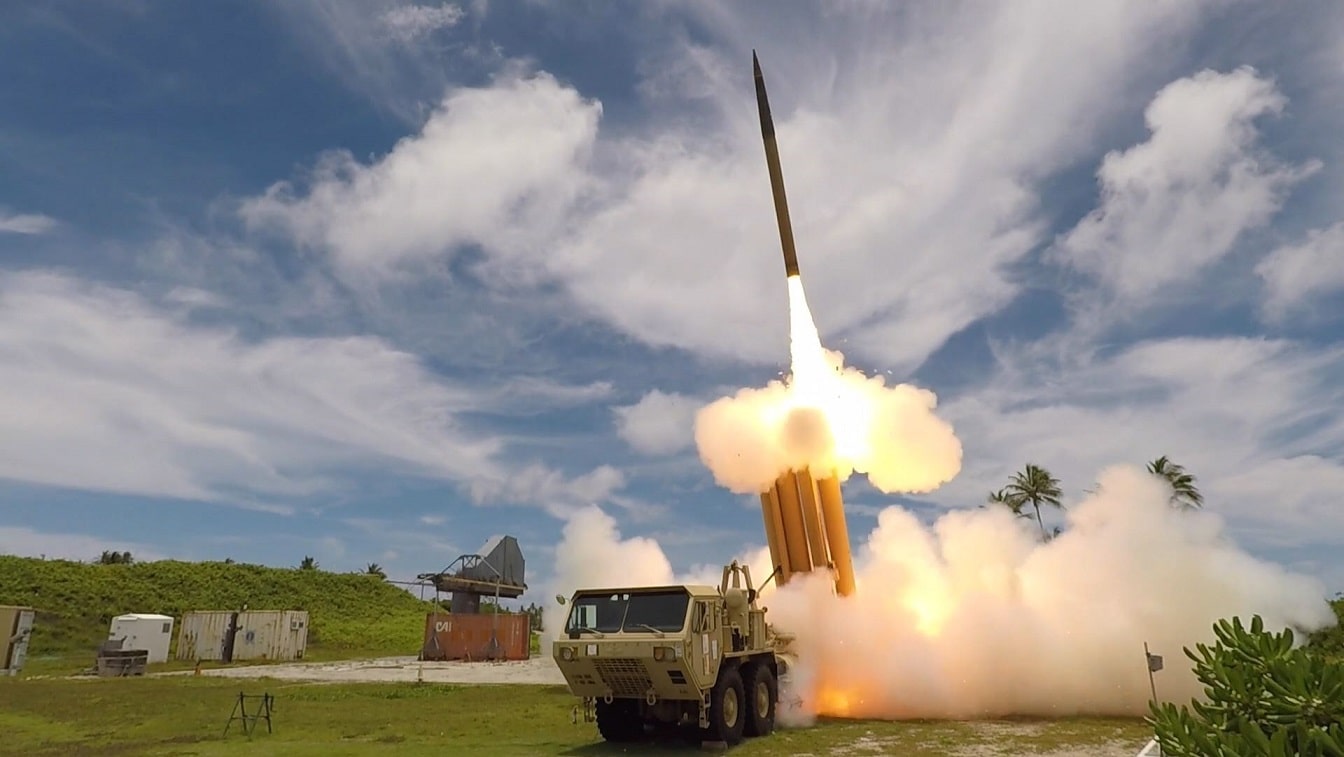
The choice of Mecca as a declared target for the drone raises the stakes of the Houthi decision even if the target is not hit. Riyadh cannot treat this type of attack as merely a strike on a military facility; protecting the holy city touches on internal legitimacy and the state's image before the Islamic world. Thus, the security of pilgrims was described as a "red line" in the news coverage, while Saudi Arabia announced the interception of the drone before it reached the city.
However, the success of the interception does not equate to eliminating the threat. Cheap drones can force defenders to activate their radars and command centers and launch much more expensive munitions. Practically, air defense is not measured by the number of targets it shoots down in a single day, but by its ability to maintain its stock and capabilities when attacks come in waves, from multiple axes, and with a mix of drones, ballistic missiles, and cruise missiles.
The Problem is Not Just Mecca but Three Vital Corridors
The current pressure links three theaters that were previously viewed as separate files. In the south, Houthi forces are advancing along the Yemeni coast and reportedly hold, according to conflicting reports that could not be independently verified, part of the Hanish Islands and positions near Al-Mokha and Bab al-Mandab. In the east, the Strait of Hormuz remains nearly closed since the outbreak of the U.S.-Israeli war on Iran in February. Meanwhile, in the heart of the kingdom, Riyadh has halted the East-West pipeline, known as Petroline, following a drone attack targeting the Riyadh and Medina regions.
The pipeline extends about 1,200 kilometers and connects eastern oil fields to the port of Yanbu on the Red Sea. Al Jazeera reports, citing sources and market data, that flows were raised in the early months of the war to about 4 or 5 million barrels per day, which is approximately 4 to 5 percent of global supply, to avoid using Hormuz. If the pipeline remains halted, Yanbu will have only a few days of exportable stock, while repairs are estimated by Reuters to take five to six weeks, with a possibility of faster resumption.
Here lies the military paradox: the kingdom has purchased fighter jets and air defense networks to protect its airspace, but it relies on a long linear facility and on ports and ships that cannot all be covered by a single shield. Intercepting a drone near Mecca protects a national symbol, but it does not restart Petroline or open Bab al-Mandab.
Saudi Response Between Power and Munitions
The coalition stated it would respond "responsibly and firmly," while the Houthis reported that Saudi aircraft carried out 54 airstrikes within 24 hours and threatened retaliation. Riyadh has not publicly confirmed the details of the Houthi strikes, so it is necessary to separate conflicting statements from established facts. What is certain is that the fighting has shifted from a frozen front since the 2022 truce to an exchange of fire that reaches deep into Saudi territory and the Red Sea.
This transition complicates Saudi calculations. A limited strike may restore some deterrence, but it does not eliminate mobile platforms hidden within mountainous and urban environments. A prolonged campaign requires continuous intelligence, ready aircraft, precision munitions, and the capacity to endure political and humanitarian losses. Any military officer who has served in the region knows that possessing F-15s and Typhoons does not guarantee finding every launch platform, nor does it solve the problem of resupply, repositioning, and maintenance.
This dilemma comes as an analysis by the U.S. Congressional Budget Office revealed that the war with Iran has cost Washington about $38 billion as of August 1, and has consumed between half and two-thirds of the stock of some interceptor missiles since June 2025. The estimates include Patriot, THAAD, SM-3, and SM-6, and rebuilding the stockpile may take at least five years. The Inspector General of the Department of Defense also stated that Iranian attacks have damaged hundreds of U.S. facilities in Kuwait, Bahrain, Qatar, the UAE, Saudi Arabia, Iraq, Oman, and Jordan.
These figures are not a distant American concern. Gulf air defense operates within a largely American command, armament, and training network. If Washington's missiles are depleted and its bases are themselves intercepted, the promise of protection becomes less automatic. Buying an additional missile does not necessarily purchase an available stock at wartime, nor does it guarantee that operational priority will remain in the Gulf.
Testing the Mecca Agreement
The escalation has brought back to the forefront the mutual defense agreement signed by Saudi Arabia, Turkey, and Pakistan in August. Pakistani Defense Minister Khawaja Asif stated that the agreement becomes actionable if an unprovoked attack occurs on the kingdom or if fighting extends from Yemen to its territory. However, an actual response requires rules of engagement, means of transport, munitions, and information sharing, not just a political phrase.
Ankara and Islamabad do not want to be drawn into an open war within Yemen, especially with the ambiguity of commitment boundaries and Iran's absence from the agreement's framework. If the regional threat is linked to Iran and its networks, then building a security system that excludes Tehran creates a contradiction from the moment of establishment. Meanwhile, Washington is reportedly in talks with the Houthis, according to Al Jazeera, while Riyadh seeks direct military assistance; this leaves the Saudi ally with a mixed message about the meaning of American deterrence.
Conclusion
Intercepting a drone near Mecca is an important tactical achievement, but it does not resolve the war. The Houthis have proven that pressure on Saudi Arabia does not require air superiority; it is enough for them to threaten a symbolic point, strike a pipeline, and approach a maritime corridor, then force the kingdom to distribute its defenses over a vast area. Riyadh will find itself compelled to choose a level of escalation that does not endanger pilgrims, energy, and ports, while the munitions of allies dwindle and new defense agreements remain untested. This is the real contradiction: Saudi Arabia wants independence in its military decision-making, but it still needs an external protection network to make that decision sustainable.
Sources
- Al Jazeera, September 16, 2026, Houthi Drone Intercepted Near Mecca
- Al Jazeera, September 15, 2026, Saudi Arabia's Commitment to Respond to Houthi Attacks
- Al Jazeera, September 14, 2026, East-West Pipeline and Oil Markets
- Defense News, September 15, 2026, Cost of War and Depletion of U.S. Interceptor Missiles
- Defense News, September 15, 2026, Damage from Iranian Strikes on Regional Bases
Saudi forces intercepted and destroyed a Houthi drone near Mecca on September 16, 2026, following Houthi attacks on three Saudi cities that injured 13 civilians. The attacks raised concerns over the security of pilgrims and highlighted vulnerabilities in Saudi oil supply routes, particularly after the halting of the Petroline pipeline due to drone strikes.
- Saudi forces intercepted a Houthi drone near Mecca on September 16, 2026.
- Houthi attacks on Khamis Mushait, Abha, and Taif resulted in 13 civilian injuries.
- The Saudi government described the security of pilgrims as a 'red line'.
- The Petroline pipeline was halted due to drone attacks, affecting oil supply.
- The conflict has escalated with Houthi forces advancing along the Yemeni coast.