
Saudi Arabia Leads the Red Sea Alliance 2026 with the Participation of 14 Countries to Protect Bab el-Mandeb
 Ahmed Al-Rashid
Saudi Arabia Leads the Red Sea Coalition 2026 with Participation from 14 Countries to Protect Bab el-Mandeb
On July 30, Riyadh announced a new maritime framework for the Red Sea, and just four days later, the news was bigger than an ordinary Saudi statement: 14 countries signed or joined the announcement, and 43 out of 51 countries and organizations attended the Riyadh meeting, while the Strait of Hormuz operated on August 2 with only 19 crossings in 24 hours, about 31% of pre-war traffic. This is not a coincidence in timing. Saudi Arabia is trying to tell Washington, Tehran, and the Houthis at the same time that Bab el-Mandeb is not a small appendage to the Hormuz war.
What Riyadh Actually Announced
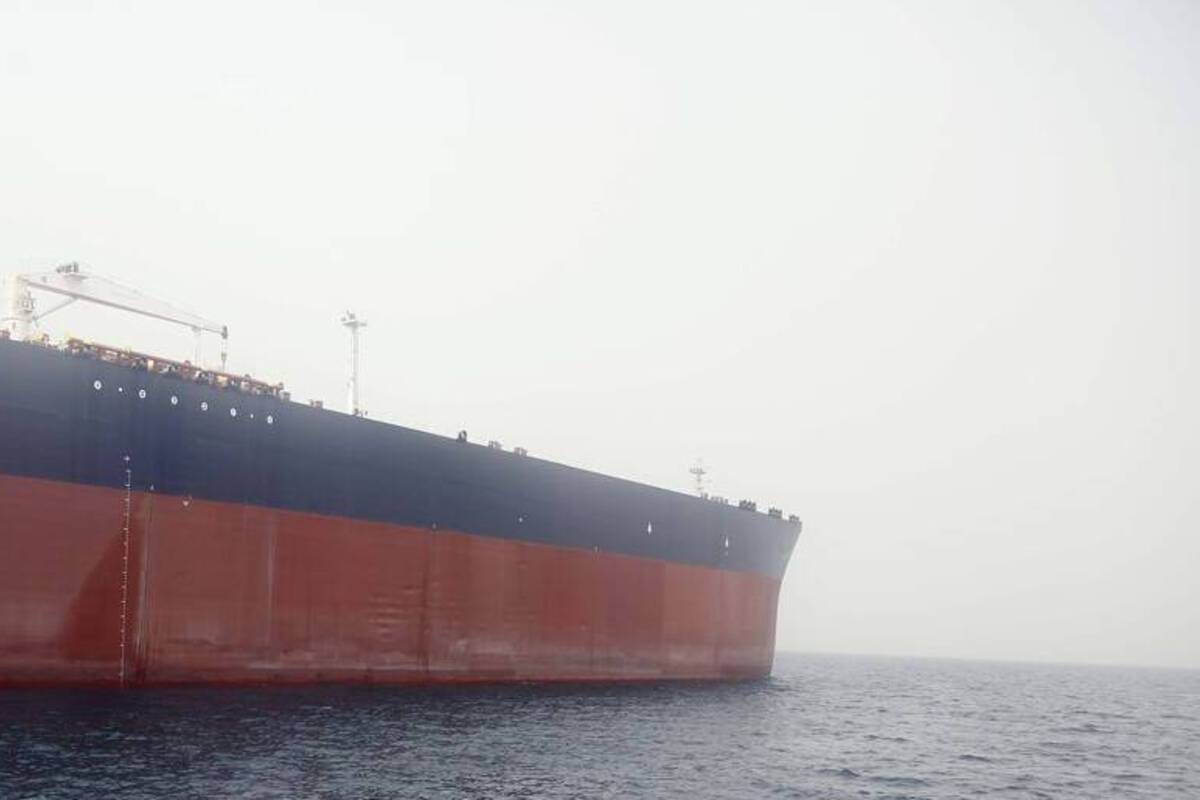
According to an Inter Press Service report on August 3, Saudi Arabia seeks to support more than 50 countries and organizations for a maritime defense coalition in the Red Sea. Countries reported to have joined or signed include Turkey, Pakistan, Egypt, Qatar, Kuwait, Bahrain, Nigeria, Jordan, Bangladesh, Yemen, Djibouti, and Somalia, in addition to Saudi Arabia itself. Notably, the UAE and Oman were not among the signatories in the first phase, even though their maritime and energy interests are directly linked to the same route.
Militarily, the announcement does not mean that Riyadh has created a unified fleet overnight. A real maritime coalition requires command and control, rules of engagement, immediate intelligence sharing, communication between operations centers, and a clear right to inspect, escort, and respond. What has been announced so far is closer to an operational political umbrella, but it is an important umbrella because it shifts Saudi Arabia from the position of a state seeking protection of the passage to that of a state organizing the protection table.
The Immediate Motive is the July 29 Strike, Not the Theoretical Map
The Saudi Press Agency states that the Kingdom condemned drone attacks carried out by Iran-linked militias from Iraq targeting oil facilities in the Eastern Province and Riyadh, and that Riyadh relied on the right to self-defense under Article 51 of the UN Charter. The IPS report links this to coordinated strikes on July 29 between Saudi forces and the U.S. Central Command against Iran-backed proxies inside Iraq.
Here, the maritime coalition should be read as part of a broader pattern. Saudi Arabia is not facing a purely maritime threat; it is facing a pressure network extending from Iraq to Yemen and from the Gulf to the Red Sea. A drone launched from Iraq is not far from a tanker passing near Bab el-Mandeb if the political goal is the same: raising the cost of energy exports and linking Saudi security to an American or Iranian decision that Riyadh does not control.
Bab el-Mandeb is No Longer a Secondary Theater
The Red Sea is not a local passage. According to data from the OECD referenced in the report, about 15% of global maritime trade passes through the Red Sea and the Suez Canal. Since the Houthi attacks in 2023, container traffic through the Suez Canal has decreased by 82%, and the cost of booking an urgent trip from Shanghai to Europe has increased by 256%. Circumventing the Cape of Good Hope typically adds 3,000 to 3,500 nautical miles, or seven to ten days, and in the case of a Saudi tanker from Yanbu to Taiwan, the journey could jump from 19 to 48 days with an additional cost of nearly $2.5 million according to a Reuters analysis based on Kpler and LSEG.
Any military officer who has served in the region knows that the Houthis do not need to completely close Bab el-Mandeb. It is enough for them to make insurance more costly and to push ship owners to change their routes. This is the power of cheap weaponry when it attacks an expensive commercial system. A cruise missile or a suicide drone does not sink all ships, but it can change the calculations of an insurance company in London or a ship owner in Singapore, and this sometimes achieves the desired political effect more than traditional maritime engagement.
The Saudi Coalition is a Test of Triad Capability
I evaluate any military or defensive initiative through a simple triangle: equipment, training, and institutions. At the equipment level, Saudi Arabia has patrol vessels, frigates, coastal surveillance capabilities, patrol aircraft, and helicopters, as well as air defense systems like Patriot and THAAD to protect the depth against missiles and drones. However, Red Sea security cannot be managed by ground batteries alone. It requires maritime radars, reconnaissance drones, long-range patrol aircraft, ships capable of staying at sea, and trained legal inspection teams.
At the training level, the most important question is not the number of signing countries but the number of countries capable of sending units operating under a single operational rhythm. Turkey, Pakistan, and Egypt have useful maritime and aerial experience, and Djibouti, Somalia, and Yemen have geographical value, but combining these capabilities does not equal a joint force unless a real operations room and unified rules of engagement are established. Arab armies know well that a joint statement is easier than encrypted communication at the moment of a nighttime attack on a commercial vessel.
As for the institution, it is the knot. Will the leadership be explicitly Saudi? Will countries like Egypt, Turkey, and Pakistan accept sharing sensitive data under Riyadh's leadership? Is the coalition allowed to pursue a launch platform on the Yemeni coast, or is its role limited to escorting and warning? These are questions that do not appear in the meeting's image, but they determine whether the coalition is a deterrent force or a large political banner.
The Absence of the UAE and Oman is a Message in Itself
The UAE and Oman's non-signature in the first round does not necessarily mean opposition, but it reveals the sensitivity of the Gulf balance. Oman plays a mediating role in the Hormuz file and does not want to appear as part of a maritime alignment that Tehran may see as direct pressure. The UAE has ports, shipping companies, and independent maritime ambitions, and it usually does not like to enter a framework led by Riyadh without clear leadership and return rules.
Practically, this is the real Saudi challenge. Riyadh wants to lead Red Sea security, but it needs partners who do not want to become appendages in a Saudi project. If it succeeds in making the coalition a security service platform for all, it may gain maritime influence it did not possess before the war. If it treats it as a political platform, it will turn into another meeting where photos are taken, and then American warships wait at the first crisis.
Washington Wants De-escalation but Does Not Leave the Stage
On August 1, U.S. President Donald Trump stated that Iran and Middle Eastern countries asked Washington to halt a planned attack because "the outlines of an agreement" began to take shape, linking it to a full and immediate opening of the Strait of Hormuz and the end of the Iranian nuclear threat. On August 2, Saudi Crown Prince Mohammed bin Salman spoke with Trump and emphasized, according to the Saudi Press Agency, the priority of dialogue and de-escalation.
However, canceling a strike does not mean the end of the war. The United States still needs to protect its bases in the Gulf, ensure freedom of navigation in Hormuz, and maintain credible deterrence against Iran. Therefore, Saudi Arabia appears to be filling a relatively vacant space in the Red Sea not because Washington is completely incapable, but because the U.S. Navy is distributed between Hormuz, the Red Sea, the Gulf, and regional bases. In my estimation, this is the essence of the initiative: Riyadh wants to reduce its dependence on daily American decision-making, but it cannot build maritime deterrence without an American and intelligence network behind the curtain.
Conclusion
The Saudi Red Sea coalition is not just a diplomatic title, but it is also not yet a complete naval force. Its primary value is that it acknowledges that Saudi Arabia can no longer separate the security of Yanbu, Jeddah, and Bab el-Mandeb from Hormuz, Iraq, and Yemen. Its second value is that it puts Riyadh before a test it has long postponed: can it transform money, influence, and relationships into sustained operational capability?
In armies, we say that a ship does not protect the passage because it raises the flag, but because it remains at sea when politicians tire of meetings.
The paradox is that Saudi Arabia seeks greater independence in maritime security at the very moment it needs a broader American umbrella against Iran. This tension between the ambition for leadership and the need for protection is what will determine the fate of the coalition, not the number of countries that attended the Riyadh meeting.
Saudi Arabia announced the formation of a maritime coalition on July 30, 2026, involving 14 countries to protect Bab el-Mandeb. This coalition aims to enhance maritime security in the Red Sea and respond to regional threats, particularly from Iranian-backed militias. Notably, the UAE and Oman did not participate in the initial signing, reflecting regional sensitivities. The coalition seeks to establish a framework for collective maritime defense among over 50 nations.
- Saudi Arabia announced a new maritime framework for the Red Sea on July 30, 2026.
- 14 countries signed or joined the coalition to protect Bab el-Mandeb.
- The coalition aims to support over 50 countries and organizations for maritime defense.
- The UAE and Oman did not sign in the first round, indicating regional sensitivities.
- The coalition is seen as a response to Iranian threats and regional maritime security challenges.