
Saudi-backed Yemen forces face second setback this year
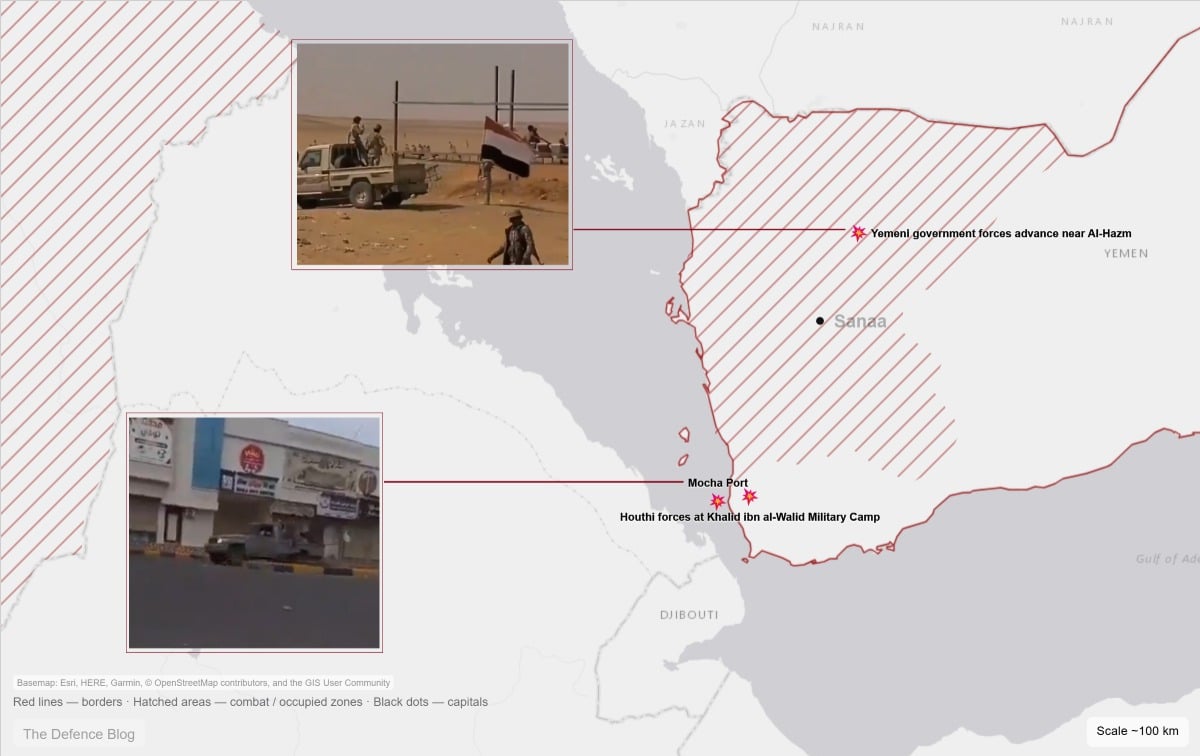
The Houthi seizure of Mocha this week lands on top of a difficult year for Saudi Arabia’s position in Yemen, one that already saw its allied government nearly collapse under a separate rebellion months earlier.
A offensive by the UAE-backed Southern Transitional Council swept across southern Yemen in December 2025, briefly seizing roughly half the country’s territory before a Saudi-backed counteroffensive reversed those gains and the group announced its own dissolution on January 9, 2026.
That earlier crisis pitted two of the internationally recognized government’s own backers against each other. STC forces, drawing on support from the United Arab Emirates, took the oil-producing Hadramawt and al-Mahra governorates from Saudi-aligned units in a matter of days, driving toward Aden before Saudi airstrikes and a government counteroffensive pushed them back. STC leader Aidarus al-Zoubaidi was removed from Yemen’s Presidential Leadership Council on charges of treason and fled to the UAE as his forces’ resistance collapsed.
French Middle East analyst Clément Molin, writing on social media, described the STC’s December offensive as an early warning sign for Saudi-backed forces in Yemen and argued that this week’s fall of Mocha extends a run of setbacks for Riyadh in 2026. Molin’s characterization is his own assessment rather than an official one, and it comes alongside broader claims about Saudi Arabia’s finances and its posture toward Iran that carry more nuance than a single social media post can capture.
One part of that picture is well documented: Saudi Arabia has scaled back its flagship Neom megacity project this year, not abandoned it as some social media commentary has suggested. The Financial Times reported in January that Crown Prince Mohammed bin Salman’s office was preparing a significantly smaller and redesigned version of Neom after a year-long internal review found delays and cost overruns, with the project’s centerpiece, The Line, expected to be reworked well below its original 170 km (106 mile) design. Saudi Arabia’s sovereign wealth fund said in April that it had reshuffled Vision 2030 priorities toward artificial-intelligence investment and away from large-scale tourism spending.
Saudi Arabia has also weathered direct attacks tied to the wider war that began after U.S. and Israeli strikes on Iran on February 28, 2026. Iran launched hundreds of missiles and drones at Saudi targets in the weeks that followed, striking the Ras Tanura oil refinery and damaging the U.S. embassy in Riyadh, among other sites; Saudi air defenses intercepted the large majority of the incoming fire. Whether Saudi Arabia struck back is less settled than Molin’s post suggests. At least one account of the conflict describes Saudi forces quietly hitting Iranian missile and drone-launch sites and Iranian-backed militias in Iraq in response, though Riyadh has not publicly confirmed any retaliatory strikes on Iranian territory. Molin also raised the possibility that the UAE could reassert itself in southern Yemen, pointing to continued pro-STC sentiment even after the group’s formal dissolution. That remains speculation rather than a documented plan; neither the UAE nor STC remnants have announced any renewed push since al-Zoubaidi’s departure in January.
Mocha’s fall does not reopen the STC-Saudi rift directly, since the fighting this week pitted the Houthis against the Saudi-backed government’s National Resistance Forces in the country’s northwest, far from the STC’s former territory in the south and east. But the two episodes, seven months apart, point to the same underlying problem for Riyadh: the coalition it has backed against the Houthis since 2015 has struggled to hold ground even when it is not the Houthis doing the attacking.
Content preview only. Full article available at source. View Full Article
Houthi forces seized Mocha in January 2026, marking a significant setback for the Saudi-backed government in Yemen. This follows earlier territorial losses to the UAE-backed Southern Transitional Council, which briefly controlled half of southern Yemen. The ongoing conflict highlights the challenges faced by Saudi Arabia in maintaining its influence in the region amid internal and external pressures.
- Houthi forces seized Mocha in January 2026.
- Saudi Arabia's position in Yemen has faced significant setbacks this year.
- The Southern Transitional Council (STC) previously seized territory in southern Yemen before being pushed back by Saudi forces.
- Saudi Arabia has scaled back its Neom megacity project due to financial issues.
- Iran launched missile attacks on Saudi targets following U.S. and Israeli strikes on February 28, 2026.