
SH-60K and MH-60R Conduct Anti-Submarine Training in Sagami Bay in 2026, Testing the Undersea Connection of the Japan-U.S. Alliance
 Tanaka Takashi
SH-60K and MH-60R Conduct Anti-Submarine Training in Sagami Bay in 2026, Testing Japan-U.S. Alliance Underwater Connectivity
On October 28, above Sagami Bay, the Japan Maritime Self-Defense Force's SH-60K and the U.S. Navy's MH-60R flew in formation. This was part of a Japan-U.S. anti-submarine warfare training exercise announced by the Ministry of Defense and the Maritime Staff Office on the 29th. The participating units were limited to these two types of helicopters, and it was not an exercise meant to showcase scale. However, the most practical connection of the alliance was confirmed in Sagami Bay, where submarines were detected, tracked, and information was relayed back to the fleet command structure.
Commonalities and Differences Between the Two Models
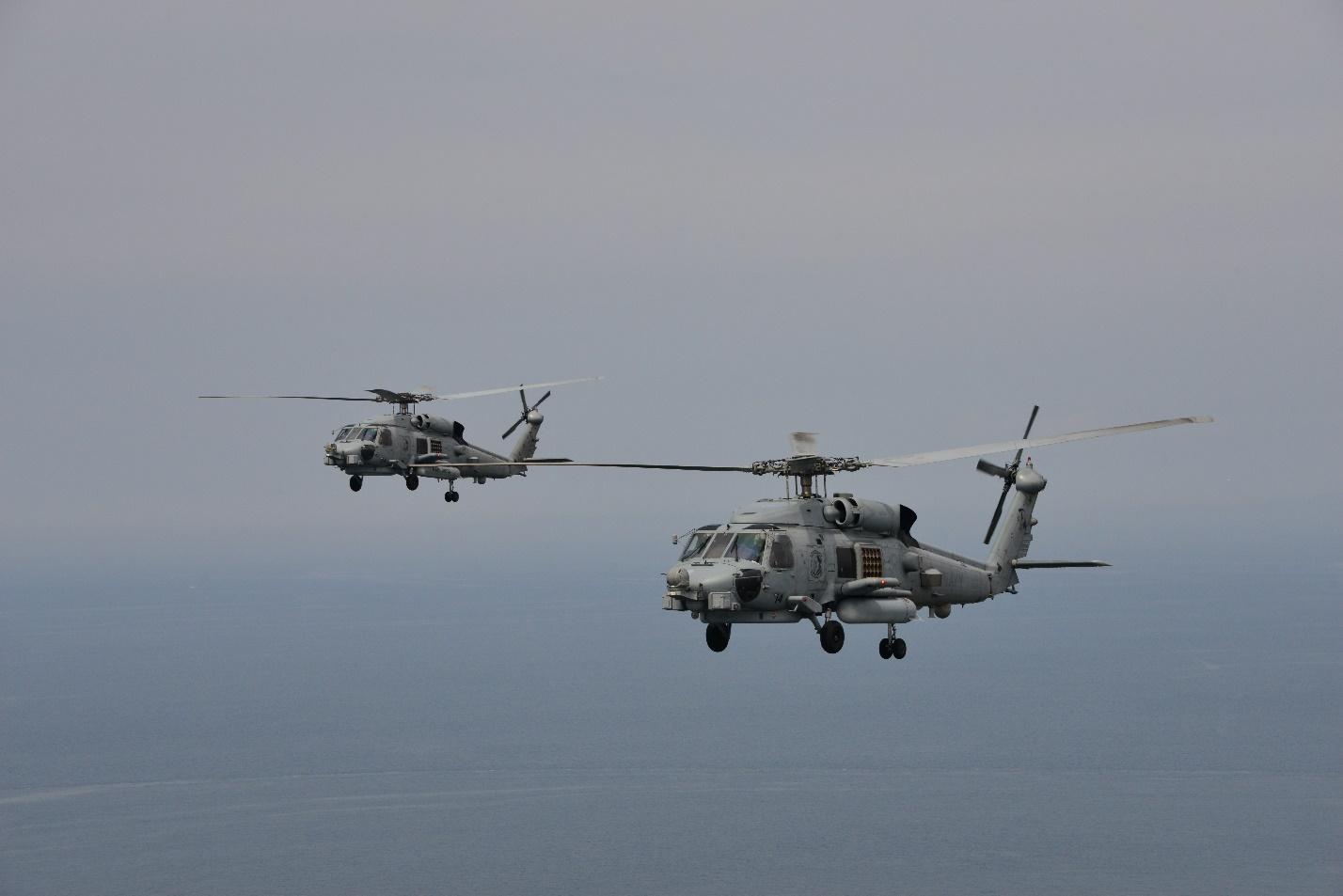
The SH-60K is a ship-based anti-submarine helicopter operated from Japan's escort ships, while the MH-60R is an anti-submarine platform integrated into the U.S. Navy's surface ships and carrier strike groups. Both utilize a combination of dipping sonar, sonobuoys, radar, and electronic support measures, designed to create contact information over a wide area rather than achieving a "kill" independently. Comparing only the aircraft performance would misinterpret the significance of the training. What is crucial is whether units with different data links, representations of acoustic information, and rules of engagement can treat the same contact as the same threat.
Realistic Challenges Tested in Sagami Bay
Sagami Bay is a training area close to the metropolitan area, connecting the JMSDF's major bases with U.S. military facilities. On the other hand, it is not a simple testing ground in the open ocean, as it contains commercial ships, fishing boats, and coastal topography. Anti-submarine training here not only requires the technology to search for quiet seas but also the procedures to select contacts from noise and the command and control to safely transition aircraft.
As reported by the Japan Times on October 30, Japan and the U.S. are looking to transition to more realistic joint training with China in mind. The training conducted with these two aircraft is considered a way to translate that large-scale direction into a small unit of underwater monitoring. If a crisis occurs around the southwestern islands, the anti-submarine air units will be tasked not only with the Taiwan area but also with the protection of SLOCs (Sea Lines of Communication) extending from the East China Sea to the Pacific. What is needed is not just the addition of U.S. military aircraft. It is the interoperability that allows information obtained by JMSDF vessels to be quickly passed to the U.S. military's operational network and, conversely, the return of U.S. wide-area surveillance to JMSDF's on-site decision-making.
The Weakness of the Alliance Is Not the Number of Aircraft
The Ministry of Defense's announcement describes the purpose of this exercise as improving the JMSDF's tactical capabilities and Japan-U.S. interoperability. While modestly expressed, this is where the essence lies. In anti-submarine warfare, one exercise cannot determine the superiority of detection capabilities. Weather, sea conditions, target behavior, sonobuoy placement, and communication delays all influence the results.
In my view, what influences the underwater deterrence of the Japan-U.S. alliance is not the catalog performance of the SH-60K or MH-60R, but who can fuse detection information and deliver it to political and operational decision-making in what time frame. Even if the aircraft fly in the same airspace, if the ownership of information is separate, it remains parallel flight rather than a joint operation.
References
- Ministry of Defense, Japan Maritime Self-Defense Force "Japan–U.S. Bilateral Exercise" October 29, 2026
- Japan Times "With China in mind, Japan eyes more realistic joint military exercises" October 30, 2026
On October 28, 2026, the Japan Maritime Self-Defense Force's SH-60K and the U.S. Navy's MH-60R conducted anti-submarine training in Sagami Bay. This exercise focused on enhancing tactical capabilities and interoperability between the two forces, involving submarine detection and information sharing with fleet command. The training reflects a strategic shift towards more realistic joint military exercises amid regional security concerns.
- SH-60K and MH-60R conducted anti-submarine training in Sagami Bay on October 28, 2026.
- The exercise aimed to enhance tactical capabilities and interoperability between Japan and the U.S.
- The training involved detecting and tracking submarines and returning information to fleet command.
- Sagami Bay serves as a training space connecting major JMSDF bases and U.S. military facilities.
- The exercise reflects a shift towards more realistic joint training in response to regional threats.