
Six Iranian Conditions to Open Hormuz Turn into a Surrender List and Trump Bets on Tehran's Bankruptcy
 Ahmed Al-Rashid
Six Iranian Conditions to Open Hormuz Turn into a Surrender List and Trump Bets on Tehran's Bankruptcy
On August 8, Iranian state television published a statement attributed to the Secretary of the Supreme National Security Council, Mohammad Baqer Qalibaf, a former commander in the Revolutionary Guard, stating that the Strait of Hormuz would not be opened to navigation until "the United States corrects its behavior." The statement was not merely a negotiating position but a list of six conditions set by Tehran as a prerequisite for any return to normalcy in one of the world's most important waterways.
The Six Conditions: From Negotiation to Ultimatum
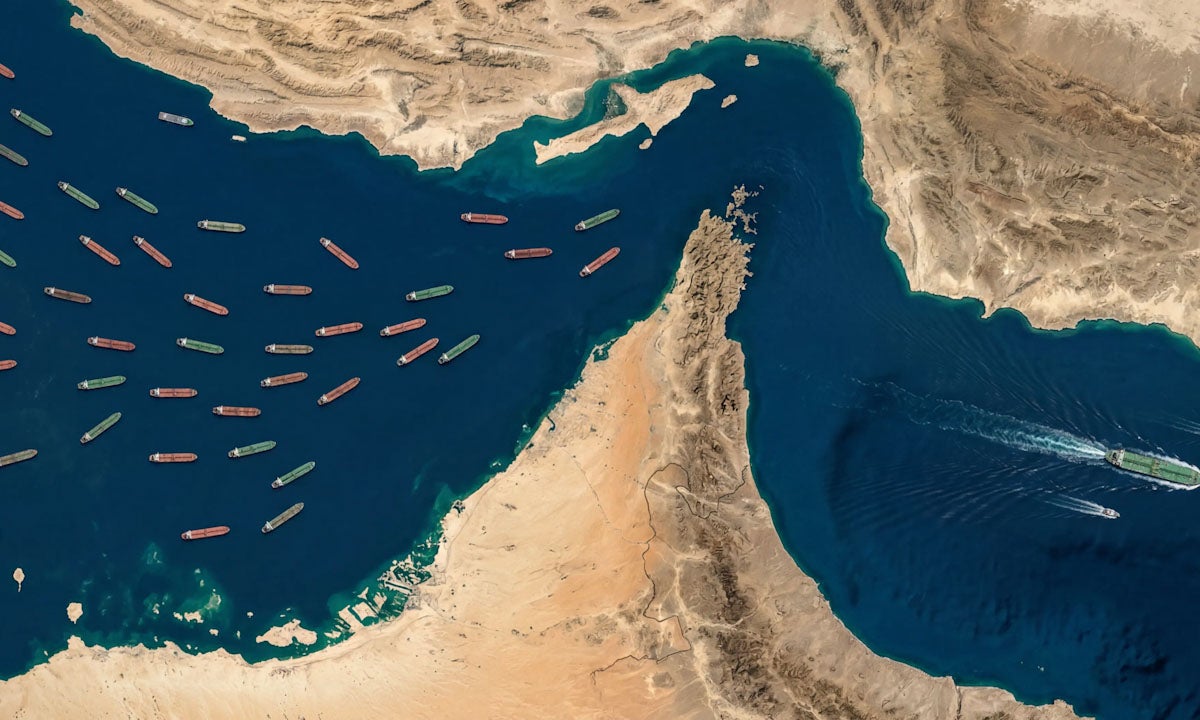
Qalibaf outlined six demands conveyed by the IRNA agency and official Iranian websites, which are:
- Cease American threats against Iran and refrain from insulting the sanctities of the Iranian nation
- End the war and aggression against Iran and its allies in Lebanon, Palestine, Yemen, and Iraq forever
- Lift the naval blockade and withdraw American military forces from the vicinity of Iran
- Pay full compensation for damages from the "two imposed wars" without any reduction
- Lift illegal sanctions on the Iranian people
- Unconditional release of frozen and confiscated assets
What is striking here is not the content of the conditions themselves, as most of them have appeared in previous proposals, but their transformation from mutually negotiable items into preconditions. The memorandum of understanding signed on June 17 treated these issues as part of a gradual reciprocal process, while Qalibaf now presents them as conditions that Washington must meet before reopening the strait. The spokesman for the Revolutionary Guard, Hossein Salami, went further by asserting that reopening Hormuz "is not linked to Iranian-Omani negotiations" and is solely subject to the acceptance of the United States of the conditions.
Geography That Cannot Be Exhausted in a War That Consumes Everything
Practically, any military personnel who has served in the region understands that this list is not a negotiation plan but a surrender document. No American administration can accept "complete withdrawal + compensation + lifting sanctions + release of assets" as a precondition, as that would mean acknowledging defeat before sitting at the table. So why does Tehran present a list it already knows is unacceptable?
The answer lies in the nature of the war itself. Reports circulating about the depletion of Iranian munitions and repeated American-Israeli strikes suggest that Iran is likely losing the war militarily. However, the strait is not ammunition, nor an aircraft, nor a warship; it is the only resource that cannot be bombed or exhausted. In this sense, Tehran has shifted from trying to win the war to turning Hormuz into a comprehensive bargaining chip, as it has discovered that geography is the only weapon that does not run out.
There is another item in the Iranian calculations that is no less important, which is the transit fee. Tehran has previously announced its intention to impose fees on tanker transit that could reach 7% of the value of the goods. This is not a wartime measure but an attempt to establish a permanent "rent" in peacetime, that is, to turn an international waterway into a toll road managed from Tehran and Muscat. Washington explicitly opposes this, but its presence in Iranian calculations explains why Tehran does not want to end the crisis quickly.
The American Response: A Game of Chess or Economic Siege?
In an interview with Axios published on August 9, U.S. President Donald Trump stated that Washington is "calmly dealing" with Iran, and that "we are negotiating with them in a semi-official manner only, and we are watching their massive inflation and the fact that they are out of money." He added: "The matter will be resolved; it always happens, it's like a game of chess."
“We are just watching Iran with its massive inflation and the fact that they have no money.” — Donald Trump, interview with Axios, August 9, 2026
This position is met with rigidity in the American defense establishment. Former Defense Secretary Mark Esper described the Iranian conditions as "ridiculous and should be rejected from the outset," adding that Tehran "thinks it has the upper hand and believes it is winning." In reference to the war's depletion, Deputy Defense Secretary Steve Fineberg issued a memo to defense companies giving them three weeks to develop plans "to significantly accelerate production schedules," stating that "development cycles that take years are unacceptable."
The American option, then, is an extended economic siege: lifting the naval blockade only after "restoring unhindered commercial navigation," meaning after Iran fulfills its obligations first. This is the completely inverted equation of the Iranian equation, with each side demanding the other to move first, and the strait remains a hostage between them.
The Gulf: The Absent Party at the Table Deciding Its Fate
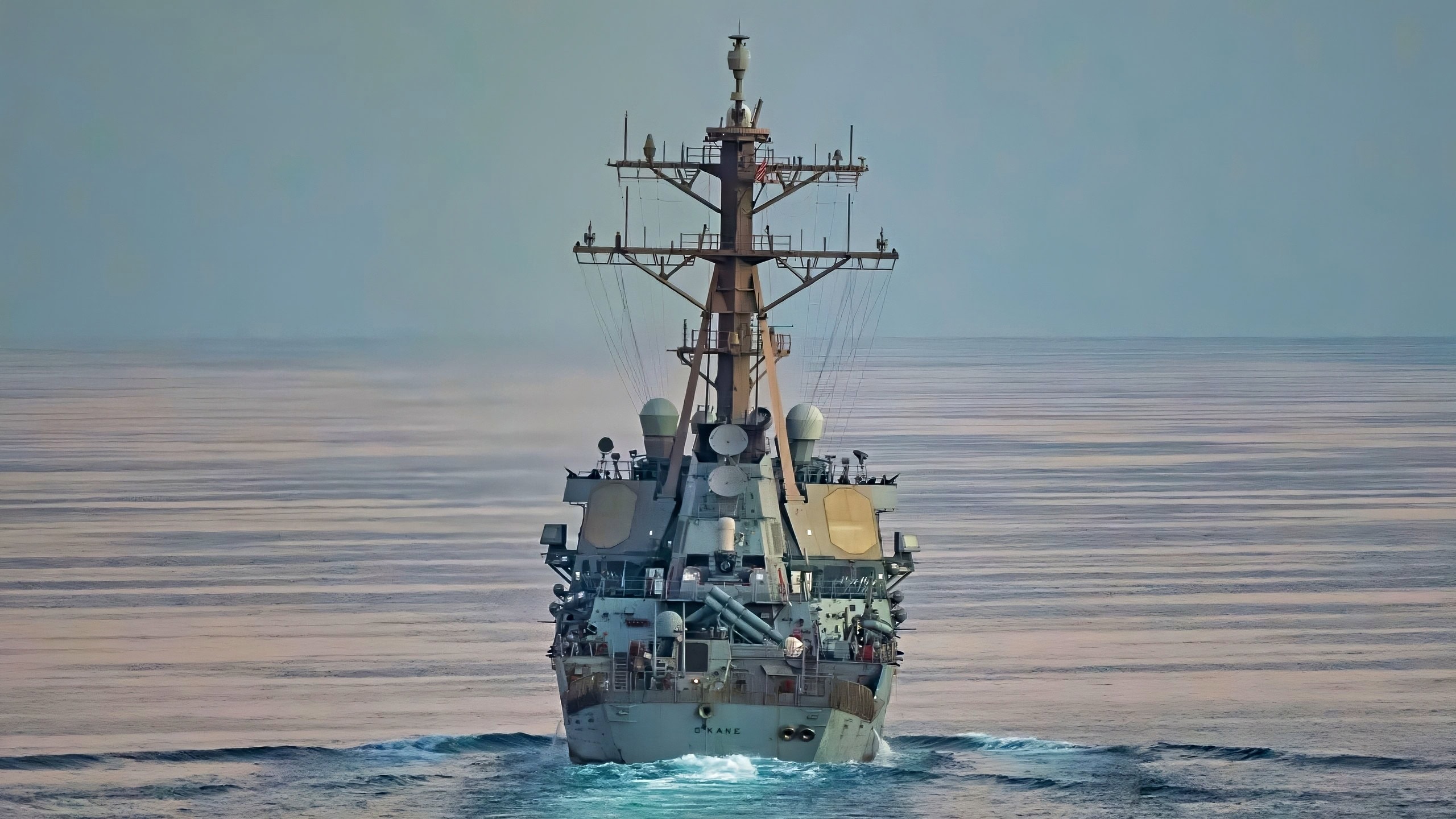
On the same day that Tehran announced its six conditions, the UAE stated that a tanker belonging to ADNOC was targeted by an Iranian missile while transiting the strait, with the UAE foreign ministry describing the attack as "an act of piracy." Since the outbreak of the war in February, more than a dozen ADNOC vessels have been attacked by missiles and drones, resulting in the death of one sailor and injuries to twenty others. On the other side of the Arabian Peninsula, the Houthis announced targeting the Saudi Jazan refinery, marking the second attack within two weeks, while their attacks on the port of Mocha continue.
Here lies the harshest paradox in this entire crisis: Gulf countries are the most affected party, yet they are completely absent from any negotiation table. The six Iranian conditions mention Gulf countries only as "allies" within the list of aggression, while their tankers are targeted, their refineries are burning, and their ports are waiting. The defensive pact signed days ago with Turkey and Pakistan does not include commitments for naval escort, and Turkey has explicitly stated that it is not directed against Iran.
From the perspective of the "Triangle of Capability" that I always use—equipment, training, and institution—there is no weapon system in the world that can protect a waterway thirty kilometers wide from fast boats, drones, and anti-ship missiles. Gulf countries have confidently purchased Patriot and THAAD systems, but neither Patriot nor THAAD can open a strait. The problem here is fundamentally political and economic, and expensive equipment does not solve a political problem.
Conclusion: A Strait That Is No Longer What It Was
Washington and Tehran have less than a week left before the sixty-day period designated for negotiating a final agreement ends, with the possibility of extension. However, every extension costs the "temporary framework" part of its credibility, and every day the strait remains closed deepens the fundamental transformation: Hormuz is no longer an international passage under the law, but has become a subject of negotiation, something that must be "opened" and "restarted," and perhaps "paid for its use."
The Iranians say they are waiting for "the correction of American behavior," while the Americans say they are waiting for the collapse of the Iranian economy. In the middle stand the detained tankers in the Gulf, millions of Yemenis threatened by hunger, and the Gulf countries that bear the entire cost. The war in the Middle East does not end with agreements or overwhelming victories, but by exposing the weak point that neither side can endure forever. The question that no one has yet answered is: who has the capacity to endure more, Iran's battered economy or Washington's patience in an election year?
Iran has established six preconditions for reopening the Strait of Hormuz, demanding U.S. compliance on various issues, including the lifting of sanctions and ending military threats. The Iranian Revolutionary Guard has stated that these conditions must be met before any negotiations can occur. Meanwhile, the U.S. is maintaining economic pressure and monitoring Iran's economic stability, while Gulf states remain vulnerable and excluded from the discussions.
- Iran has issued six preconditions for reopening the Strait of Hormuz.
- The conditions include ending U.S. threats and lifting sanctions.
- Iran's Revolutionary Guard stated that reopening the strait is contingent on U.S. compliance with these conditions.
- The U.S. response involves economic sanctions and monitoring Iran's economic situation.
- Gulf states are significantly affected but are not included in negotiations.