
Six US Coast Guard Cutters Cannot Hold the Western Pacific
 Marcus Chen
Six US Coast Guard Cutters Cannot Hold the Western Pacific
Six 154-foot cutters have moved from a Middle East patrol force into the Indo-Pacific. That is the useful number in the story, and it is also the limit of the story.
USNI News reported on July 17 that Coast Guard fast response cutters USCGC Robert Goldman and USCGC John Scheuerman entered Puerto Princesa, Palawan, after previously serving with Patrol Forces Southwest Asia. The same report noted that all six of those cutters have now been reassigned to the Indo-Pacific as an Expeditionary Cutter Squadron. Two more, Charles Moulthrope and Emlen Tunnell, had just completed CARAT Thailand 2026 with Thailand and Canada. On paper, Washington has shifted a small maritime-security force from the Gulf to the Western Pacific. In practice, it has put constabulary hulls into a theater where geography is the first adversary.
The Cutters Fit the Gray-Zone Fight
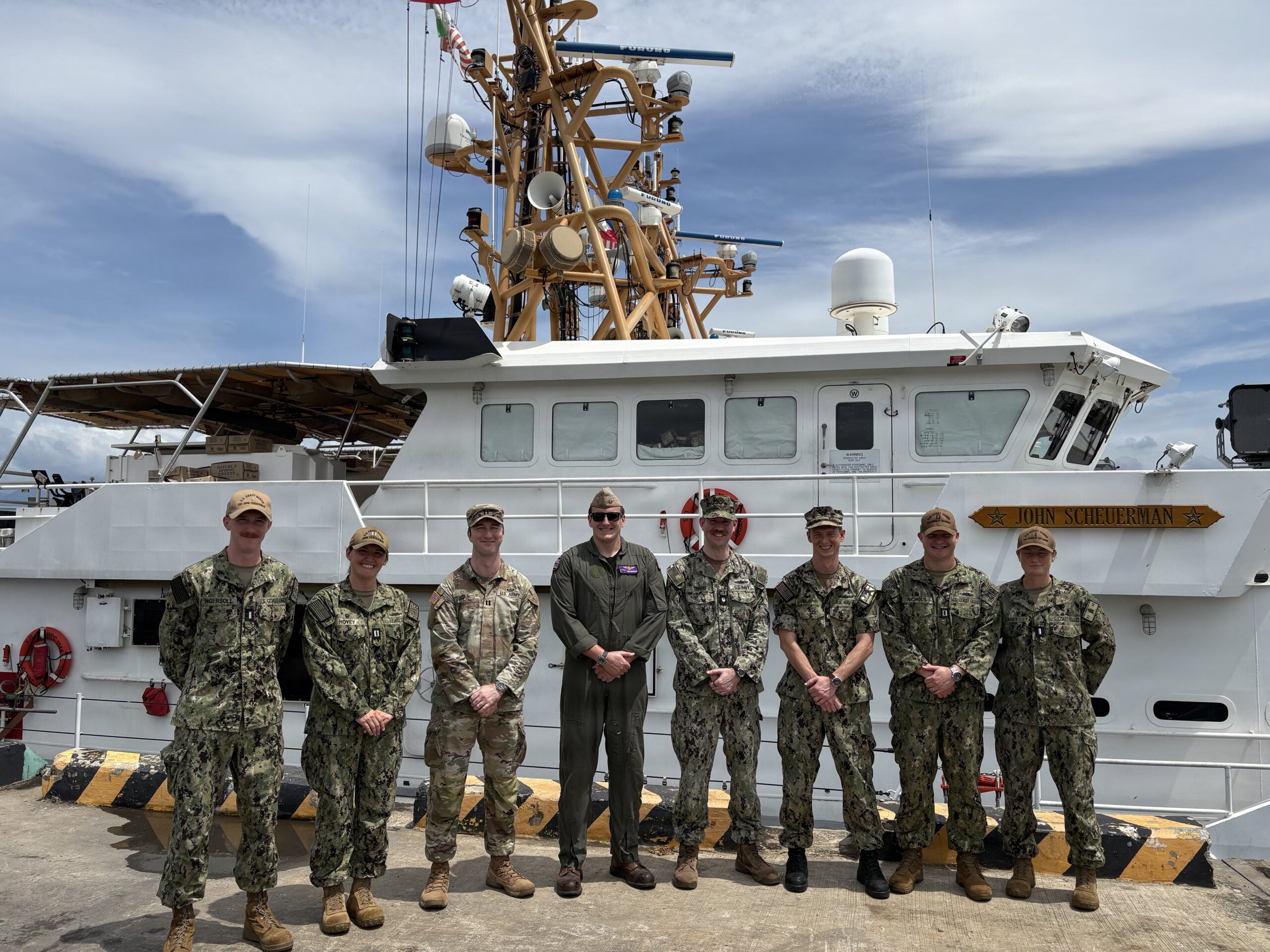
The Sentinel-class fast response cutter is not a miniature destroyer. It is a patrol combatant built around presence, boarding teams, maritime law enforcement, and partner engagement. Public Coast Guard specifications put the class at 154 feet, about 28 knots, roughly 2,500 nautical miles of range, a five-day endurance, and a crew of about two dozen. Its main weapon is a 25 mm gun, backed by machine guns and small boats. That is enough for fisheries enforcement, counter-smuggling, port visits, and training patrols. It is not enough to survive inside a missile exchange with the People Liberation Army Navy.
That does not make the move meaningless. The Western Pacific does not only have a high-end war problem. It has a daily sovereignty problem. Chinese maritime pressure against the Philippines, Taiwan, and Japan often comes through coast guard and maritime militia activity rather than destroyers firing YJ-18s. A US Coast Guard cutter in Palawan can do things a US Navy destroyer should not be asked to do every day: board, train, document, reassure, and sit close enough to contested waters without looking like the opening move of a carrier battle.
Anyone who has served on a destroyer knows the temptation to use expensive gray hulls as political billboards. That is a bad habit. A Burke-class destroyer has vertical launch cells, Aegis sensors, and a limited maintenance clock. Using it as a routine maritime-policing signal burns readiness that should be reserved for sea control and strike. A fast response cutter is better suited to the small, persistent work that fills the space between diplomacy and combat.
The Geography Still Wins
The operational math is harsh. Puerto Princesa is a good location because Palawan points directly toward the South China Sea. It is roughly 160 nautical miles from parts of the Spratly Islands. That is a manageable patrol problem for a 2,500 nautical mile cutter if the mission is presence, liaison, and short-duration maritime security. But the same cutter has only about five days of endurance. Six hulls do not mean six cutters on station. Maintenance, crew rest, transit time, training, and weather quickly turn six hulls into perhaps two or three available patrol platforms at any given moment, and that is before a crisis starts.
The area is also too large. The South China Sea alone covers about 1.4 million square miles. Add Philippine Sea patrol requirements, Japan approaches, Guam support, and regional exercises from Thailand to Malaysia, and the squadron becomes a thin line of white hulls across an oceanic map. The Coast Guard can create contact points. It cannot create coverage.
This is where Washington should be honest. The move is a useful redistribution of low-end capacity, not a new deterrent architecture. It gives US Indo-Pacific Command more options below the threshold of naval combat. It does not solve the shortage of submarines, air-defense ships, maritime patrol aircraft, munitions, or repair capacity west of Hawaii.
Palawan Matters More Than the Hull Count
The best part of the deployment is not the number six. It is the choice of places. Palawan is close to the friction. Puerto Princesa gives the United States a legal and political operating point alongside the Philippines, the ally that faces the most immediate South China Sea pressure. A US Coast Guard port call there is less escalatory than a carrier strike group visit and more practical than another communique about maritime order.
That matters because Manila needs usable support. The Philippines has limited naval mass, a stretched coast guard, and a public that sees Chinese pressure in direct terms: water cannons, blocking maneuvers, reef access, and resupply missions. A US fast response cutter cannot escort every Philippine mission. It can increase training tempo, improve boarding and communications procedures, share habits for small-boat operations, and make American presence more routine in the places where incidents actually occur.
The Thailand piece matters too. USNI reported that Charles Moulthrope and Emlen Tunnell took part in CARAT Thailand 2026, alongside Thai and Canadian forces. That is a different kind of value. It uses Coast Guard hulls to stitch together habits among regional maritime forces that do not all want to be seen as part of a war plan against China. Coast Guard branding gives Washington political access that Navy branding sometimes complicates.
The Deterrence Problem Remains Naval
There is still a hard ceiling. In a Taiwan crisis, these cutters would not be the force that breaks a blockade, protects Guam, or contests a Chinese surface action group. They lack sensors, missiles, endurance, and survivability for that role. If Washington talks about them as a deterrent force, it will be fooling itself. If it treats them as a way to free destroyers from constabulary tasks and build partner capacity where gray-zone pressure is occurring, the move makes sense.
That distinction is important because the Indo-Pacific debate keeps confusing presence with combat power. Presence is necessary. It tells allies that the United States is physically in the theater. Combat power is different. It is measured in submarines ready to sail, missiles loaded, tankers available, repair capacity forward, and commanders who know where the next fuel delivery is coming from.
The Expeditionary Cutter Squadron is a smart small move. It puts the right kind of hulls closer to the right kind of day-to-day problem. But six cutters with five-day endurance cannot compensate for a Navy still trying to cover the Western Pacific with too few ships and too much ocean.
The white hulls help manage the competition. They do not change the balance if the shooting starts.
Six US Coast Guard cutters were reassigned to the Indo-Pacific, arriving in Puerto Princesa, Palawan, on July 17. This deployment aims to enhance maritime security and partner engagement in the region, although the cutters lack the capabilities for high-end naval combat. The move is viewed as a strategic redistribution of resources rather than a significant increase in deterrent power.
- Six US Coast Guard cutters have been reassigned to the Indo-Pacific.
- The cutters are based in Puerto Princesa, Palawan.
- The deployment aims to enhance maritime security and partner engagement.
- The cutters are not equipped for high-end naval combat.
- The move is seen as a redistribution of low-end capacity rather than a new deterrent architecture.