

Why did Ukraine opt for a large order of Saab’s JAS 39 Gripen fighters over other, more proven Western fighter designs? The answer comes down to the Swedish jet’s design and how it dovetails with Ukraine’s pressing, immediate needs.
Kyiv needs a fighter force that can take off on short notice from small, dispersed bases across the country to strike targets quickly—and the Gripen offers, in theory, more flexibility than other platforms.
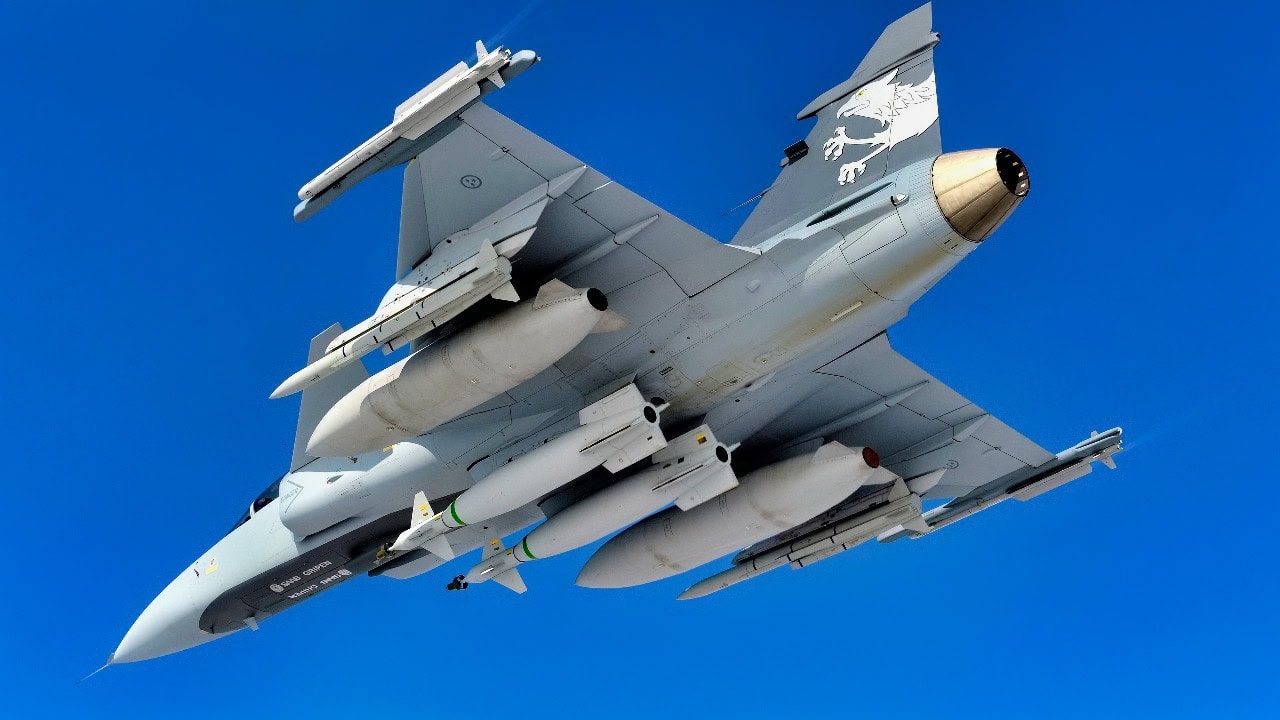
JAS 39 Gripen. Image Credit: Creative Commons.
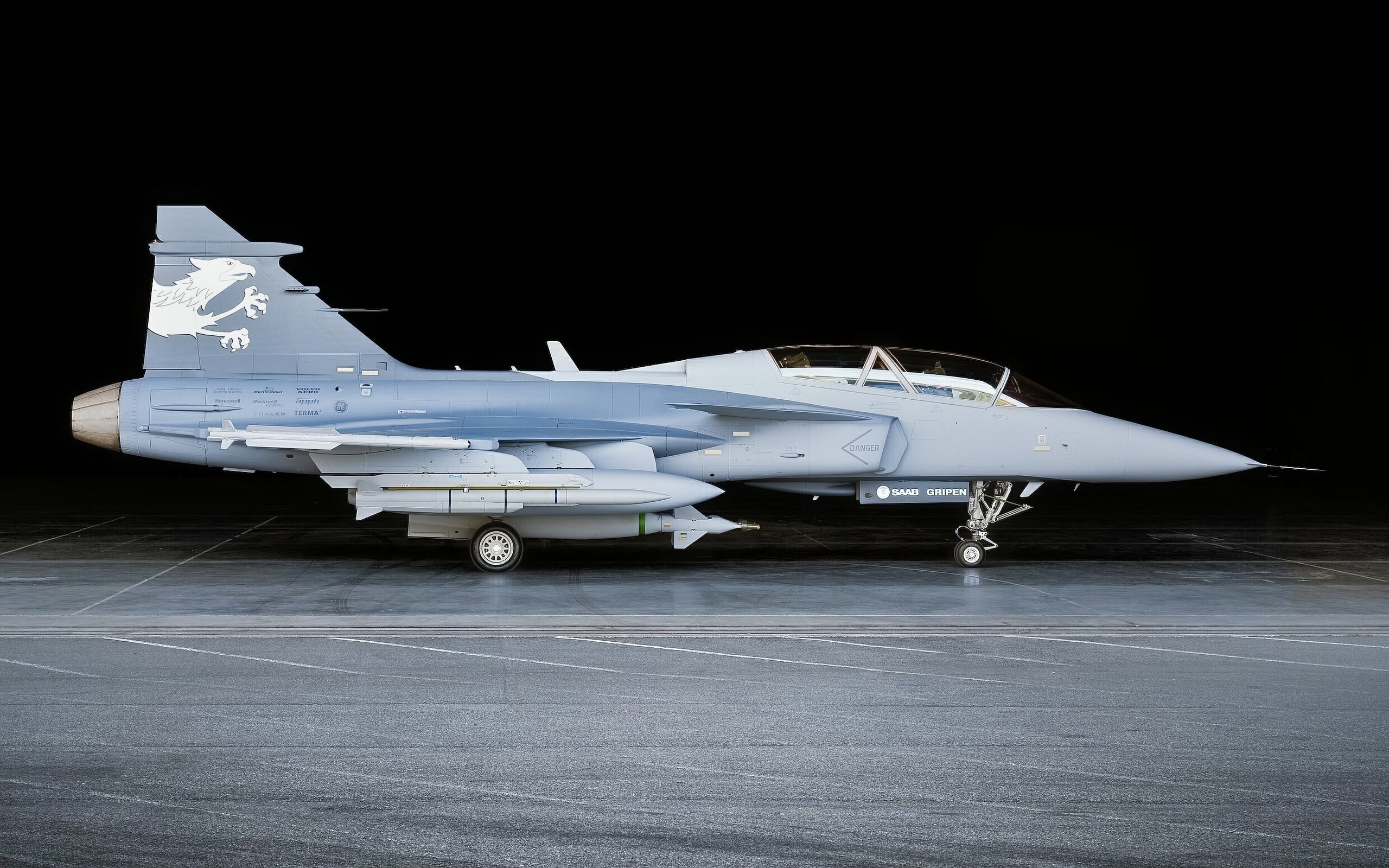
JAS 39 Gripen. Image Credit: Creative Commons.
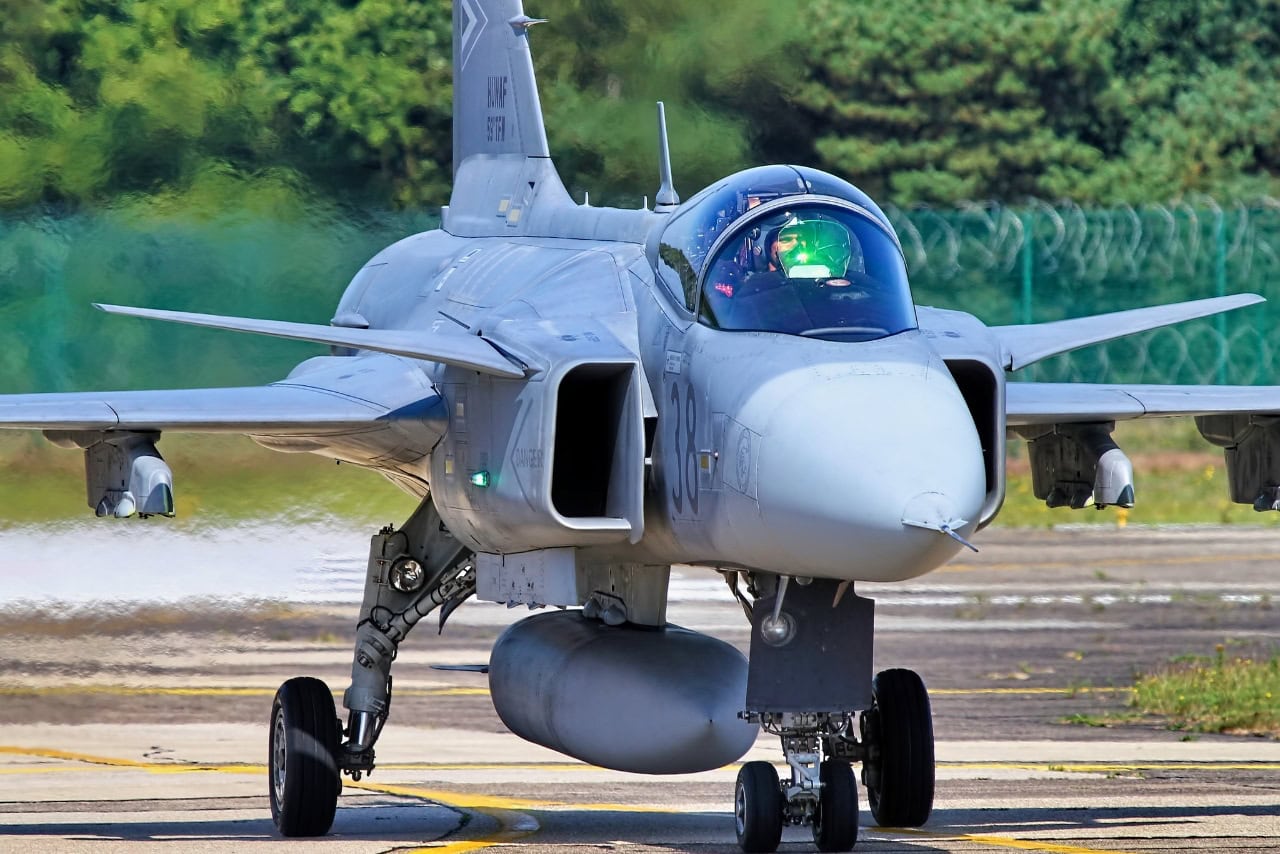
JAS 39 Gripen. Image Credit: Creative Commons.
The agreement, struck in June of this year, covers 16 new Gripen E jets financed through an EU loan with British support.
But Sweden will donate 16 older Gripen C/Ds from early 2027 onward, and Kyiv has characterized the purchase as providing a framework for a Gripen fleet that could eventually number 100 to 150 aircraft.
What is the Gripen?
The Gripen is a Swedish single-engine multirole fighter built by Saab, a Swedish aerospace firm.
The newer E variant carries an active electronically scanned array radar, a more powerful General Electric F414 engine, greater fuel capacity, and an upgraded electronic warfare suite.
The Gripen’s main strength is operational simplicity and flexibility.
Saab designed the aircraft from the outset to operate from short, austere runways, including sections of highway and ersatz landing strips.
Small ground crews can quickly service the jet, refuel it, rearm it, and get it back into the air.
The jet reflects Sweden’s Cold War strategy of remaining a neutral, non-aligned country that anticipated a knockout blow from Soviet forces should the Cold War turn hot.
The Gripen’s strategy, therefore, was to scatter across Sweden rather than concentrate in a handful of large, centralized air bases.
Why Ukraine Chose the Gripen
Ukraine’s air force has spent the war adapting to the Russian threat. Russian missiles and drones have repeatedly targeted runways, fuel stores, maintenance facilities, as well as air command posts.
A fighter, therefore, that can disperse widely across Ukraine and require only a modest logistics tail offers a significant survivability advantage.
Cost is another plus. Ukraine is fighting a long, protracted war with constrained finances and a stretched industrial base.
The JAS 39 Gripen E package—16 aircraft, plus spare parts, equipment, training, and technical support—costs only about $2.5 billion.
The jet’s low maintenance requirements and small ground crews also help reduce the burden on Ukrainian technicians already supporting Soviet-era aircraft, F-16s, and French Mirage 2000s.
But the agreement with Saab also gives Ukraine a staged transition to newer aircraft.
Sweden is expected to donate the C/D variants sometime next year, allowing pilots and ground crews to learn the aircraft, familiarize themselves with its maintenance requirements, and practice dispersed operations before even more advanced Gripen E models arrive in Ukraine in 2029 to 2030.
What the JAS 39 Gripen Could Do
The JAS 39 Gripen’s most immediate military value may be pushing Russian aircraft back.
Ukrainian officials and analysts see the jet, particularly when armed with Meteor beyond-visual-range missiles, as a potential way to threaten Russian Su-34 fighter-bombers that launch glide bombs from standoff distances.
The goal would not necessarily be to win dogfights against larger, dual-engined Russian aircraft, but to force Russian air crews to release their weapons from further distances, reducing accuracy and pressure on Ukraine’s cities and soldiers.
The Gripen’s dispersed basing strategy could also seriously complicate Russian targeting.
If Ukrainian Gripens operated from short strips and roads, Russians would have a much harder time striking the logistics components that keep the jets in the fight.
Important Caveats
The Gripen has less combat experience than some of its NATO counterparts.
The F-16, for example, has decades of operational history across many air forces, and other jets, like the French Rafale or multi-nation Eurofighter, have both seen combat and active deployment.
With the Gripen, Ukraine is receiving a capable but comparatively untested aircraft.
But the nature of the air war in Ukraine also limits what any fighter can realistically achieve.
Russian air defenses, including electronic warfare capabilities and long-range weaponry, have prevented most manned combat aircraft from operating with any sense of impunity near the front lines.
Air-to-air engagements are relatively rare, and most of the war’s aerial fighting occurs through long-range drone and missile strikes.
Dispersed aerial operations are not without risk.
They require mobile fuel stores, munitions trains, sufficient spare parts, and robust air defenses—all of which could be targeted.
In short, the Gripen will matter only if Ukraine can sustain the systems that sustain it.
About the Author: Caleb Larson
Caleb Larson is an American multiformat journalist based in Berlin, Germany. His work covers the intersection of conflict and society, focusing on American foreign policy and European security. He has reported from Germany, Russia, and the United States. Most recently, he covered the war in Ukraine, reporting extensively on the shifting battle lines in Donbas and the war’s civilian and humanitarian toll. Previously, he worked as a Defense Reporter for POLITICO Europe. You can follow his latest work on X.