
Special operations guardians must ‘maneuver with their SOF counterparts,’ commander says

Source: Task & Purpose
Loading...Strong SignalCredibility: 81%
Report Content
The Space Force is looking for a new crop of guardians who can keep up physically with troops in highly specialized units like Navy SEALS and Army Green Berets, while bringing technical space expertise to those missions, the head of its new specialized command told Task & Purpose.
Col. Peter “Charlie” Norsky, commander of the new Space Force Special Operations Command or SPACEFOR-SOC, discussed the vision for the new formation on a call Friday with Task & Purpose and one other media outlet. On Monday, the new command formally activated in a ceremony at its new headquarters at MacDill Air Force Base near Tampa, Florida — which is also the home of U.S. Special Operations Command.
“As we look to assign guardians to this component, especially as we look to assign them to the space special warfare teams for employment attached to other [special operations force] units around the world, we’re looking for those guardians who are expert at their craft — whether that’s operations, intel, cyber — and that they are able to maneuver with their SOF counterparts,” Norsky said. “As the guardians stand shoulder to shoulder with their SOF counterparts, physical fitness is absolutely very important.”
Officials told Congress in 2025 that SOCOM had established a space-focused component but then clarified to Task & Purpose that it had not been fully stood up or manned.
Norsky said a goal of the new command is “normalizing” the Space Force, adding that the new unit will integrate “guardian power at scale” into existing special operations units.
“Space Force-SOC is about ensuring that special operations forces have space expertise integrated early during planning, preparation and execution, rather than integrating space after the fact,” he said. “The Space Force has supported special operations for years, but this activation gives us a permanent, dedicated structure to organize, train, equip and present guardians and tailored space capabilities to the special operations enterprise, along with SOCOM’s other service components.”
The new special operations-focused command joins the service’s recently activated units that report to Department of Defense-level combatant commands based in the Middle East, Europe, Asia and Africa. Earlier this year, the service activated its contingent reporting to U.S. Northern Command, which covers the U.S. and other parts of the Northern Hemisphere such as Canada, Mexico, portions of the Caribbean and Greenland.
Norsky emphasized that guardians would not replace Army, Navy or Marine Corps special operators in existing formations. The command’s headquarters will operate out of MacDill while guardians will be able to deploy to theaters around the world — similar to how Army Green Berets or Air Force pararescue special operators already do, he said.
Norsky would not say whether guardians would be part of on-the-ground tactical units like Green Berets, or be attached to battalions that manage command and control from behind the scenes. Instead, he said: “at a high level, our SOF guardians will be trained to be able to operate where and when they are needed.”
“Their core contribution is integrating space expertise and capability in direct support of the SOF enterprise,” he said.
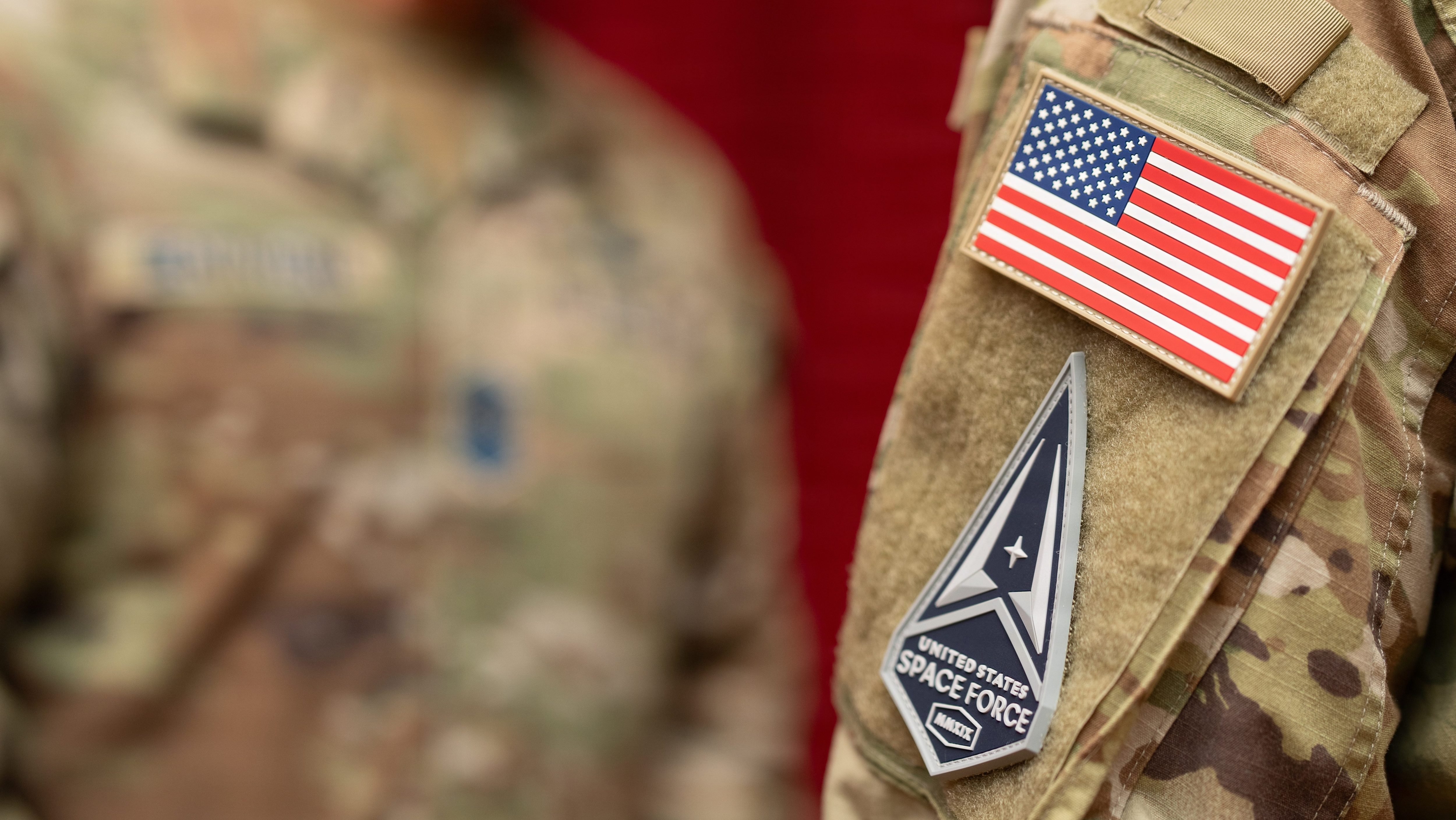 The Space Force will soon train guardians to join special operations units. Air Force photo by Jonathan R. Mallard.
It’s unclear so far what kind of training these guardians will receive, but officials said they are going to develop their own based on existing special operator assessment, selection, and training pipelines — like those in the Army or Air Force. Norsky said that SPACEFOR-SOC guardians would have “expeditionary, tactical, and small team training” before joining existing elite units.
“It’s putting our SOF guardians through a level of training that other guardians may not yet have received in their career,” he said. “It’s to make sure that they’re equipped to provide the capability that all the SOCOM units require when they’re out in the field.”
The guardian’s roles will include traditional Space Force capabilities, he said, like monitoring satellite communications, protecting GPS and other navigation tech from enemy jamming, or ensuring that troops receive a “timely missile warning.”
“Consider a team operating in a contested environment where adversaries, they’re attempting to disrupt their communications, interfere with their navigation, or collect against friendly forces — a deployed space special warfare team with guardians can help that team understand space, the electromagnetic threats, they can identify vulnerabilities and integrate resilient comms and navigation options,” Norsky said. “It’s about preserving survivability, awareness, and decision of speed when every second matters.”
Officials declined to give the total number of personnel that would make up the new command but said it will be mostly made up of service members, a smaller percentage of civilians, and some contractors. Among uniformed personnel, there will be a mix of guardians from career fields like space operations, intelligence, cyber and acquisition experts.
“We’re certainly not in the hundreds,” Norsky said. “We will look to grow to ensure that we are meeting the requirements to meet all the SOCOM mission sets.”
The post Special operations guardians must ‘maneuver with their SOF counterparts,’ commander says appeared first on Task & Purpose.
Classification
Region
North America
Analytical Domain
Operational
Primary Category / Secondary Categories
Military Operations / Command & Control
Subcategory
Special Operations
SALUTE Report
Size
Not specified
Activity
Activation of the Space Force Special Operations Command and integration of guardians into special operations units
Location
MacDill Air Force Base · Tampa · Florida
Unit
Space Force Special Operations Command (SPACEFOR-SOC)
Time
Activated on Monday
Equipment
satellite communicationsGPS technologymissile warning systems
Summary
The Space Force activated its Special Operations Command (SPACEFOR-SOC) at MacDill Air Force Base, Florida, aiming to integrate guardians with space expertise into special operations units. This new command will ensure that space capabilities are incorporated early in planning and execution phases. Guardians will undergo specialized training to support special operations forces globally, without replacing existing military operators.
Key Facts
- The Space Force activated its Special Operations Command at MacDill Air Force Base.
- Guardians will integrate space expertise into existing special operations units.
- The command aims to normalize the Space Force's role in special operations.
- Training for guardians will be developed based on existing special operator pipelines.
- The command will not replace existing Army, Navy, or Marine Corps special operators.