
Syria Approaches Mecca Defense Agreement After Israeli Strikes and Lifting of U.S. Sanctions
 Ahmed Al-Rashid
Syria Approaches the Mecca Defense Agreement After Israeli Strikes and Lifting of U.S. Sanctions
On August 24 and 25, Damascus no longer viewed the scene purely from a diplomatic angle. Washington removed Syria from the list of state sponsors of terrorism, and regional reports spoke of Syrian-Israeli talks mediated by the U.S. to reduce tensions, while other readings suggested that the Israeli strikes themselves are pushing Syria to seriously consider joining the Saudi-led Mecca defense agreement with Turkey and Pakistan. From a military perspective, this is not a paradox but a logical outcome: a state that has its doors opened to investment and politics from abroad, while its airspace remains exposed, will quickly seek a deterrent umbrella closer than American promises and less costly than rebuilding its army alone.
Why the Agreement Has Become Attractive to Damascus Now
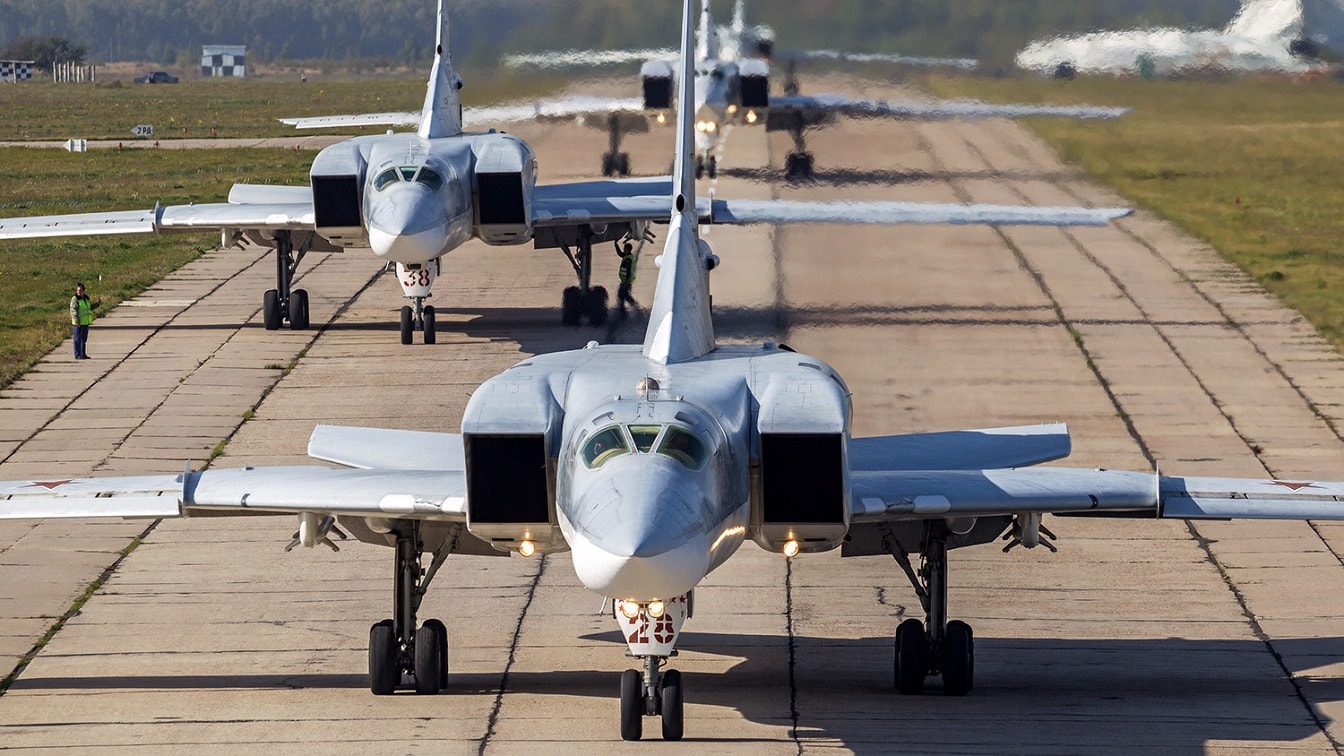
The current moment pressures Syria from three directions simultaneously. First, Israeli strikes are no longer an exceptional event that can be contained by statements; they have become a regular tool for redrawing the lines of power in Syrian airspace. Second, the American openness to Damascus does not mean that Washington will guarantee its air security; lifting political barriers to investment is one thing, and providing a practical defensive umbrella is something entirely different. Third, the Mecca agreement has become, for a number of Arab and Islamic capitals, a framework that can be used not only against Iran or threats in the Red Sea but also as a tool for producing new balances outside the old formula that forces every crisis to pass through the Pentagon.
Any military officer who has served in the region knows that the Syrian problem is not just a lack of weapons in the narrow sense. The problem is what I always call the triangle of capability: equipment, training, and institution. Damascus has a long combat experience, but its air defense and command and control networks, as well as the integration between its branches, have suffered from depletion and fragmentation. Therefore, any Syrian consideration of approaching the Mecca agreement should not be understood as a search for a new political statement, but as a search for a path that reconnects the military institution with funding, training, and regional coordination systems that it no longer possesses alone.
What the Mecca Agreement Can Offer Syria
If we look at the agreement through Damascus's eyes, the core value lies not in the symbolic material but in what it can provide in terms of indirect access to early warning networks, training, joint planning, and perhaps later to air defense arrangements or logistical support. Saudi Arabia has the money and the need for Arab depth to alleviate pressure on it, Turkey has military industry and operational experience, and Pakistan has the weight of the institution, moral deterrence, and experience in building forces that operate on a budget smaller than the Gulf armies. This trio, if it moves seriously, could offer Syria what Russia has been unable to provide in recent years: a structure for sustainable cooperation instead of circumstantial protection linked to external calculations.
However, caution must be exercised against illusion here. Having a defensive framework does not automatically mean having the capability to use it. This is the chronic disease in our region. The Gulf has purchased the best platforms over decades, only to discover that the operator, doctrine, and decision-making chain are the weakest links. If Syria enters this path without reorganizing its military institution, it may end up with a new banner without acquiring a real capability to prevent hostile aircraft from imposing their rhythm on it.
What Riyadh, Ankara, and Islamabad Gain
The question is not only about what Damascus wants, but also about what the other side wants from it. For Saudi Arabia, bringing Syria closer to the agreement gives the kingdom an opportunity to expand the Arab security space from the Red Sea to the Levant, and prevents leaving the Syrian arena entirely to the equation of Israel, Turkey, and Iran. For Turkey, incorporating Syria into broader defense arrangements may provide a less confrontational channel for managing competition with Israel and prevent the Syrian land from becoming an open testing ground between the two sides. As for Pakistan, it sees this expansion as an opportunity to establish itself as a Muslim guarantor with real military weight, not just political rhetoric.
In my estimation, this is the deeper meaning of the discussion about Syria and the Mecca agreement. We are not only witnessing an attempt to integrate a state that has emerged from isolation, but a redefinition of the function of the alliance itself. Is it an alliance to protect the Gulf from asymmetric attacks? Or a platform for producing a new security balance across all of West Asia? If it leans towards the second possibility, Syria's joining or even approaching it will be a turning point greater than it appears in the quick headlines.
The Knot That the Agreement Cannot Easily Untie
Nevertheless, there remains a structural dilemma that cannot be ignored. The agreement seeks to send a message of relative independence from Washington, yet it still operates in an environment where most of its members rely to varying degrees on American technology, American political cover, or at least on its non-interference. Syria itself, after being removed from the terrorism list, enters a phase where openness to the West is part of its economic need. Here the contradiction emerges: Damascus may approach a regional umbrella to protect itself from strikes and extortion, but it will do so at a moment when it also needs channels with Washington and Western markets for reconstruction.
For this reason, I do not see the real question as whether Syria will join quickly or not. The more important question is whether the Mecca agreement can transform from a declaration of intentions into a structure of capability. If it remains a broad political framework, it will give Damascus a useful image but will not change the balance of power in the skies above it. However, if it succeeds in building coordination, warning, training systems, and clear role distribution, then it can be said that the Israeli strikes have pushed Syria not only towards a new alliance but towards a different security formula for the entire region.
And here lies the final paradox: the more Washington opens the political door for Damascus, the more it increases its need for a regional security door that Washington does not possess for it. This is not the end of dependence on the outside, but a redistribution of it. And Syria, like many armies in the region, finds itself once again between the desire for independence and the reality of needing someone to fill the void when the aircraft arrive first and politics arrives late.
Syria is moving towards a defense agreement with Saudi Arabia, Turkey, and Pakistan following Israeli airstrikes and the recent lifting of US sanctions. This shift reflects Syria's need for enhanced military support and regional security amidst ongoing threats. The Mecca agreement is viewed as a potential framework for military cooperation and deterrence against external aggressions.
- Syria is nearing a defense agreement with Saudi Arabia, Turkey, and Pakistan.
- Israeli strikes have become a regular occurrence, prompting Syria to seek new defense arrangements.
- The US has lifted Syria from the list of state sponsors of terrorism, facilitating diplomatic engagement.
- The Mecca agreement is seen as a way for Syria to enhance its military capabilities and regional security.
- Syria's military infrastructure has been weakened, necessitating external support.