
Taiwan's 2027 $2 Billion Aid Package Still Cannot Buy Time
 Marcus Chen
Taiwan's 2027 $2 Billion Aid Package Still Cannot Buy Time
$2 billion sounds large until it is divided by the problem it is supposed to solve. The new U.S. plan for Taiwan, reported as part of the Fiscal Year 2027 defense request, splits the money evenly: $1 billion for direct Taiwan security assistance and $1 billion to replenish American stocks already drawn down for transfer. That is a useful mechanism. It is not a war plan.
The important detail is not the headline number. It is the delivery channel. The package is built around faster Department of Defense-managed assistance, Presidential Drawdown Authority, and the Taiwan Security Cooperation Initiative rather than the traditional Foreign Military Sales pipeline. That tells us Washington has finally accepted something Taipei has known for years: a weapon that arrives after the shooting starts is a procurement success and an operational failure.
The Money Buys Denial, Not Depth
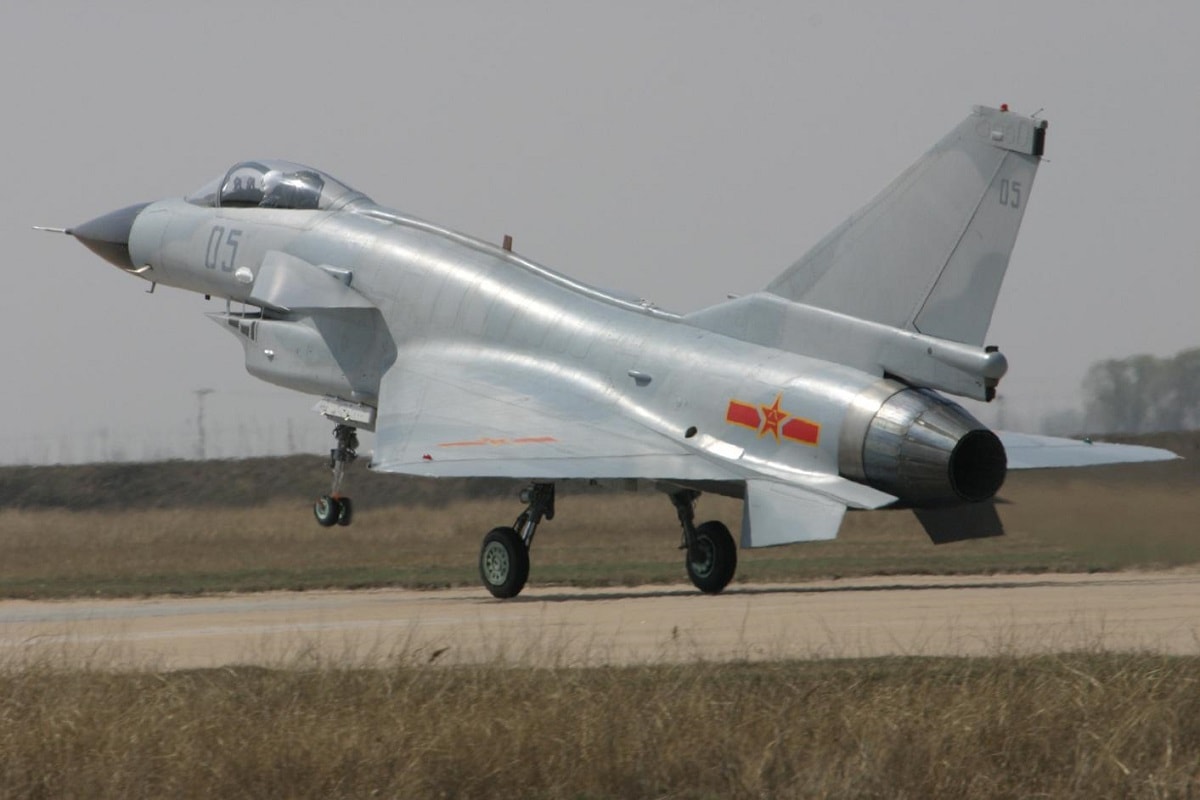
Army Recognition reported that the FY2027 request puts the Taiwan line inside a wider $11.7 billion Pacific Deterrence Initiative. The Taiwan portion targets air and missile defense, anti-ship weapons, anti-armor systems, intelligence, surveillance, reconnaissance, communications, electronic warfare, unmanned systems, counter-drone tools, medical support, and training. That is the right shopping list for a denial defense. It is not glamorous, but it is the kit that makes an amphibious operation expensive.
The problem is scale. Taiwan sits roughly 180 kilometers from the Chinese mainland. The Bashi Channel to the south and the Miyako Strait to the northeast are not abstract map features; they are routes a Chinese force would need to contest, surveil, or exploit in a blockade or invasion scenario. A few extra batteries, drones, and radios help. They do not erase the tyranny of distance for U.S. forces or the tyranny of proximity for Taiwan.
Anyone who has served on a destroyer knows the difference between having weapons on paper and having enough loaded, maintained, and networked weapons at the point of contact. Sea denial is a magazine problem before it is a slogan. Taiwan needs mobile launchers, mines, air defense interceptors, coastal sensors, hardened communications, fuel, spares, and trained crews. It also needs enough redundancy to keep fighting after the first 72 hours, when fixed sites, fiber nodes, radars, and air bases would be under missile pressure.
The Replenishment Line Is the Real Warning
The most revealing half of the package is the $1 billion for U.S. replenishment. That line exists because drawdown aid is not free in military terms. Pull a Stinger, Javelin, radar, vehicle, or munition from an American inventory and the recipient gets speed, but the U.S. force gives up readiness until industry replaces it.
That trade is acceptable when the transfer changes Taiwan's near-term survivability. It becomes dangerous when Washington uses drawdown authority as a substitute for production capacity. The United States has already learned this lesson in Ukraine. Presidential Drawdown Authority can move equipment fast; it cannot manufacture interceptors, rocket motors, seekers, or launch canisters any faster by itself.
The Taiwan backlog has also been a chronic problem. Harpoon coastal defense systems, Stinger missiles, and other asymmetric capabilities have often moved more slowly than the threat timeline. The new assistance structure tries to bypass the worst delays of Foreign Military Sales, which can stretch five to ten years for major systems. That is necessary. But bypassing paperwork does not bypass shipyards, missile plants, semiconductor supply chains, or trained maintenance pipelines.
The hard question is not whether $2 billion is politically meaningful. It is whether the money can turn into deployed, survivable combat power before Beijing's pressure campaign changes the facts around Taiwan.
China Is Testing the Edges Around Taiwan
This package is landing while China is making the Taiwan problem less theoretical. Defense News reported in July that Chinese coast guard vessels had sustained patrols east of Taiwan, about 54 nautical miles from the island, while Beijing also conducted a submarine-launched ballistic missile test from the South China Sea into the Pacific. Those are different tools, but the operational message is connected: China is practicing pressure beyond the immediate shoreline.
The coast guard patrols matter because they normalize presence without forcing a naval crisis every time. White-hulled ships create ambiguity. They make it harder for Taiwan, Japan, and the United States to decide when a law-enforcement operation becomes military shaping. The ballistic missile test matters for the opposite reason: it was loud, long-range signaling. Defense News cited CSIS analysis that the missile flew about 7,300 kilometers and likely overflew parts of the Philippines.
Put those together and the logic is clear. Beijing is not only preparing for a dramatic invasion scenario. It is building a menu: coast guard pressure, air activity, missile signaling, cyber disruption, blockade drills, and naval presence beyond the first island chain. Taiwan aid that only counts platforms misses this wider fight. Taiwan needs systems that can survive ambiguity as well as bombardment.
The First Island Chain Still Runs on Logistics
The broader Pacific Deterrence Initiative numbers are useful here. According to the same Army Recognition report, the request includes $4.4 billion for exercises and training, $3.0 billion for infrastructure, $2.9 billion for forward presence, $500 million for logistics and prepositioning, $600 million for allied capacity building, and $300 million for capability enhancements. The imbalance is visible. Exercises and presence are funded heavily. Logistics and prepositioning remain thin.
That matters because a Taiwan contingency would be decided as much by runway repair, fuel distribution, munitions storage, sealift, and communications resilience as by the first exchange of missiles. Kadena, Guam, Philippine sites, Japanese ports, and dispersed Marine and Air Force operating locations all become part of the same equation. If the U.S. cannot reload and move under fire, then Taiwan's denial defense becomes isolated.
The $2 billion package is therefore best understood as a correction, not a solution. It corrects the delivery model by pushing faster aid. It corrects the capability mix by emphasizing mobility, air defense, anti-ship fires, drones, and communications. It corrects the inventory problem by acknowledging replenishment. Those are real improvements.
But the package does not buy time. Only delivered weapons, trained units, hardened nodes, stocked magazines, and repeatable logistics buy time. Washington is finally funding the right categories. Now it has to prove it can move faster than a crisis that may not wait for the FY2027 calendar.
The math is still uncomfortable. Taiwan does not need a symbolic account line. It needs enough distributed combat power to make the first week unwinnable for China. $2 billion helps. It does not yet answer whether the arsenal can arrive before the clock runs out.
Taiwan is set to receive a $2 billion military aid package from the U.S. in Fiscal Year 2027, aimed at enhancing its defense capabilities against potential Chinese aggression. The package includes $1 billion for direct security assistance and $1 billion for replenishing U.S. military stocks. As China increases its military activities around Taiwan, the U.S. aid focuses on air defense, anti-ship weapons, and logistics, although concerns remain about the adequacy of these measures in a potential conflict.
- Taiwan's $2 billion aid package includes $1 billion for direct security assistance and $1 billion for U.S. stock replenishment.
- The aid package emphasizes faster delivery mechanisms and a focus on air and missile defense, anti-ship weapons, and other military capabilities.
- China is increasing its military presence around Taiwan, conducting patrols and missile tests.
- The U.S. aid package aims to enhance Taiwan's defense capabilities but may not be sufficient to deter a Chinese invasion.
- Logistics and prepositioning remain critical challenges for U.S. support in a Taiwan contingency.