
Taiwan's $3.5 Billion Anti-Drone System Named in Audit, PLA's 5.1GHz and Fiber-Optic Guided Drones Become Blind Spots
 Li Minghui
Taiwan's NT$3.5 Billion Anti-Drone System Named in Audit; PLA's 5.1GHz and Fiber-Optic Guided Drones Become Blind Spots
[Comprehensive News] On August 15, the South China Morning Post reported the core findings of Taiwan's audit department regarding the 2026 fiscal year settlement—Taiwan's Air Force commissioned the National Chung-Shan Institute of Science and Technology (NCSIST) to develop a NT$3.55 billion (approximately US$111 million) fixed-site anti-drone system, which is unable to detect or interfere with the PLA's new drones operating in the 5.1GHz frequency band, has blind spots for certain frequency bands of the BeiDou-3 system, and has almost no countermeasures against fiber-optic guided and AI autonomous navigation drones, with the overall project lagging behind by 6 to 12 months. The same audit also exposed a complete failure in another procurement by the Taiwan Army.
Three Major Blind Spots Named in the Audit
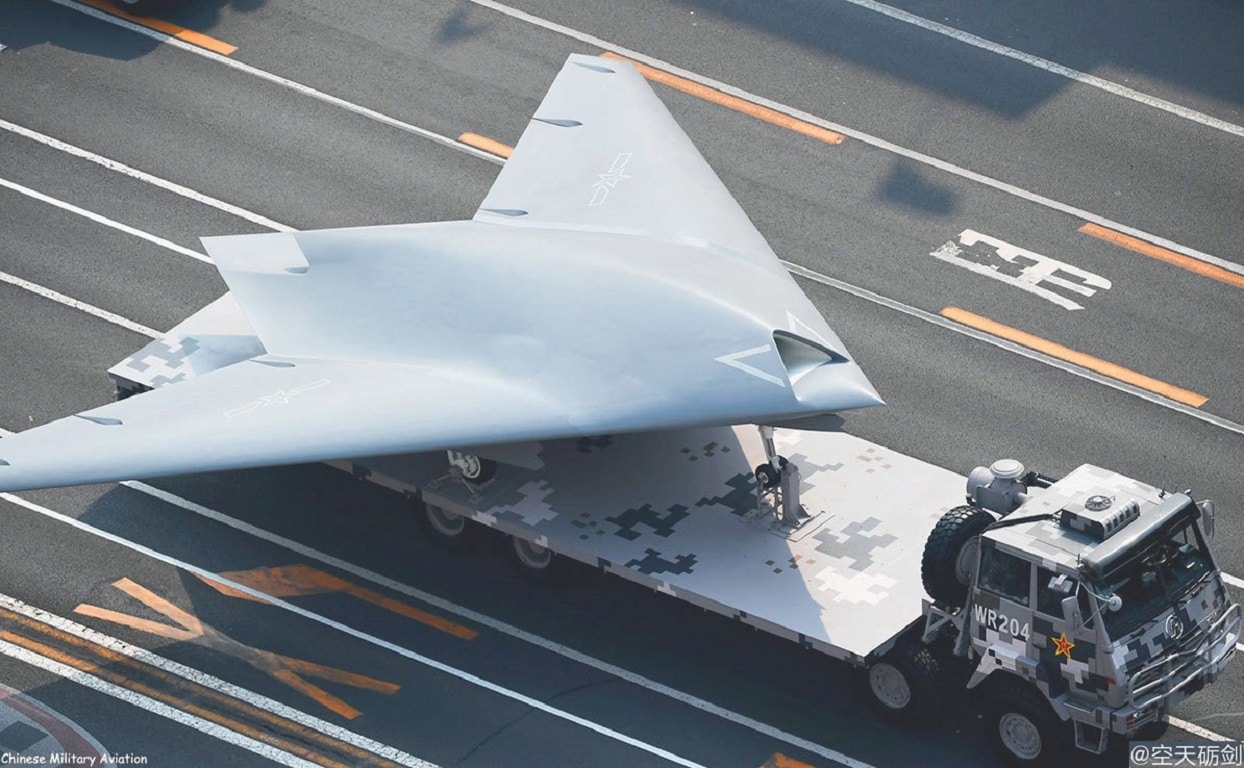
First, the 5.1GHz frequency band. The 2.4GHz and 5.8GHz civilian frequency bands are already crowded with drones, and starting in 2023, the PLA has shifted to 5.1GHz, which was not covered in the design of NCSIST's system. Second, BeiDou-3. The system can interfere with GPS, GLONASS, and Galileo, but only covers certain frequency bands of BeiDou-3—Taiwan acknowledges that the PLA is likely to primarily use BeiDou in wartime. Third, fiber-optic and AI guidance. The report bluntly states that this system, centered on "signal suppression," has "no feasible countermeasures" against fiber-optic guided drones and AI autonomous navigation drones.
Army Procurement Collapse: All 26 Systems Failed Acceptance Testing

Even more embarrassing than the Air Force system is the Army. The Taiwan Army signed a NT$985 million (approximately US$30.5 million) contract with Tron Future Tech to procure 26 fixed-site anti-drone systems, requiring detection at 6 kilometers and interference within 4 kilometers. As a result, the equipment failed all prototype validation and two rounds of initial acceptance testing, with the final round scoring zero points. Taiwanese media reported that the Army has initiated contract termination procedures—this is not just a matter of slightly off parameters; it is a failure where "commercial-grade drones can breach the defense line."
"The system's detection and countermeasure capabilities remain incomplete, and the execution progress has fallen behind schedule."—Taiwan Audit Department 2026 Fiscal Year Report
Technical Interpretation: PLA Drones are Changing Tracks
The audit report inadvertently outlines the true technical direction of PLA drones. The 5.1GHz frequency avoids congestion in civilian bands, at the cost of rendering all existing anti-drone equipment of the opponent ineffective—changing a communication standard nullifies the entire countermeasure chain. Fiber-optic guidance directly adopts mature tactics from the Russia-Ukraine battlefield, unaffected by electromagnetic interference. AI autonomous navigation combined with BeiDou-3 means that PLA drones are transforming from "remote-controlled toys" into "intelligent munitions with terminal autonomy." Taiwan's system, primarily based on interference, is still trying to catch up with the previous generation of drones.
Asymmetric Arithmetic and Industrial Dilemma
The report also exposes issues at the industrial level. The Taiwan Air Force reported detecting 1,238 drone flights in 2026 and implementing interference on 276 flights, but there were no follow-up investigations after reporting to the police, indicating a disconnect between detection and response. In February, the Executive Yuan issued a directive requiring anti-drone systems to "prioritize domestic research and development," but the continuous failures of NCSIST and Tron Future Tech indicate that there are real gaps in the domestic supply chain for key components such as RF front ends and multi-band antennas. In contrast, the mainland has raised the countermeasure costs for opponents with each generation, from 5.1GHz to fiber-optic guidance to AI navigation, and Taiwan's R&D cycle cannot keep up with this speed.
A Question Without an Answer
The audit report suggests that the Taiwan military "assess the capability to track new frequency bands," but the real question is: when the PLA drones shift from 5.1GHz to fiber-optic, and then to AI autonomous navigation, has Taiwan's anti-drone system, centered on the logic of "interference," been heading in the wrong direction from the very beginning? If so, no matter how much additional budget is allocated, it is merely making up for the threats of the previous generation.
Taiwan's military audit on August 15, 2023, revealed that the anti-drone systems developed by the National Chung-Shan Institute of Science and Technology are ineffective against PLA drones operating on the 5.1GHz frequency. The audit highlighted critical blind spots in the system's capabilities, including its inability to counter fiber-optic guided drones and certain Beidou satellite signals. Additionally, the Taiwanese Army's procurement of 26 anti-drone systems resulted in complete failure during acceptance tests.
- Taiwan's anti-drone system cannot detect or interfere with PLA drones operating on the 5.1GHz frequency.
- The system has blind spots against Beidou satellite signals and lacks countermeasures for fiber-optic guided drones.
- The Taiwanese Army's procurement of 26 anti-drone systems failed all acceptance tests.
- The audit reveals a 6 to 12 month delay in project timelines for the anti-drone systems.
- Taiwan's military is urged to enhance capabilities to track new frequency bands.