
Taiwan's Defense Report Highlights PLA's Upgraded Landing Capabilities: Type 075 Amphibious Assault Ship and Type 071 Dock Landing Ship Shift Taiwan Strait Pressure to Continuous Deployment
 Li Minghui
Taiwan's Defense Report Highlights PLA's Upgraded Landing Capability: Type 075 Amphibious Assault Ship and Type 071 Dock Landing Ship Shift Pressure in the Taiwan Strait to Continuous Deployment
On September 2, Taiwan reported that eight Chinese vessels and one military helicopter were detected operating around the Taiwan Strait; the previous day, Taiwanese media cited the latest report from Taiwan's defense department stating that the PLA is continuously strengthening its landing capabilities against Taiwan. Individually, these two pieces of news may not seem particularly alarming, but when viewed together, the message is clear: the pressure in the Taiwan Strait may not necessarily manifest as a large-scale "assault," but rather as a long-term positioning of vessels, air forces, amphibious platforms, and subsequent supply chains. In my opinion, this is more concerning than simply tracking how many aircraft are deployed on a given day.
From 075 to 071: The Real Change Lies in Sustained Lift Capacity
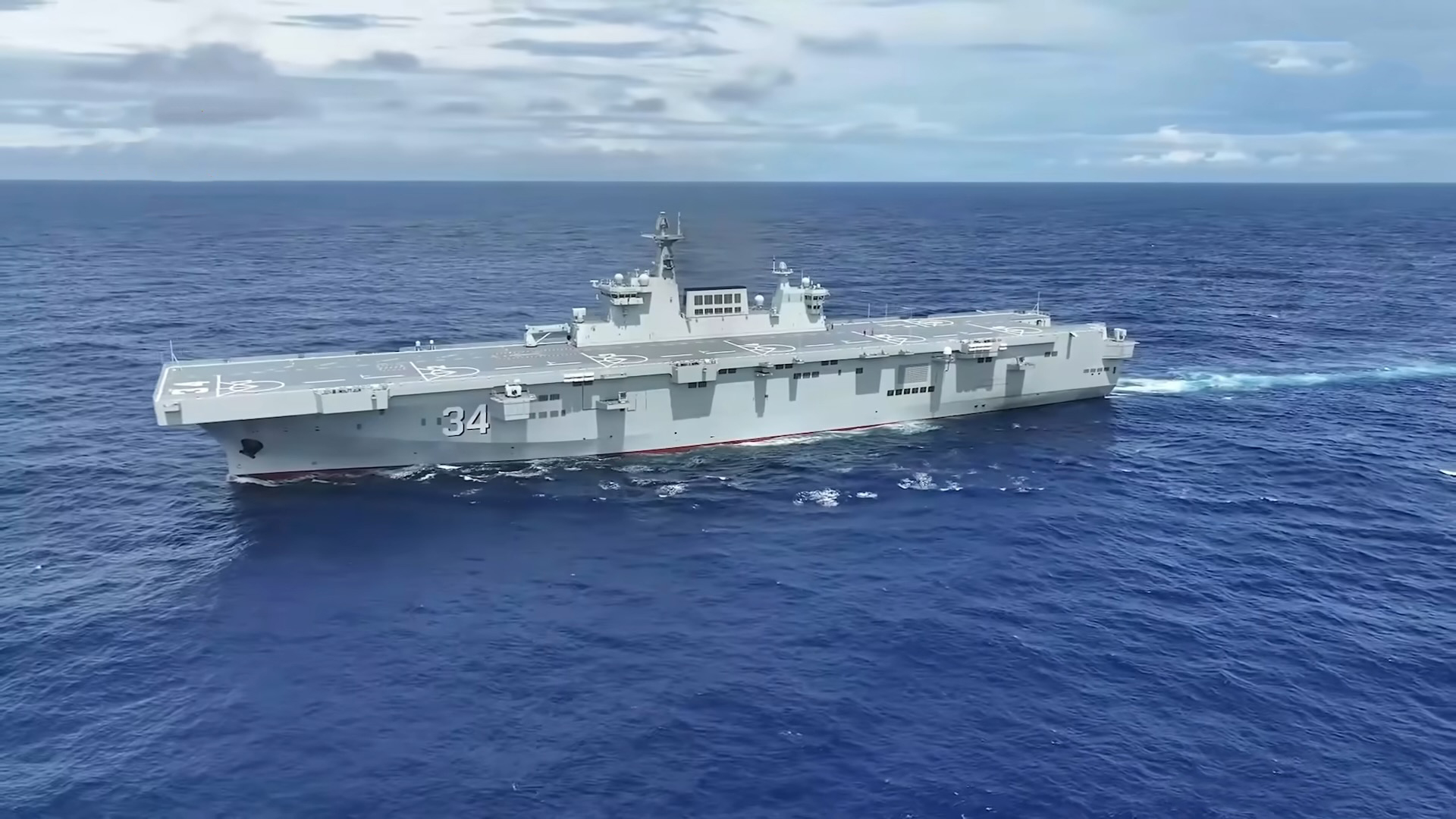
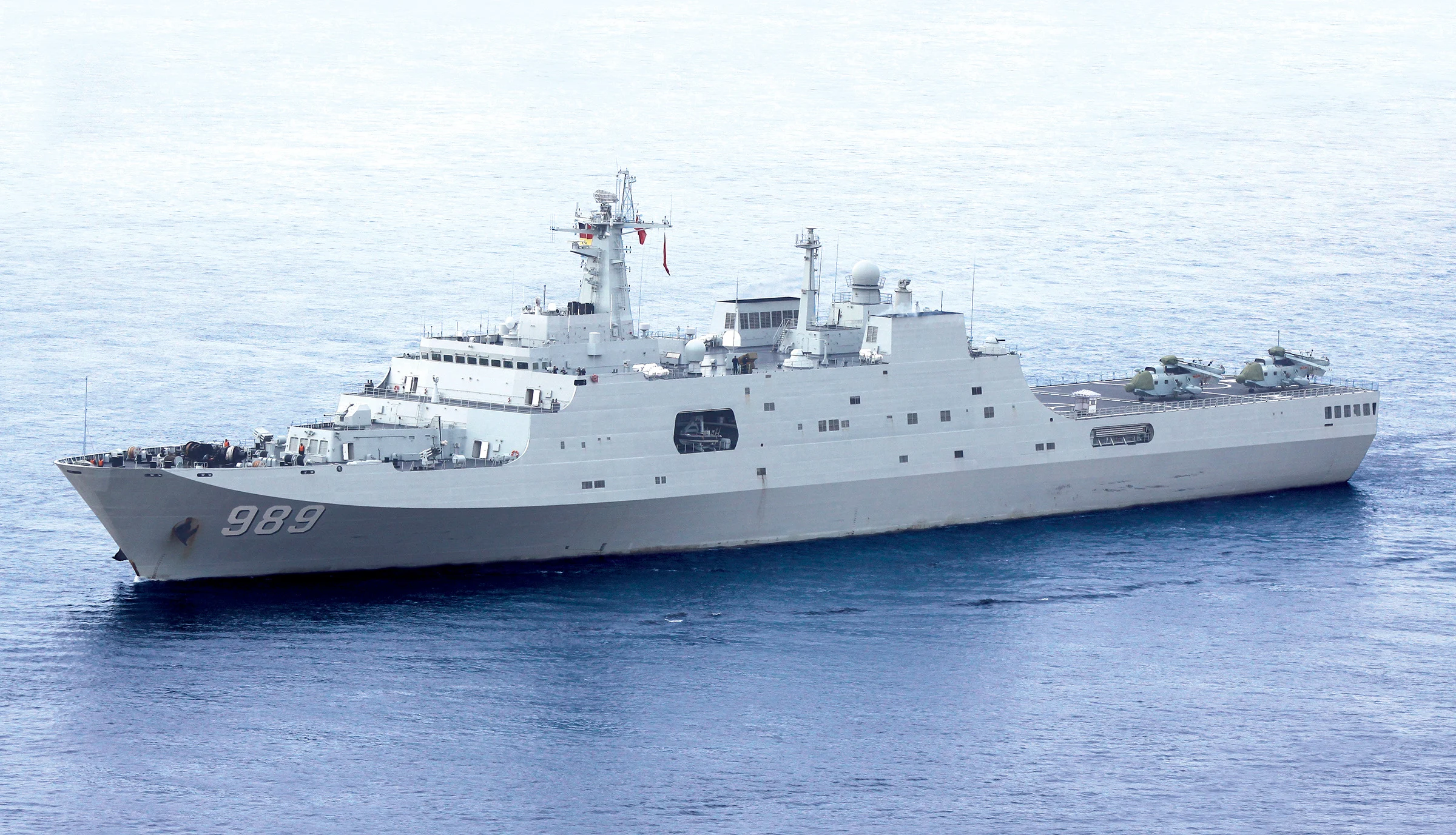
Public information typically estimates the full-load displacement of the Type 075 amphibious assault ship at around 35,000 to 40,000 tons. Its value lies not just in how many helicopters can be placed on its deck, but in its ability to integrate vertical maneuvering, firepower delivery, and command of landing troops on the same ship. The Type 071 dock landing ship functions more like a "maritime truck," with a platform of about 25,000 tons responsible for transporting personnel, vehicles, and air-cushion landing craft, addressing the challenging supply issues after the first wave. In simple terms, the 075 is responsible for breaking down the door, while the 071 ensures that subsequent forces do not run out of supplies. The combination of these two types of ships is a true indicator of mature landing capability.
Why Taiwan is Now Particularly Emphasizing Landing Capability
This time, Taiwan's defense department has singled out "enhanced landing capability" not because the PLA has suddenly built another ship, but because amphibious deployment is expanding from the number of platforms to the integrity of the system. In the past, discussions about landing in the Taiwan Strait often focused on how many people could be sent ashore in the first wave; however, based on recent construction rhythms, naval fleet activities in distant seas, and discussions on civilian ship mobilization, it appears that Beijing is more concerned with whether the second and third waves can keep up. One easily overlooked detail is that as long as the number of vessels at sea remains high, even if there are no large-scale live drills on a given day, the defending side will continuously consume resources for early warning, anti-ship firepower allocation, and logistical preparations.
What This Means for the PLA
- The Type 075 amphibious assault ship provides helicopter strikes, command, and vertical landing nodes.
- The Type 071 dock landing ship is responsible for the bulk transport of vehicles, personnel, and landing craft.
- The normalization of vessels in the Taiwan Strait enhances system integration, rather than just political display.
- The real threshold has shifted from "can we land?" to "can we sustain supplies for over 72 hours?"
This is also the judgment method that Li Minghui has consistently emphasized: do not just look at the performance of individual ships, but consider mass production, grouping, and supply. The most realistic progress for the PLA in the amphibious domain may not be the sudden emergence of a new model, but rather the gradual standardization of previously dispersed transportation, air cover, and command chains. For the Taiwanese military, the pressure has thus shifted from "fighting a landing battle" to "preparing every day for a potential escalated landing battle."
The Real Shortcoming Is Not the Ships, But the Complex Friction Across the Strait
Of course, this does not mean that the PLA has solved all the challenges of cross-sea operations. An increase in the number of amphibious ships does not equate to the successful completion of air and sea cover, mine countermeasures, beach unloading, port seizure, and subsequent heavy equipment deployment. Especially since the Taiwan Strait is not a training area, but a high-friction battlefield with anti-ship missiles, mobile mine laying, and urbanized coastlines. I tend to believe that Beijing is currently making "landing preparations" a sustainable option for pressure, rather than betting everything on a single, all-out charge. What is truly worth observing is not how many more ships are added on any given day, but whether the PLA will further integrate civilian roll-on/roll-off ships, land aviation nodes, and long-range fire support into the same training chain over the next six months.
On September 2, Taiwan reported the detection of 8 Chinese vessels and 1 military helicopter in the Taiwan Strait, indicating an enhancement of the People's Liberation Army Navy's amphibious landing capabilities. The focus has shifted from large-scale assaults to maintaining a sustained military presence and logistics, with an emphasis on continuous supply capabilities. Taiwan's defense department highlights the need for constant readiness against potential landing operations.
- Taiwan detected 8 Chinese vessels and 1 military helicopter in the Taiwan Strait on September 2.
- The Chinese military is enhancing its amphibious landing capabilities with Type 075 and Type 071 vessels.
- The focus is shifting from single large-scale assaults to sustained military presence and logistics.
- The Chinese military aims for continuous supply capabilities beyond 72 hours during potential operations.
- Taiwan's defense emphasizes the need for constant readiness against possible landing operations.