
Taiwan's Hai Kun-class Submarine Test Progress in 2026 Will Change U.S.-Japan Southwest Defense
 Tanaka Takashi
The Progress of Testing for Taiwan's Hai Kun-Class Submarine in 2026 Will Change U.S.-Japan Southwest Defense
As testing and operational preparations for Taiwan's first domestically produced submarine, the "Hai Kun," advance, reports regarding Taiwan's submarine capabilities, including this vessel, have been frequent since November 20. It is noteworthy that Taiwan is not merely increasing its submarine fleet by one. There is a possibility that the use of submarines for denial capabilities could become normalized along the sea lines of communication (SLOC) extending from the Taiwan Strait to the southwestern islands.
The Practical Significance of the Hai Kun-Class
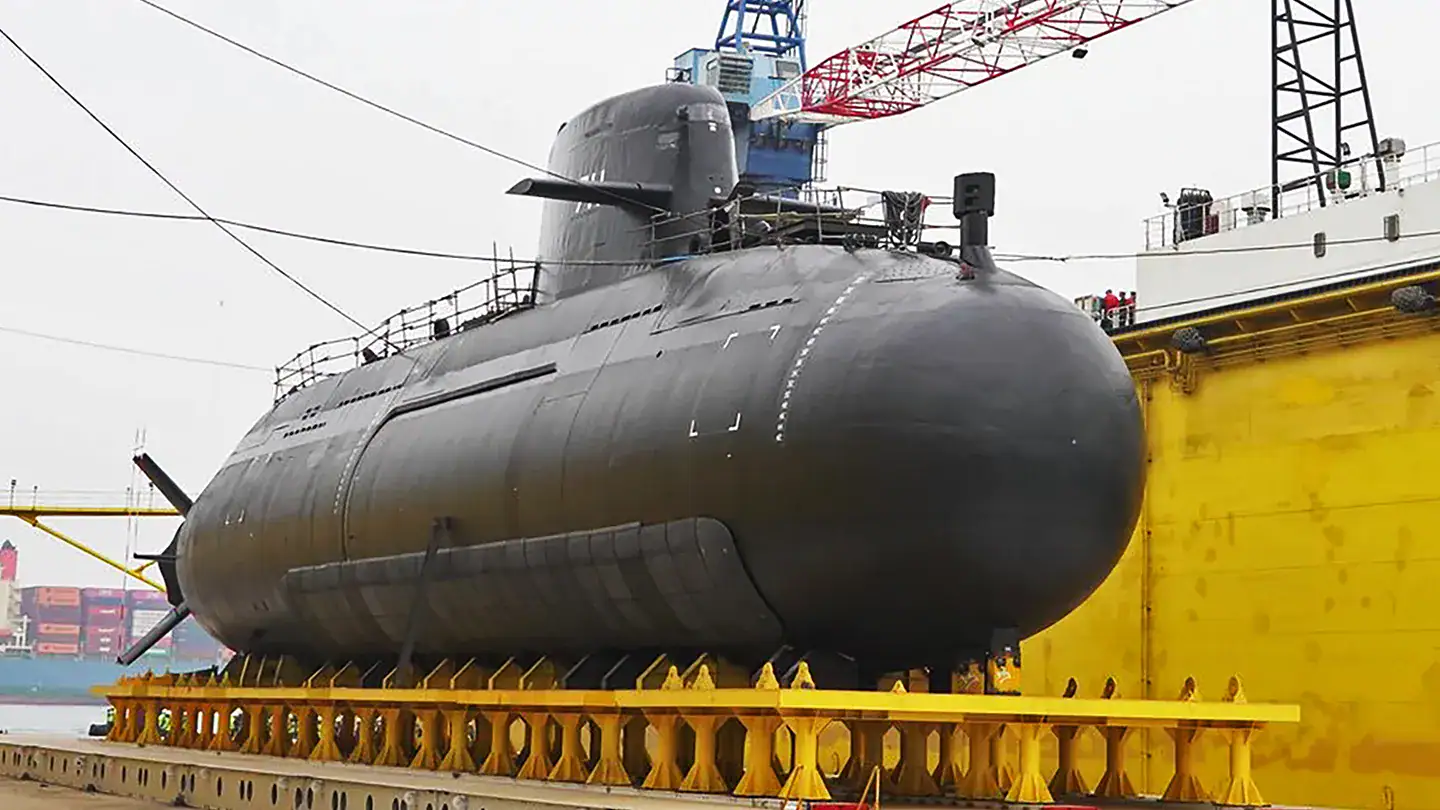
The Hai Kun-Class is a conventionally powered submarine that combines Taiwan's shipbuilding base with existing U.S.-made equipment. Based on publicly available information alone, it is difficult to ascertain the actual integration status of stealth, sonar performance, torpedoes, and anti-ship missiles. This is an area where exaggeration should be avoided. However, if even one submarine can secure training areas and maintenance cycles while accumulating patrol experience, it will have the effect of constraining adversaries in the underwater environment of the Taiwan Strait.
- Operational Focus: Continuity of crew training and maintenance over vessel performance
- Geographical Impact: Monitoring approaches to the deep sea areas off Taiwan's east coast and the Bashi Channel
- Uncertainty: Limited public information on testing schedules, onboard weapons, and mass production plans
Implications for the Japan Maritime Self-Defense Force and the U.S. Navy
The issue for Japan is not whether the Taiwan Navy will engage in direct underwater combat with the Chinese Navy. If submarine activities around Taiwan increase in the early stages of a crisis, the Japan Maritime Self-Defense Force's P-1 patrol aircraft, SH-60L helicopters, and escort vessels will have more contact targets to confirm. In defending the southwestern islands, anti-submarine monitoring must be expanded not only around the Miyako Strait and Yonaguni Island but also into the rear sea areas through which supply convoys pass.
Cooperation with the U.S. Navy will also require speed over the quantity of information shared. If Taiwan's contact information is not shared between the U.S. and Japan, and if Japan does not have a mechanism to correlate this with the maritime and aerial situation around its own territory during peacetime, "joint anti-submarine" efforts during a crisis will end up being mere rhetoric. There is room for consideration of practical information connections among the Ministry of Defense, the Japan Coast Guard, the U.S. military, and Taiwan, while still leaving political considerations aside.
Separating Capability from Intent
It is not guaranteed that China will immediately perceive the Hai Kun-Class as a threat. A single conventionally powered submarine cannot continuously dominate a vast maritime area, and there are limitations to Taiwan's crew, supply, and maintenance capabilities. On the other hand, if Beijing strengthens underwater surveillance around Taiwan, even Taiwan's small naval force can absorb the Chinese Navy's anti-submarine resources. Herein lies a discrepancy between capability and intent.
In my view, the greatest value of the Hai Kun-Class lies not in its sinking capability but in the uncertainty it creates for the adversary regarding "where it is."
Points Japan Must Not Overlook
Japan needs to establish procedures to connect not only the number of submarines and the introduction of new equipment but also underwater information around Taiwan to its own SLOC protection. The true blind spot is not whether Taiwan's submarines are strong or weak. It is whether the U.S. and Japan can convert underwater information in the Taiwan Strait into operational decisions ahead of political judgments.
Sources
Taiwan is advancing testing and operational preparations for its first domestically produced submarine, the Hai Kun, as of November 20, 2023. This development may enhance Taiwan's undersea denial capabilities in the Taiwan Strait and surrounding areas, prompting Japan's Self-Defense Forces to increase anti-submarine monitoring. The report emphasizes the strategic implications of Taiwan's submarine capabilities for U.S.-Japan defense cooperation and the potential impact on Chinese naval operations.
- Taiwan is progressing with testing and operational preparations for its first domestically produced submarine, the Hai Kun.
- The Hai Kun submarine could enhance Taiwan's undersea denial capabilities in the Taiwan Strait and surrounding areas.
- Increased submarine activity around Taiwan may require Japan's Self-Defense Forces to expand their anti-submarine monitoring efforts.
- The report highlights the importance of Taiwan's submarine capabilities in relation to U.S.-Japan defense cooperation.
- China may not immediately perceive the Hai Kun as a threat, but it could affect their naval operations in the region.