
The 2026 Security Document Proposal Calls for Long-Range Missiles for the Next-Generation Submarine of the Maritime Self-Defense Force
 Tanaka Takashi
The 2026 Security Three Documents Proposal Calls for Long-Range Missiles on Next-Generation Submarines
In the proposal for the revision of the Security Three Documents by the Liberal Democratic Party, revealed on May 18, what caught my attention the most was not the intercept drones, but the phrase "to equip next-generation powered submarines with long-range missiles." The ground-launched Type 12 capability enhancement model and the U.S.-made Tomahawk have already been discussed as symbols of retaliatory capability. However, if submarines are included as launch platforms, the role of the Japan Maritime Self-Defense Force (JMSDF) will shift from merely defending maritime traffic routes to deterring by creating uncertainty in the opponent's operational plans.
The Distance from Soryu Class to Next-Generation Vessels
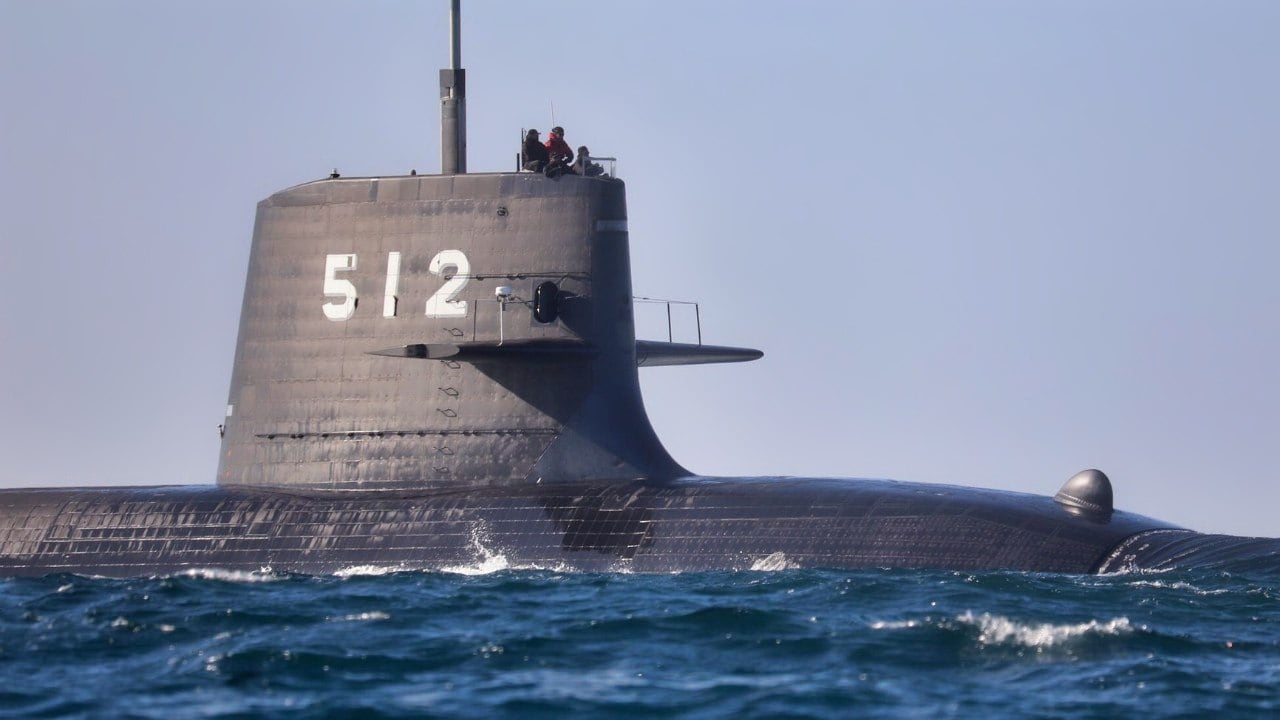
According to Naval News, the current Taigei class is 84 meters long, has a standard displacement of about 3,000 tons, and carries a crew of about 70. It is a JMSDF submarine that has fully adopted lithium-ion batteries. Its underwater speed is said to be about 20 knots, and it can operate torpedoes and UGM-84L Harpoon Block II missiles. The above photo is of the Soryu class submarine SS-512 "Toryu," which is not the next-generation vessel itself, but is appropriate to illustrate the context in which the JMSDF has already built up its quietness and battery technology.
The issue is that equipping submarines with long-range missiles is not simply a matter of adding new weapons to existing vessels. The range of the Harpoon is about 248 kilometers. In contrast, the Type 12 anti-ship guided missile capability enhancement model has a range of about 1,000 kilometers, and the Tomahawk has an even longer range. If these are to be operated from submarines, a different system will be required for launch tubes, command and control, communications, target information updates, and maintenance after return.
Retaliatory Capability Gains Stealth but Risks Losing Accountability
The revised proposal organized by Kantenna treats intercept drones, high-energy weapons, over one year of sustained combat capability, Pacific-side surveillance, and next-generation powered submarines as part of the same bundle. This is not a coincidence. If the Chinese Navy expands its reach to the second island chain by combining aircraft carriers, long-range anti-ship missiles, drones, and satellites, Japan cannot afford to place its retaliatory capability solely in fixed bases.
The advantages of submarine-launched systems are clear. The launch positions are difficult to predict, and the opponent must be wary not only of bases on the Japanese mainland but also of unknown launch points underwater. This is a strong deterrent. However, politically, it is challenging. Submarines are invisible weapons, and it is difficult to explain to the Diet and the public where they are deployed and what targets they are intended for. The more the retaliatory capability is explained as being "within the scope of exclusively defensive operations," the greater the tension with the stealth launch platforms.
Dependence on the U.S.-Japan Alliance Will Not Decrease but Will Change Form
The U.S. Defense Security Cooperation Agency's sale of Tomahawks to Japan and the early deployment of the Type 12 capability enhancement model reported by AP indicate a trend for Japan to move towards its own long-range strike capabilities. However, considering submarine-launched systems, dependence on the U.S.-Japan alliance will not disappear. Rather, it may deepen in less visible areas such as target information, battle damage assessment, communication satellites, and avoiding duplication with U.S. forces.
The JMSDF submarine fleet has been highly regarded for its underwater surveillance against the Soviet Union during the Cold War and now against China. However, if a unit that excels in reconnaissance and ambush is tasked with politically significant long-range retaliatory strikes, the training culture will also change. It will become more important to determine "who, with what information, and when to decide not to fire" rather than simply being able to "fire."
The Real Issue Is Command and Control, Not Nuclear Power
The term next-generation power suggests fuel cells, improved lithium-ion batteries, and possibly nuclear propulsion. It is natural that attention is drawn to this point as Australia moves towards nuclear submarines after AUKUS. However, for Japan, the more pressing issue that needs to be realized sooner is command and control rather than the propulsion method.
If JMSDF submarines are equipped with long-range missiles, it will become difficult for opponents to read Japan's deterrence. However, Japan itself must simultaneously handle political decisions, information sharing with U.S. forces, and communication constraints for frontline units during a crisis. The more powerful weapons are placed on invisible submarines, the more necessary it is to refine decision-making procedures in visible locations first. If this remains ambiguous, next-generation submarines could become a new source of instability in crisis management rather than strengthening deterrence.
Japan's Self-Defense Forces are revising their defense policy to include equipping next-generation submarines with long-range missiles, as revealed on May 18, 2026. This shift aims to enhance deterrence capabilities against potential threats, particularly from China. The current submarine fleet, including the Soryu-class, is already equipped with advanced missile systems, and the integration of long-range missiles will require significant changes in command and control systems.
- Japan plans to equip next-generation submarines with long-range missiles.
- The current submarine class is capable of operating UGM-84L Harpoon Block II missiles.
- The Type 12 anti-ship missile has an estimated range of 1,000 km.
- The report highlights the strategic shift in Japan's defense posture against China.
- There are concerns about the political implications of deploying stealthy submarines.