
The $405 Million LOCUST X3 Deal Puts Gulf Defense Against Drones to the Test of True Capability
 Ahmed Al-Rashid
LOCUST X3 Deal Worth $405 Million Puts Gulf Defense Against Drones to the Test of True Capability
On November 11, 2026, AeroVironment announced that it had received an international order worth $405 million for the high-energy laser systems LOCUST X3 for the benefit of an unnamed Middle Eastern country. The figure is significant, but the more important information is not the value of the contract or the allure of the word laser; rather, it is that a Gulf or regional country is now willing to pay hundreds of millions to intercept relatively inexpensive drones. This is the price of a war in which the Middle East has learned that a small aircraft can impose on the defender expenditures that far exceed the cost of the attacker.
What We Know About the New Order
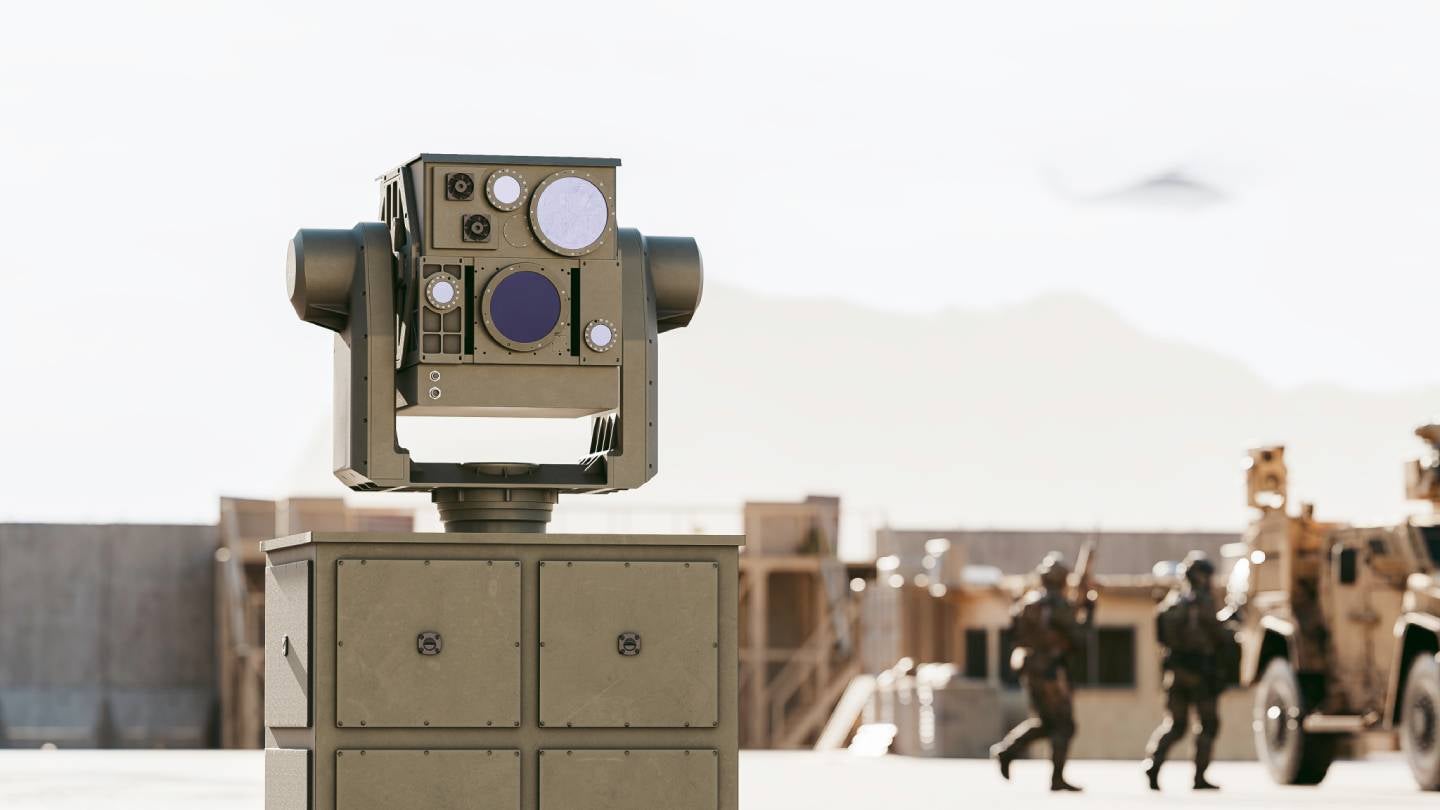
The company confirms that the order pertains to LOCUST X3 laser defense systems to counter unmanned aerial systems, but it has not disclosed the name of the buyer, the number of units, or the delivery terms. Therefore, it is not appropriate to turn the contract into an announcement of a specific country's possession of a new capability. What can be said with confidence is that the customer wants a close defense layer with a low launch cost, theoretically capable of dealing with small and repetitive targets when conventional air defense missiles become an expensive option.
This system differs from purchasing a ready-made missile. The laser requires continuous detection and tracking, a clear line of sight, electrical power and cooling, and sufficient time to keep the beam on the target. In the Gulf environment, where dust, humidity, and high temperatures are not trivial details, maintenance and daily readiness become part of the weapon itself. There is insufficient data in the public statement regarding engagement range or the system's capability in harsh weather conditions, and any circulating figure outside of that remains待确认.
Why is the Region Paying This Amount Now?
The practical reason is the changing equation of attack. Offensive drones and loitering munitions can attack airports, oil facilities, ports, and command centers from multiple directions. The wars in Yemen, Iraq, and Syria, along with maritime and aerial threats around the Red Sea and the Gulf, have shown that defense does not always face a single high-value missile, but swarms and low-altitude targets that require fire density and continuous communications.
On November 11, Arab News published an analysis regarding the Gulf states' agreement to establish an advanced military command in Kuwait to confront regional threats, while other reports linked the new deal to the growing American interest in laser systems for countering drones. The implication here is that purchasing LOCUST X3 is not an isolated technical decision; it is part of the Gulf's transition from reliance on separate missile batteries to a distributed command, sensing, and interception network. However, the network does not emerge solely from the contract.
The Real Test is the Capability Triangle
In military assessment, I place this deal within a simple triangle of equipment, training, and organization. Equipment is the visible part: vehicle, laser, radar, and software. Training determines whether the crew can distinguish a commercial drone from a friendly aircraft, whether they can switch between targets quickly, and whether they can operate under jamming and communication outages. The organization is the element that buyers often overlook: who has the engagement decision? Do the air force, air defense, and facility security exchange data in seconds? And who plans for maintenance and spare parts after the political enthusiasm wanes?
Practically, LOCUST X3 will not protect a facility if the radar cannot see the target, or if the command network is separate from the guard responsible for protecting the site, or if the system fails due to a cooling malfunction. The laser may reduce the cost of interception, but it does not eliminate the need for short-range defenders, missiles, and electronic warfare systems. Multi-layered defense does not mean buying everything; it means knowing which layer works against which type of attack.
The Political Message of the Deal
Hiding the buyer's name is understandable in a sensitive deal, but it also highlights the limits of transparency in the Gulf defense market. Countries want to announce upgrades when it serves deterrence, and they want to conceal size and positioning when they fear exposing vulnerabilities. If the buyer is a Gulf state, the deal gives Washington and AeroVironment an additional foothold in the regional air defense structure. If the buyer is another country in the Middle East, it reflects the spread of the threat itself beyond the Gulf borders.
The $405 million amount should not be read as the cost of the laser alone. International contracts typically include training, support, integration, and supporting equipment, but the details are not disclosed here. Therefore, it is not possible to extract the number of systems or calculate the unit price. Additionally, the company's description of the order as the largest in this field does not prove that the weapon has demonstrated its effectiveness in real combat; it proves that the market sees an urgent need, and this is a completely different matter.
What to Watch After Signing
- Identifying the purchasing country, the number of units, and deployment locations.
- Announcing test results in dust, heat, and humidity, not just under ideal display conditions.
- The extent of LOCUST X3's integration with Gulf radars, command systems, and existing American systems.
- The readiness rate and maintenance costs after the first year, because a weapon that remains in storage deters no one.
In summary, the LOCUST X3 deal reflects a real need and is not just a technical trend. However, it does not grant the Gulf immunity from drones; rather, it buys an additional opportunity to intercept them. The difference between the two is made by doctrine, training, and organization. As every military personnel who has served in the region knows, purchasing the equipment is much easier than building the capability that makes it work at the moment people need it.
Sources
AeroVironment announced a $405 million international order for LOCUST X3 laser systems intended for a Middle Eastern country on November 11, 2026. This procurement signifies a strategic investment in drone defense capabilities, reflecting a shift in regional military operations. The deal emphasizes the need for effective training and integration of these systems into existing defense frameworks.
- AeroVironment received a $405 million international order for LOCUST X3 systems.
- The buyer is an unnamed Middle Eastern country.
- The systems are intended for defense against drones.
- The deal reflects a shift in regional defense strategies.
- The report highlights the importance of training and integration for effective use of the systems.