
The 68th Battalion Is Not Enough — Mallam-Fatori Without Village Chiefs Reveals the Fragility of the Return to Borno in 2026
 Marie Dubois
The 68th Battalion is Not Enough — Mallam-Fatori Without Village Chiefs Reveals the Fragility of the Return to Borno in 2026
Mallam-Fatori, at the northern tip of Borno, did not receive a simple administrative message this week. By suspending all absent village and ward chiefs in one fell swoop during his visit, Governor Babagana Zulum signaled something more serious than a protocol breach. In this border town ravaged by years of insurgency, the absence of local intermediaries at the moment when residents are returning home means that the Nigerian state still holds military ground without fully securing human ground.
Reports from The Nation, Punch, and Daily Post converge on a specific point: Zulum inspected destroyed schools, damaged administrative buildings, war-stricken housing, and then ordered both the acceleration of reconstruction and the immediate replacement of failing customary authorities. This fact is important because in Mallam-Fatori, reconstruction and security are not two separate issues. They are the same line of operation, viewed from two different offices.
A Civil Return Without Local Intermediaries
The central problem is simple. A displaced population can physically return to a locality, but if no one organizes mediation between residents, administration, and military, the return remains fragile. In northern Borno, village chiefs are not mere figureheads. They are the men who know which families have returned, which neighborhoods remain empty, which paths are passable, which young people are missing, and what signs indicate the reactivation of a logistical network of Boko Haram or ISWAP.
In other words, when these officials disappear at the moment the governor arrives, the signal is bad. Either they no longer truly control the community they are supposed to represent, or they deem the risk too high to show themselves, or they have already lost their effective authority. In all three cases, the state faces the same operational reality: there is a missing civil command level at the most useful level.
Marie Dubois would look at this as an officer looks at a forward post. A post may have men, ammunition, and a flag; if it lacks eyes, interpreters, and reliable intermediaries with the population, it occupies a point, not a space. Mallam-Fatori still resembles this.
The 68th Battalion Holds the Line but Cannot Administer the Town
The visit of Zulum to the headquarters of the 68th Nigerian Battalion is almost as revealing as the suspension of local chiefs. The governor greeted the troops and promised to support their operational effectiveness. This is necessary. But it is also an implicit admission: the military apparatus remains the backbone of state presence in this area. A battalion can secure a route, cover a garrison, escort movements, and deter an attack. It cannot alone rebuild the chain of daily trust that allows a town to become a town again.
In the Lake Chad basin, this distinction is essential. Jihadist groups do not necessarily need to permanently retake a locality to achieve a strategic effect. Often, they only need to maintain uncertainty: a few infiltrations, fear on the roads, discreet sabotage, looting of materials, rumors of an imminent attack. If local administration is wavering, every minor incident takes on an exaggerated political dimension.
This is why Zulum's decision is less punitive than preventive. He cuts off intermediaries deemed unnecessary before they become sieves. It is harsh, but consistent with a logic of active borders.
Lake Chad Remains a Logistical Theater
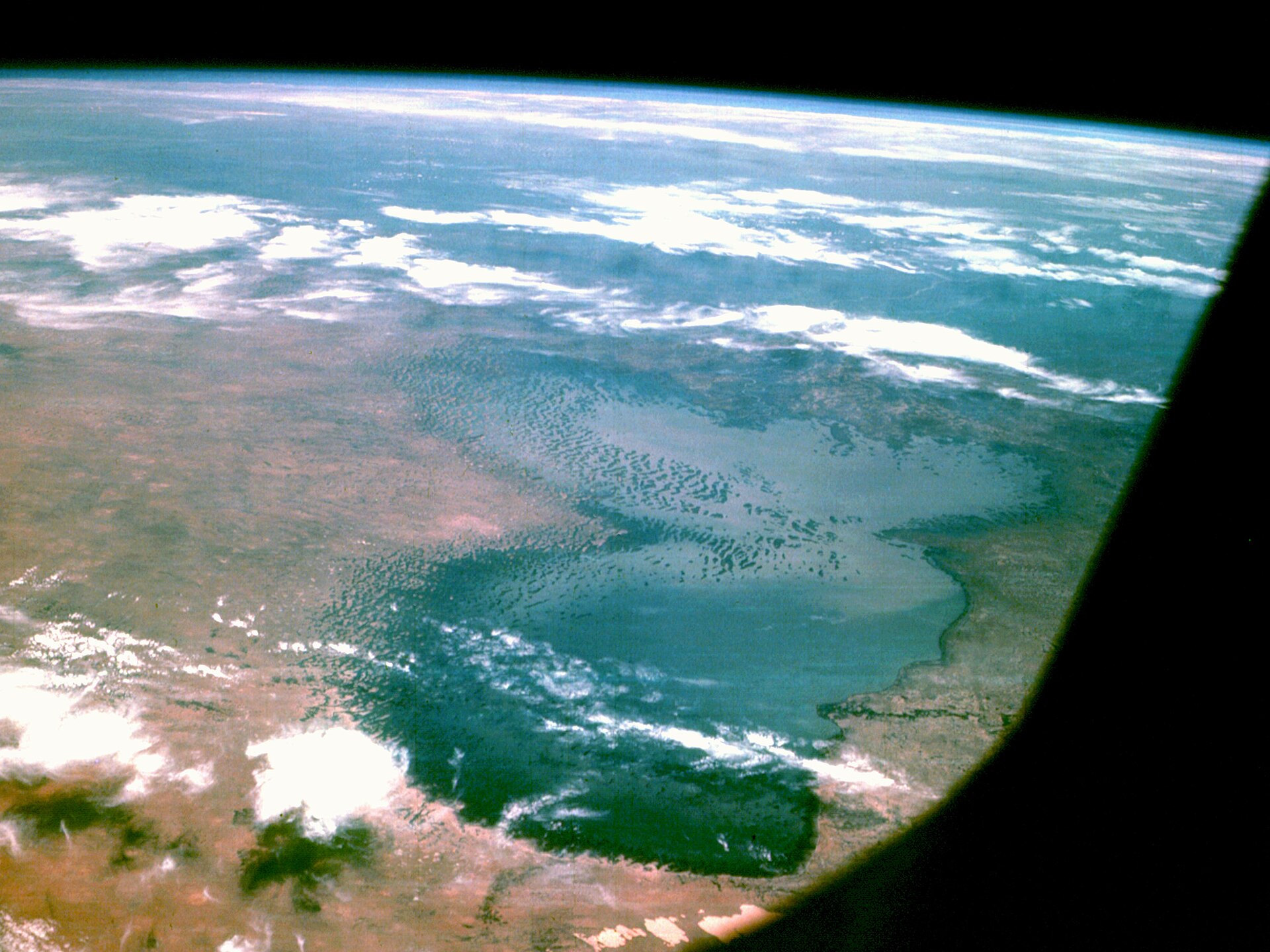
The regional context reinforces this reading. In June, National Accord was already reporting Zulum's warnings about metal recovery networks and equipment looting in the Lake Chad basin, which he explicitly linked to the underground economies of Boko Haram and ISWAP. This detail matters. In this theater, the insurgency does not only thrive on spectacular attacks; it also lives off discreet circuits, resold parts, moved equipment, local complicities, and administrative wear.
Mallam-Fatori is therefore not just a reconstruction issue. It is a logistical knot on the edge of an area where the return of civilians, the reopening of public services, and the protection of equipment determine the real depth of government presence. A reopened school, a maintained health center, a present local chief, and a stock of non-looted materials are sometimes worth more, in the long run, than a triumphant statement about neutralized fighters.
It is also necessary to acknowledge what is not yet known. Open sources do not indicate how many families have returned in recent days, whether authorities have already identified replacements for the suspended chiefs, or at what pace the announced works can actually begin. In Borno, political intent is often faster than physical consolidation. This gap must be monitored.
What Zulum's Decision Reveals
- The return of the displaced in northern Borno has entered a new phase: it is no longer just about holding militarily, but about governing again at ground level.
- The Nigerian state clearly believes that the absence or weakness of customary authorities has become a security risk in itself.
- The 68th Battalion remains essential, but its presence confirms that Mallam-Fatori remains a stabilization zone, not yet a normalized zone.
- The Lake Chad basin continues to be affected by logics of sabotage, predation, and more discreet insurgent micro-logistics than large offensives, but sometimes more corrosive.
The Next Test Will Seem Banale
The next indicator will likely be neither a great battle nor a federal announcement. It will be much more mundane: whether, in the coming weeks, Mallam-Fatori sees the reemergence of a credible local chain between residents, renewed traditional authorities, Borno administration, and the 68th Battalion military. If this chain holds, the civil return can begin to take root. If it breaks, the town will remain a position held under armed protection, exposed to the next shock from Lake Chad. On the ground, this is where the difference between an announced liberation and a real stabilization is played out.
Sources used: The Nation, Punch, Daily Post Nigeria, National Accord.
Governor Babagana Zulum suspended local village chiefs in Mallam-Fatori, Borno, highlighting the fragility of civil return in 2026. He inspected damaged infrastructure and emphasized the need for local governance alongside military presence to ensure stability. The 68th Battalion remains active in the area, but the lack of local leadership raises security concerns as displaced populations begin to return.
- Governor Babagana Zulum suspended local village chiefs in Mallam-Fatori.
- The 68th Battalion is currently holding the military line in the area.
- Local governance is deemed essential for the return of displaced populations.
- Zulum inspected damaged infrastructure and called for immediate reconstruction efforts.
- The absence of local leaders poses a security risk in the region.