
The Blind Spots in Japan's Anti-Submarine Warfare Revealed by North Korea's Submarine-Launched Cruise Missile Tests in 2026
 Tanaka Takashi
2026 North Korea's Submarine-Launched Cruise Missile Test Reveals Gaps in Japan's Anti-Submarine Warfare
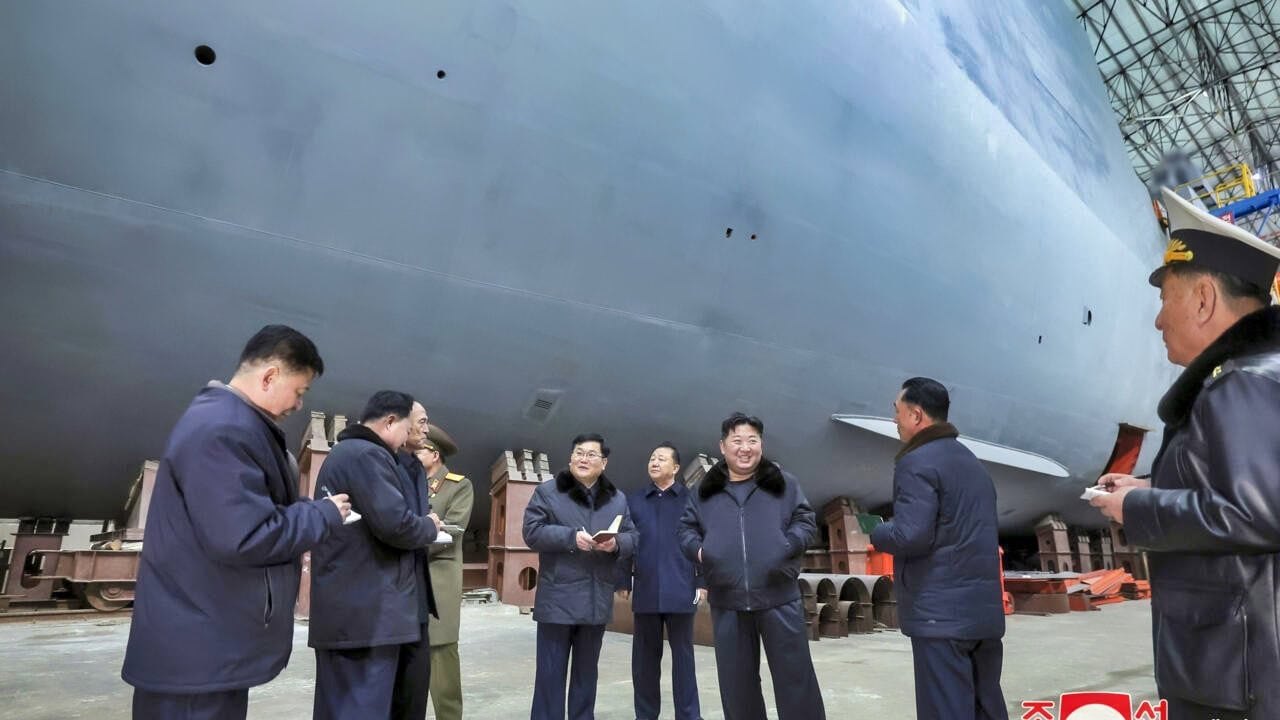
On October 14, North Korea announced that it had launched two types of strategic cruise missiles from a submarine in the East Sea (Sea of Japan). KCNA described this as a naval training exercise to inspect the mobilization posture of underwater combat systems. While the success of the launch and the performance of the vessels used cannot be confirmed from outside, the different launch postures shown in the footage—“vertical” and “oblique”—are difficult to dismiss as mere propaganda.
Low-Altitude Cruise Weapons Change Detection Time
As reported by France 24 through AFP, vertical launches can extend the flight distance after ascent, while oblique launches start flying at a low altitude, placing a burden on ground radar and naval air defense systems for detection and interception. Although cruise missiles are often slower than ballistic missiles, flying close to the sea surface can delay detection due to the curvature of the Earth and sea surface reflection. The issue is not the flight speed but whether the launch point can be identified in advance.
Challenges Faced by the Japan Maritime Self-Defense Force
The Japan Maritime Self-Defense Force (JMSDF) monitors maritime areas by combining destroyers, fixed-wing patrol aircraft, submarines, and information sharing with the U.S. Navy. However, when considering cruise missiles launched from the eastern coast of the Korean Peninsula, it is not enough to focus solely on post-launch interception. Continuous awareness of submarine departures, movements to patrol areas, and short-term launch preparations must be maintained. This is a matter of ongoing underwater surveillance and immediate target information sharing, separate from the ability to “sink submarines.”
The Japanese government has been strengthening Japan-U.S. surveillance against North Korea's ballistic missiles. On October 12, Japan announced that North Korea had launched multiple ballistic missiles. Meanwhile, during the Japan-U.S. discussions on October 9, the continuation of regional stability and alliance cooperation was confirmed. What emerges from this is an unaddressed area of how to incorporate submarine-launched cruise missiles into the ballistic missile defense framework.
Separating “Capability” and “Intent”
It is premature to conclude that North Korea has completed a practical submarine launch capability. The range, guidance accuracy of the cruise missiles, and the stealth of the submarines remain unclear, and the KCNA announcement likely includes political theatrics. However, even with limited capabilities, there is an effect of expanding the adversary's alert areas. If the JMSDF and the U.S. Navy increase anti-submarine surveillance in the Sea of Japan, the availability of aircraft and vessels that can be allocated to the southwestern islands and around Taiwan will decrease.
In my view, the true significance of this test lies not in whether “North Korea has acquired second-strike capability,” but in how quickly Japan-U.S. underwater surveillance information can be converted into missile defense decision-making. Simply enhancing detection equipment is not enough. Ultimately, the question is the speed of political judgment in treating fragmentary information obtained in peacetime on a quiet sea as a warning before a launch.
Reference Information
- France 24 / AFP, “North Korea test-fires submarine-launched cruise missiles amid rising tensions,” October 15, 2026
- Japan Times, “North Korea fires multiple ballistic missiles into Sea of Japan,” October 12, 2026
- NHK WORLD-JAPAN, “Japan, US reaffirm cooperation on Indo-Pacific stability,” October 9, 2026
- Defense News, “US Marine Corps anti-ship weaponry to see exercise action on remote Japan island near Taiwan,” October 5, 2026
North Korea test-fired two types of strategic cruise missiles from submarines in the Sea of Japan on October 14, 2026, as part of naval training exercises. The launches involved different firing positions, impacting detection by ground radar and naval defense systems. Japan and the U.S. are increasing surveillance efforts in response to North Korea's missile activities, although the actual capabilities of these missiles remain unclear.
- North Korea launched two types of strategic cruise missiles from submarines in the Sea of Japan.
- The launch was part of a naval training exercise to inspect underwater combat systems.
- The missiles were launched in both vertical and diagonal positions, affecting detection capabilities.
- Japan and the U.S. have been enhancing surveillance against North Korean ballistic missiles.
- The effectiveness of North Korea's submarine-launched capabilities remains uncertain.