
The Blind Spots of Japan-U.S. Maritime Cooperation Revealed by the 2026 Sagami Bay Training of SH-60K and USCGC Midgett
 Tanaka Takashi
SH-60K and USCGC Midgett's 2026 Sagami Bay Training Highlights Blind Spots in Japan-U.S. Maritime Cooperation
On June 17 in Sagami Bay, the Japan Maritime Self-Defense Force's SH-60K patrol helicopter landed on the deck of the U.S. Coast Guard cutter "Midgett" and received fuel. This small training exercise can easily be overshadowed by large-scale drills. However, to the author, this single photograph seems to better illustrate the practical changes in the alliance.
Small Training Content but Broad Mission Scope
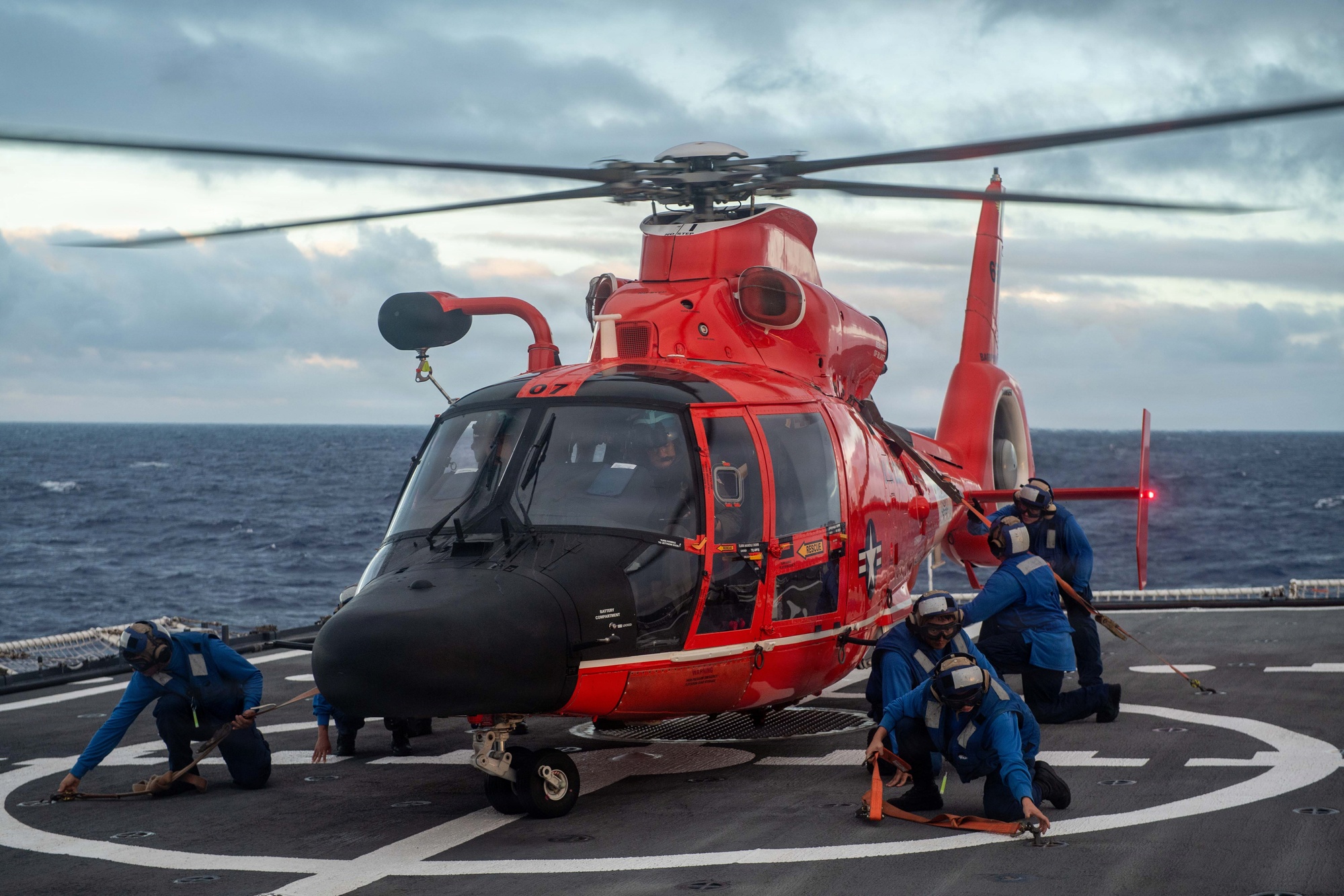
According to the announcement from the Maritime Staff Office on June 18, the training area was Sagami Bay, with participating units being the JMSDF SH-60K and USCGC Midgett, and the conducted items included deck landing training and shipboard refueling. The key point is that the JMSDF helicopter landed on a U.S. Coast Guard vessel, not a self-defense ship. The SH-60K is a core aircraft of the JMSDF aviation unit responsible for anti-submarine patrol, surveillance, and rescue support, and confirming deck compatibility and refueling is not merely a goodwill event.
Midgett is a Legend-class National Security Cutter of the U.S. Coast Guard, hull number WMSL 757. In April 2026, it was deployed for a missing persons search near Micronesia, and the U.S. Coast Guard explained that the presence of a large cutter close to the scene shortened the rescue time within a search plan covering over 14,000 square nautical miles. At the same time, the ship was reported to be operating in the western Pacific under Destroyer Squadron 15, the main surface force of the U.S. 7th Fleet.
Not Just Warships Facing Gray Zone Adversaries
As large vessels from the China Coast Guard routinely operate in the South China Sea and East China Sea, the capabilities of coast guard agencies lie in the intermediate realm between military power and law enforcement. In Japan, the Japan Coast Guard stands on the front lines, but if the JMSDF, U.S. Navy, and U.S. Coast Guard each have separate supply and communication procedures in the same maritime area during a crisis, on-site command will quickly become burdensome.
This training differs in nature from joint exercises with U.S. Navy carrier strike groups. It was likely an attempt to test "how far we can operate under the same procedures" in low-intensity missions such as rescue, surveillance, boarding support, and convoy protection, rather than showcasing deterrence. The fact that it was conducted in Sagami Bay, near Honshu, should not be overlooked. There may be a growing assumption of allied operations, including the U.S. Coast Guard, not only in the southwestern islands but also in the outer edges of Tokyo Bay and along the Pacific SLOC (Sea Lines of Communication).
Decision-Making Compatibility is More Critical than Equipment Interoperability
Deck landings and shipboard refueling are built on a foundation of details such as aircraft weight, rotor diameter, deck strength, firefighting procedures, fuel quality, and nighttime guidance. If the SH-60K can receive fuel on Midgett, the operational radius of the JMSDF aviation unit temporarily expands. However, its value is not limited to merely increasing one supply point in a crisis. It also serves as an entry point to connect the law enforcement vocabulary of the U.S. Coast Guard with the operational tempo of the JMSDF.
However, overestimation is to be avoided. What has been confirmed this time is merely one type of aircraft, one ship, and one day's training. Safety standards during adverse weather, nighttime operations, multiple aircraft operations, and ammunition loading, as well as interoperability with Japan Coast Guard aircraft, cannot be inferred from publicly available information. This is where practical homework remains.
Sources
- Maritime Staff Office, Japan–U.S. Bilateral Exercise, 18 June 2026
- JMSDF Self Defense Fleet news, 18 June 2026
- U.S. Coast Guard, Midgett Western Pacific patrol and FSM rescue, 7 April 2026
- DVIDS, USCGC Midgett flight deck operations, 28 March 2026
The real challenge is not whether the SH-60K can land on a U.S. Coast Guard cutter. It is whether the JMSDF, Japan Coast Guard, U.S. Navy, and U.S. Coast Guard can use the same legal language in the first 30 minutes of a crisis.
On June 17, 2026, a SH-60K helicopter from the Japan Maritime Self-Defense Force conducted a deck landing and refueling on the U.S. Coast Guard Cutter Midgett in Sagamihara Bay. This joint training exercise aimed to enhance operational compatibility and logistics between the two forces, reflecting a shift towards cooperative maritime operations in the region.
- The SH-60K helicopter conducted deck landing and refueling on the USCGC Midgett.
- The exercise took place in Sagamihara Bay on June 17, 2026.
- The USCGC Midgett is a Legend-class National Security Cutter.
- The training aims to enhance operational compatibility between JMSDF and U.S. Coast Guard.
- The exercise is part of broader efforts to improve maritime cooperation in the region.