
The Burden of North Korea's 910-Kilometer Ballistic Missile Flight on Maritime Surveillance by Japan, the U.S., and South Korea in 2026
 Tanaka Takashi
2026 North Korea's Ballistic Missile Flight of 910 Kilometers Poses Burden on Japan-U.S.-South Korea Maritime Surveillance
On October 12 at around 9:20 AM, North Korea launched multiple ballistic missiles from near Pyongyang. According to the Ministry of Defense, at least two missiles have been confirmed, with one estimated to have flown approximately 220 kilometers and the other over 910 kilometers at an altitude of about 70 kilometers. Both are believed to have fallen outside Japan's Exclusive Economic Zone (EEZ), but the issue for the Japan Maritime Self-Defense Force is not just the impact points.
The Difficulty of Simultaneously Tracking Different Flight Characteristics
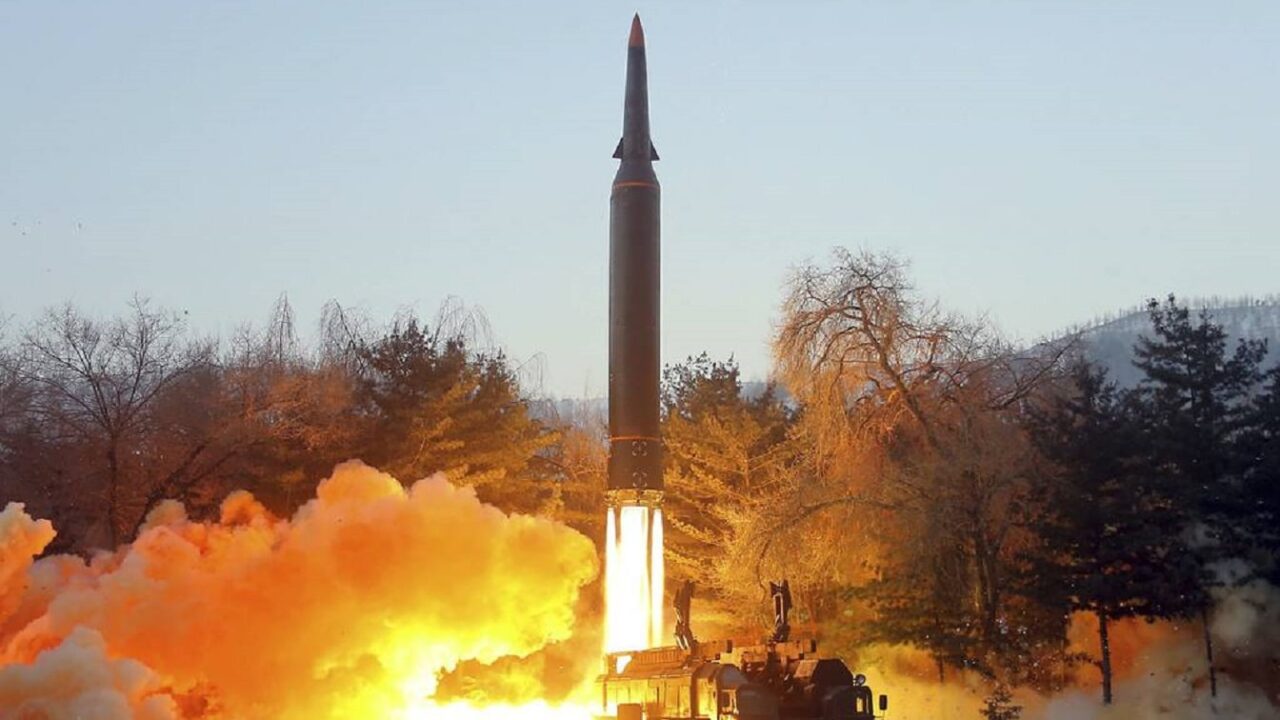
Reports from the South Korean military and Kyodo News suggest that the missiles launched this time may have been of different types. When the flight distance and altitude vary significantly, the sensor networks of Japan, the U.S., and South Korea cannot treat them as the same threat. Short-range ballistic missiles have a short time from launch to impact, while longer-flying vehicles require simultaneous navigation safety and ballistic tracking over a wide maritime area. It is necessary to cross-reference the Ministry of Defense's quick reports, the Japan Coast Guard's navigation warnings, and the assessments from the U.S. Indo-Pacific Command on a minute-by-minute basis.
Response to South Korea's Hypersonic Test
Reuters reports that this launch occurred after South Korea's test launch of a hypersonic missile. Even if North Korea positions its launch as a "countermeasure," whether the projectile was actually a hypersonic gliding weapon is a separate issue. What has been confirmed is the operation of combining multiple types of ballistic missiles to impose a burden on the opponent's detection, identification, and decision-making.
This is a case that should be considered separately in terms of capability and intent. In terms of capability, it has been demonstrated that North Korea can operate missiles of different ranges in a short time. In terms of intent, this is the fourth launch within the month following the launch on October 3, and if the South Korean military's announcement is accurate, it is considered a political message regarding South Korea's new strike capabilities. The U.S. Pacific Command has stated that it does not currently pose an immediate threat to U.S. forces and allies, but this does not mean that there is no need for vigilance.
Blind Spots in Maritime Traffic Routes for the Japan-U.S. Alliance
For Japan, the North Korean missile issue is directly linked not only to the success or failure of interception but also to the management of SLOCs (Sea Lines of Communication). Commercial vessels, aircraft, and MSDF ships navigating the Sea of Japan are affected by warnings and route changes, even if the impact area is outside the EEZ. It is reasonable that the Prime Minister instructed for rapid information gathering and ensuring navigation safety this time.
However, even if cooperation among Japan, the U.S., and South Korea becomes established, the speed of political announcements and the speed of sharing military tracking data are not the same. What is needed is not a statement competing over the number of launches, but practical capabilities to simultaneously identify different trajectories and reliably deliver warnings to vessels. Whether North Korea's aim is intimidation or preparation for negotiations, the structure where the maritime scene bears the initial burden remains unchanged.
Consistency of Judgment Over Speed of Information Sharing
Based on information from the Ministry of Defense, Kyodo News, and Reuters, this launch does not provide definitive evidence of the emergence of a new technical weapon. However, if launches combining multiple types continue, the alert posture of Japan, the U.S., and South Korea will be required to remain at a high level at all times. The real challenge lies not in detection itself, but in whether each country can evaluate the same event by the same standards and issue consistent warnings to maritime users.
North Korea launched multiple ballistic missiles from near Pyongyang on October 12, 2026, around 9:20 AM. At least two missiles were confirmed, with one flying over 910 kilometers and landing outside Japan's EEZ. This launch is seen as a response to South Korea's recent hypersonic missile test, complicating the tracking and response efforts of Japan, the U.S., and South Korea.
- North Korea launched multiple ballistic missiles from near Pyongyang.
- At least two missiles were confirmed, with one flying over 910 kilometers.
- The missiles fell outside Japan's Exclusive Economic Zone (EEZ).
- The launch was reported to be a response to South Korea's hypersonic missile test.
- The incident highlights challenges in tracking different missile types simultaneously.