
The Cheongung-II System in the Gulf in 2026: South Korea's Transformation from a Weapons Supplier to a Security Partner
 Ahmed Al-Rashid
South Korea's Cheongung-II System in the Gulf in 2026: Transforming South Korea from a Weapon Supplier to a Security Partner
In November 2026, Riyadh and Abu Dhabi found themselves facing a practical question that political data alone cannot answer: What happens when cities and vital facilities are subjected to a barrage of missiles and drones, while interceptor missile stocks are dwindling? During the Iran War in 2026, the South Korean air defense system Cheongung-II, also known as KM-SAM, emerged as one of the assets that attracted Gulf interest. The issue is no longer just a new export deal, but a test of Seoul's ability to transition from selling systems to participating in the region's security.
A Korean System Entering Real Testing
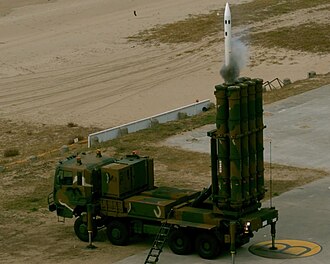
The UAE had received batteries of Cheongung-II before the outbreak of the war, as part of a defense relationship that began to extend beyond purchasing equipment to training and industrial cooperation. A study published by ORF Middle East states that the system was used for the first time outside Korea in combat conditions, and that Abu Dhabi announced during the war interception rates of nearly 94 percent for drones and 92 percent for missiles, with some figures still needing independent verification. The study also reports that two Emirati batteries achieved, according to unofficial reports, an interception rate of 96 percent against Iranian missiles.
These figures do not mean that Cheongung-II is a closed shield. Modern air defense is a network of radars, command and control, and interception, not a standalone platform. However, the Korean system offers two advantages that the Gulf specifically needs: a medium range to bridge the gap between short-range and long-range defenses, and operational costs that may be lower than some Western alternatives when dealing with dense and low-cost attacks. The problem is that shooting down a cheap drone with an expensive missile wins the tactical battle but loses the financial calculation.
Why Saudi Arabia is Turning to South Korea
Recent reports indicate that Saudi Arabia is not looking for just one system, but a mix of partners to counter attacks. The Los Angeles Times noted Riyadh's openness to Ukraine, South Korea, and others, while an ORF study discussed expanding defense and industrial cooperation between Seoul and both Saudi Arabia and the UAE. This approach is militarily understandable. Relying on a single supplier makes munitions, spare parts, and upgrades hostage to that supplier's foreign policy, and global demand for air defense missiles has surged due to the wars in Ukraine and the Middle East.
However, purchasing Cheongung-II does not equate to possessing full South Korean capability. Saudi Arabia needs an interception stockpile sufficient for weeks of fighting, local production or assembly, and training crews capable of operating under jamming and communication disruptions. It also needs to connect the system to the Gulf and American command and control networks and develop cheaper means to counter small drones. Practically, the Gulf lacks platforms as much as it lacks the ability to manage fire and prioritize between protecting cities, airports, and oil facilities.
The Korean Equation Between Trade and Responsibility
Seoul has economic and security reasons to engage. The Gulf is a major energy source for South Korea, and the Korean ship Namu was attacked by Iran in May 2026, according to ORF. Therefore, freedom of navigation in the Strait of Hormuz is not an issue distant from Korean security. Additionally, the UAE has been a special strategic partner for Seoul since 2011, hosting the Korean Akh training unit, and the comprehensive economic partnership agreement between the two countries came into effect in May 2026.
However, the war revealed a clear limit in Korean policy. When the United States redeployed THAAD batteries from Korea to the Gulf, the discussion in Seoul focused on the impact of that on Korean national defense, not on Korea's responsibility towards the security of its Arab partners. On November 23, South Korea denied its military participation in the Iran War, stating that its naval presence was related to rising piracy. This is a cautious and politically understandable position, but it leaves a gap between selling weapons and bearing the consequences of their use in a combat environment.
Weapon Capability Alone is Not Enough
The Gulf has been repeating for years that it wants to localize defense industry, but true localization does not start from assembling a missile in a local factory. It begins with training officers, standardizing alert procedures, sharing data, maintaining radars, analyzing interception results, and then the ability to quickly replenish stocks. Here emerges the "triangle of capability" that many regional deals overlook: equipment, training, and institutions. Saudi Arabia and the UAE have the money and equipment, and their training experience is improving, but the joint institutions managing regional air defense are still slower than the threat.
South Korea can be useful because it does not just sell a ready platform; it has experience in rapid industrial production, electronics, and linking civilian and military industries. However, technology transfer will be limited unless Seoul accepts deeper involvement in maintenance and supply, and unless Riyadh and Abu Dhabi establish contracts that measure actual readiness rather than the number of delivered batteries. A partnership that does not produce local operating crews and a sustainable stockpile is not a partnership, but a long-term bill.
The Gulf Does Not Want a New Guardian but More Options
The openness to South Korea should not be interpreted as an immediate alternative to the United States. Washington still provides early warning, reconnaissance, long-range command, and capabilities that Seoul cannot replace alone. Additionally, introducing multiple systems increases the challenges of interoperability and training. However, the Gulf wants to reduce its vulnerability to a single political decision, which is why it seeks to diversify suppliers without abandoning the American umbrella.
In my opinion, the value of Cheongung-II lies in its ability to reveal trends more than to determine outcomes. South Korea will only become a true security partner if it transitions from delivering batteries to ensuring supply, combat training, crisis support, and linking local industry to the system. If the relationship remains limited to exports, the familiar scene will repeat: excellent equipment, limited stocks, and institutions each operating within their own island. The Gulf wants greater independence, but it is still buying its independence from abroad; and this is the paradox that no single missile can resolve.
Sources
- ORF Middle East on South Korea's transition from supplier to security partner in the Gulf
- Los Angeles Times on Saudi Arabia's approach to Ukraine, South Korea, and other partners to counter attacks
- Iran International on South Korea's denial of military participation in the Iran War and its statements regarding piracy
In November 2026, the South Korean Cheongung-II air defense systems were deployed in the Gulf during the Iran War, achieving high interception rates against drones and missiles. Saudi Arabia is diversifying its defense partnerships, engaging with South Korea and others to enhance its military capabilities. The UAE has also integrated Cheongung-II into its defense strategy, marking a shift from mere procurement to active security collaboration with South Korea.
- The Cheongung-II system achieved interception rates of 94% against drones and 92% against missiles during the Iran War.
- Saudi Arabia is seeking a mix of defense partners, including South Korea and Ukraine, to enhance its military capabilities.
- The UAE received Cheongung-II batteries prior to the conflict and has engaged in training and industrial cooperation with South Korea.