
The Commercial Ship in the Gulf of Oman Reveals the Limits of the American Siege on Iran in 2026
 Ahmed Al-Rashid
The Commercial Ship in the Gulf of Oman Reveals the Limits of the U.S. Blockade on Iran in 2026
On October 11, the United States announced that its forces had disabled a commercial ship attempting to breach the blockade imposed on Iran in the Gulf of Oman. The incident was not just another maritime interception; it occurred almost on the same day that Tehran spoke about an explosion on an oil tanker after it struck a mine in the Strait of Hormuz, while the Revolutionary Guard Navy warned that any ship that turns off navigation and identification systems would be considered a hostile target. When these three events occur in one corridor, the military question becomes different from the political question: who has the ability to impose traffic rules, and who bears the cost of enforcing them?
From Ship Interception to Armed Inspection System
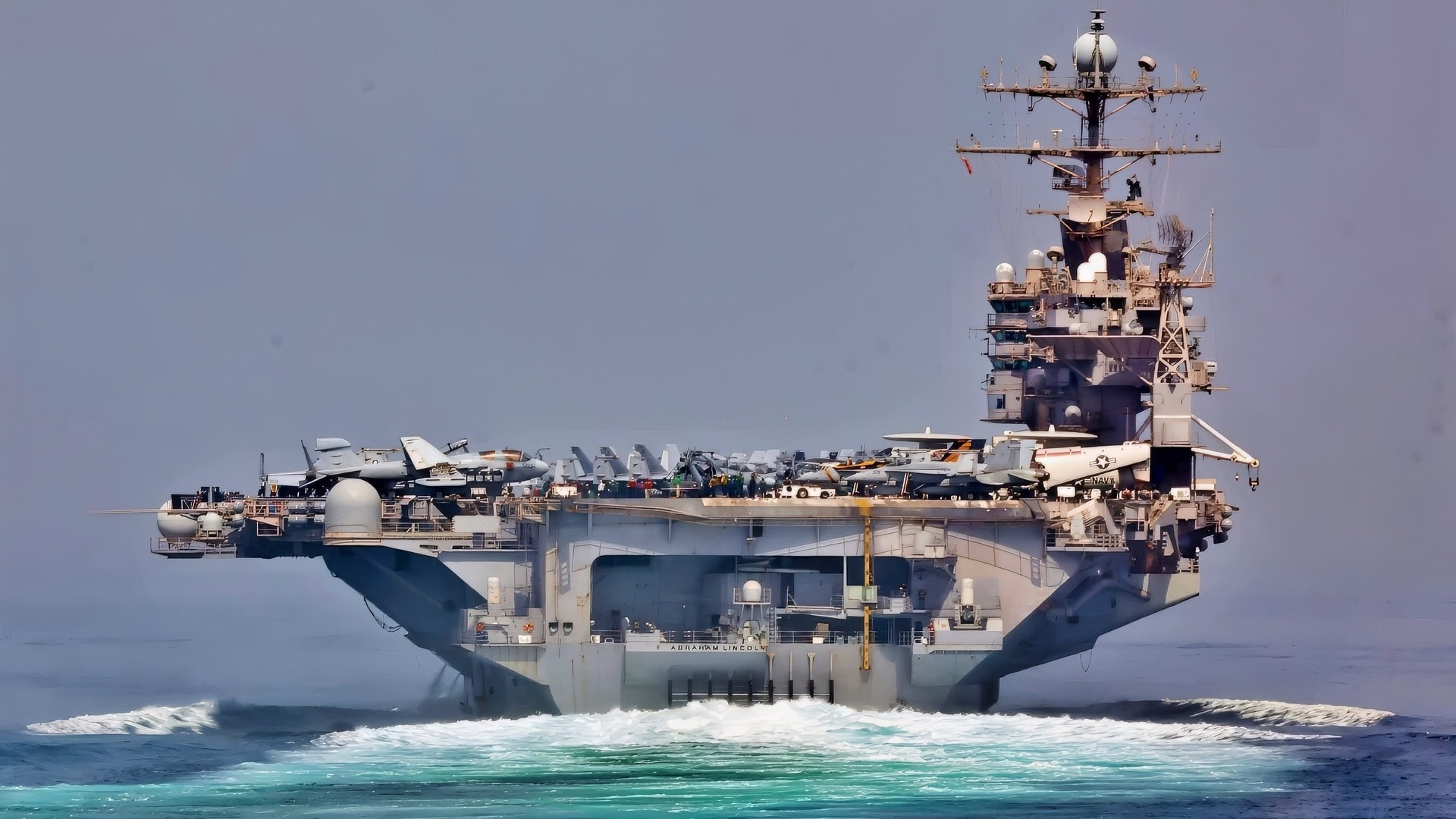
According to Reuters, the U.S. military command stated that the ship was attempting to operate a shipping line that violated restrictions on Iranian trade, and that U.S. forces used force to disable it. Al Jazeera and Arab News reported that the operation took place in the Gulf of Oman, outside the narrowest part of the strait, but within the maritime area relied upon by ships heading to Gulf ports. This point is important. Washington does not need to officially close Hormuz to make passage perilous; it is enough to turn the route into an area where a ship can be stopped, redirected, or forced to wait for a military decision.
In practical terms, this is not a classic blockade managed by surface ships at a clear barrier. It is a distributed blockade relying on aerial surveillance, fighter jets, shipping intelligence, warning communications, and then a quick decision to use force. This method gives the United States an advantage in detecting and identifying ships, but it creates a legal and political problem: each new interception expands the area that Iran considers a legitimate target for retaliation, increasing the likelihood that a misidentification could lead to direct confrontation.
Hormuz Does Not Need a Complete Closure to Stop
The Revolutionary Guard Navy announced, according to Mehr and Anadolu Agency, that an oil tanker struck a mine in the Strait of Hormuz, linking the incident to turning off identification and navigation systems or violating the traffic rules imposed by Iran. The Iranian narrative cannot be accepted as a final truth without an independent investigation, nor can it be ignored militarily. The cheap naval mine, or even the threat of its existence, forces commercial ships to slow down, change routes, and request escorts. Thus, a less costly force can impose an expensive protection operation on an advanced naval power.
The real danger to Gulf states is not just the number of tankers coming under fire. The danger is the erosion of predictability. Insurance companies do not price the missile alone; they also price ambiguity: will the ship be intercepted because it carries an Iranian cargo? Will it be treated as military if it turns off its identification device due to electronic jamming? Is close American protection enough to avoid a mine that does not show up on radar? When governments do not have fixed answers, a theoretically safe port becomes less useful than a longer but more predictable route.
Testing the Triad Capability of Gulf States
The Gulf states possess fighter jets, air defense systems, and advanced patrol vessels, but they do not have a complete system for protecting trade in an environment of electronic warfare, mines, and simultaneous interception operations. In such a crisis, the triad capability principle I use to evaluate armies comes into play: equipment, training, and institution. The equipment is present and at a huge cost. Joint training occurs during exercises. However, the institution capable of making a unified maritime decision, integrating commercial and military radar data, and distributing rules of engagement remains weaker than the scale of the threat.
Saudi Arabia, the UAE, and Oman have different interests in interpreting incidents. Abu Dhabi wants to maintain port and energy movement, Muscat wants to keep the door for mediation open, and Riyadh wants to prevent the eastern coast from becoming an additional pressure front. Therefore, it is not enough to purchase escort ships or air defense batteries. What is needed is a joint operations authority that distinguishes between a hostile ship and a ship that has lost its way, and can protect navigation without making every incident a spark for war.
Washington Gains Initiative and Loses Margin for Retreat
The American operation achieves an immediate gain: it tells shipping companies that the United States is prepared to use force to maintain the blockade, and it tells Iran that crossing the drawn lines will be met with a swift response. But this gain comes at a cost. Every ship that Washington disables becomes evidence for Tehran that the war is not just about military facilities, but about its sovereignty over trade and energy. Thus, Iran can respond through fast boats, mines, or drones, tools that do not require naval superiority to be harmful.
Moreover, the blockade pressures Gulf allies as much as it pressures Iran. Gulf states do not want their platforms and ports to become an extension of an American inspection operation, as they would bear the Iranian response without controlling the escalation decision. Here lies the contradiction that decades of arms purchases have ignored: reliance on American protection raises the level of deterrence, but it reduces the ability of Arab capitals to control the rhythm of the crisis.
The Problem Is Not Just the Ship
The events of October 10 and 11 demonstrated that Gulf security can be disrupted through three simultaneous layers: a ship attempting to breach a blockade, a tanker striking a mine, and an official threat considering turning off navigation equipment as a hostile act. This is not a traditional naval war with a clear front line, but a competition over defining normal behavior at sea. And whoever imposes their definition imposes the cost of war on others.
In my estimation, the United States will continue to intercept ships as long as it sees the blockade as enforceable, and Iran will continue to use maritime ambiguity to make enforcement costly. As for the Gulf states, they will purchase more surveillance and escort systems, but they will remain stuck between American protection that they do not control and an Iranian threat that they cannot contain alone. At sea, as on land, merely possessing weapons is not enough; the real capability is knowing when to use them and when to leave a passage for retreat. And this is the missing link in Gulf security.
Sources
- Reuters, October 11, 2026, regarding the disabling of a commercial ship attempting to breach the blockade on Iran.
- Al Jazeera, October 11, 2026, regarding the American operation in the Gulf of Oman.
- The National, October 11, 2026, regarding the use of an American aircraft against a ship violating the blockade.
- Anadolu Agency and Mehr News, October 12, 2026, regarding the explosion of a tanker and the Revolutionary Guard Navy's warning about turning off navigation systems.
U.S. forces disrupted a commercial vessel attempting to breach the blockade on Iran in the Gulf of Oman on October 11, 2026. This incident coincided with Iran's announcement of an oil tanker explosion in the Strait of Hormuz. The U.S. military indicated that the vessel was violating trade restrictions, while Iran's Revolutionary Guard issued warnings regarding navigation system disruptions.
- U.S. forces disrupted a commercial vessel in the Gulf of Oman on October 11, 2026.
- The incident coincided with Iran's announcement of an oil tanker explosion in the Strait of Hormuz.
- U.S. military stated the vessel was violating trade restrictions on Iran.
- Iran's Revolutionary Guard warned against ships disabling navigation systems.
- The blockade is characterized as distributed rather than classical, relying on air surveillance and rapid military response.