
The Dekara Attack in Nigeria Opens the Road to Kainji for Jihadists in 2026
 Marie Dubois
The Attack on Dekara in Nigeria Opens the Kainji Route to Jihadists in 2026
Dekara, in the Borgu area in the northwest of Niger State, was not supposed to become a household name in the mapping of West African jihad. Last Friday, however, it was there that armed men struck several communities during or just after prayer, killing at least thirty people and taking dozens more into the forest of Kainji National Park. This point is confirmed by several Nigerian media outlets and by initial official reactions. What remains unclear, however, is the exact scale of the abduction: some testimonies speak of at least 60 kidnapped in Dekara alone, while others suggest much higher numbers when including neighboring villages. This uncertainty is not a detail. It already says something about the state of the operational theater.
A Local Massacre, a Regional Signal
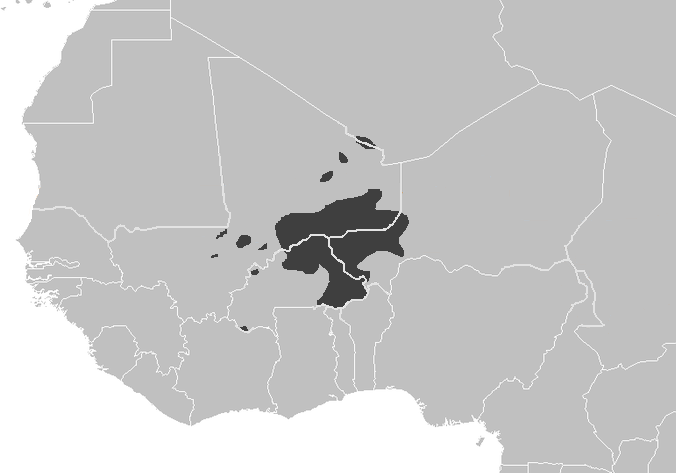
The most solid elements, for now, come from the local ground. Peoples Gazette describes an attack concentrated on Dekara, with more than 30 dead, over 60 people taken to the Kainji forest, houses burned, and the residence of district chief Umar Abubakar affected. Arise News confirms that the assailants targeted several communities in Borgu and that President Bola Tinubu has ordered a coordinated operation involving the army, police, DSS, and intelligence services. At this stage, we know three things: the assailants struck simultaneously or nearly simultaneously, they exploited a moment of collective vulnerability related to prayer, and they retreated into a forested area that is difficult to control.
On the ground, this matters more than a statement. An armed force that can strike multiple points, kill, abduct, and then disappear into Kainji does not act like a mere opportunistic band of highway robbers. It demonstrates familiarity with the routes, relay villages, response times of forces, and fallback zones. This is a corridor control logic. In the Sahel, this type of sequence often precedes the establishment of a lasting coercive presence: taxation, forced sermons, targeted abductions, punishment of communities that refuse to cooperate.
Kainji is No Longer a Margin
The geography explains the danger. Borgu and the Kainji forest are located at the junction between northwest Nigeria, the central-north, and the proximity of the Benin border. For an armed group, this is not a periphery; it is a hinge. A wooded area, scattered localities, secondary roads, uneven surveillance capabilities: all of this favors the mobility of fighters and complicates pursuit. From experience, when a regular force must choose between protecting populations, holding routes, and tracking kidnappers deep into the area, it often ends up doing a bit of everything without fully securing anything.
For several months, signals have been accumulating around this sector. Nigerian media headlines are already referring to Borgu-Kainji as a new security tipping point, and local debates focus less on an isolated incident than on the opening of a new front. The important point is not whether this area will perfectly resemble the Malian Gourma or the Nigerien Liptako. It will not resemble them exactly. The important point is that the same operational grammar is found: forest sanctuary, pressure on civilians, hostage capture, blurring between banditry and insurrection, and then increasing difficulty for the state to distinguish rural policing, counter-insurgency, and territorial defense.
The Information Fog Favors the Assailants
It is also necessary to look at what circulates around the attack. Dubawa has already debunked a viral video presented as proof that Lakurawa fighters were entering Nigerien communities imposing Sharia. The video was misleading. This denial does not absolve the threat; it shows something else: in areas where information is weak, terror thrives as much through recycled images as through weapons. Armed groups then win twice. First physically, by striking villages. Then psychologically, by allowing rumors to amplify their presence, blur their identity, and push residents to imagine that no area is safe.
This is why the exact attribution must remain cautious. Several public narratives mix bandits, jihadists, Lakurawa, and new cells like Mahmuda. Nigerian authorities themselves often use fluid categories depending on the political and military context. What can be said without overinterpreting is that the attack on Dekara fits into an environment where the boundary between armed criminality and ideological insurrection is becoming increasingly porous. For villagers, this nuance matters little when fleeing. For the state, it is decisive, as one does not neutralize a ransom network, an expanding katiba, or a hybrid of the two in the same way.
Tinubu's Response is Necessary, but It Comes Late in the Cycle
The order given by Tinubu for a coordinated operation was politically indispensable. It would have been untenable, after a mass abduction during prayer, to respond with condolences alone. But militarily, this type of order often comes after the adversary's maneuver. The kidnappers have already left the contact zone, dispersed the captives, prepared human shields, and likely activated local informants. The longer the delay, the more a rescue operation turns into a sweeping campaign, with a high risk for the hostages.
The real test will therefore not be Abuja's announcement, but the ability to hold Borgu over the long term. This requires permanent support points, reliable human intelligence, a mobile presence on secondary tracks, and, above all, a regional reading of the problem. If Kainji becomes a tactical depth for armed groups driven from elsewhere or attracted by a new security vacuum, then Nigeria is no longer facing a simple surge of banditry. It finds itself confronted with a gradual contamination of its central-north by methods already proven on the Sahelian front.
The Next Risk is Southwest of the Current Front
The immediate danger is simple: that Borgu ceases to be a raid point and becomes an anchoring point. When this happens, attacks on mosques, markets, local leaders, and roads are no longer separate episodes. They become a system. The Kainji park would then offer not only refuge but a rear base to extend pressure towards other communities in Niger, towards neighboring Kwara, and ultimately towards the coastal states of the Gulf of Guinea that have feared this shift from the Sahelian front for years. This is where the signal from Dekara becomes strategic. This village may not yet have tipped into a Sahelian-type war. But the route is now open.
An armed group attacked Dekara in Niger State, Nigeria, during prayer, resulting in at least 30 deaths and over 60 abductions. The attackers targeted several communities, burned homes, and have retreated into the Kainji National Park. President Bola Tinubu has ordered a coordinated military response to address the escalating security situation in the region.
- Attack occurred during prayer time in Dekara, Niger State.
- At least 30 people killed and over 60 abducted.
- Attackers targeted multiple communities and burned homes.
- President Bola Tinubu ordered a coordinated military response.
- The area is becoming a new security front for armed groups.