
The Deployment of Japan's Intercepting Drones in September Indicates a Shift in Air Defense for the Southwestern Islands Bases
 Tanaka Takashi
The Deployment of Japan's Interceptor Drones in September Signals a Shift in Air Defense for the Southwestern Islands
On August 22, the Ministry of Defense reported that it would use the rapid procurement system for the first time to expedite the acquisition of interceptor drones, aiming to begin deployment in September, according to Yomiuri Shimbun. What is noteworthy here is that this is not merely about purchasing new unmanned aerial vehicles. We have entered an era where inexpensive small drones threaten runways, ammunition depots, radar, and naval vessel moorings, and Japan is finally beginning to acknowledge the reality that "expensive interceptor missiles alone cannot provide complete protection" in terms of its systems.
The Urgency is More About a Shift in Air Defense Thinking than the Aircraft Itself
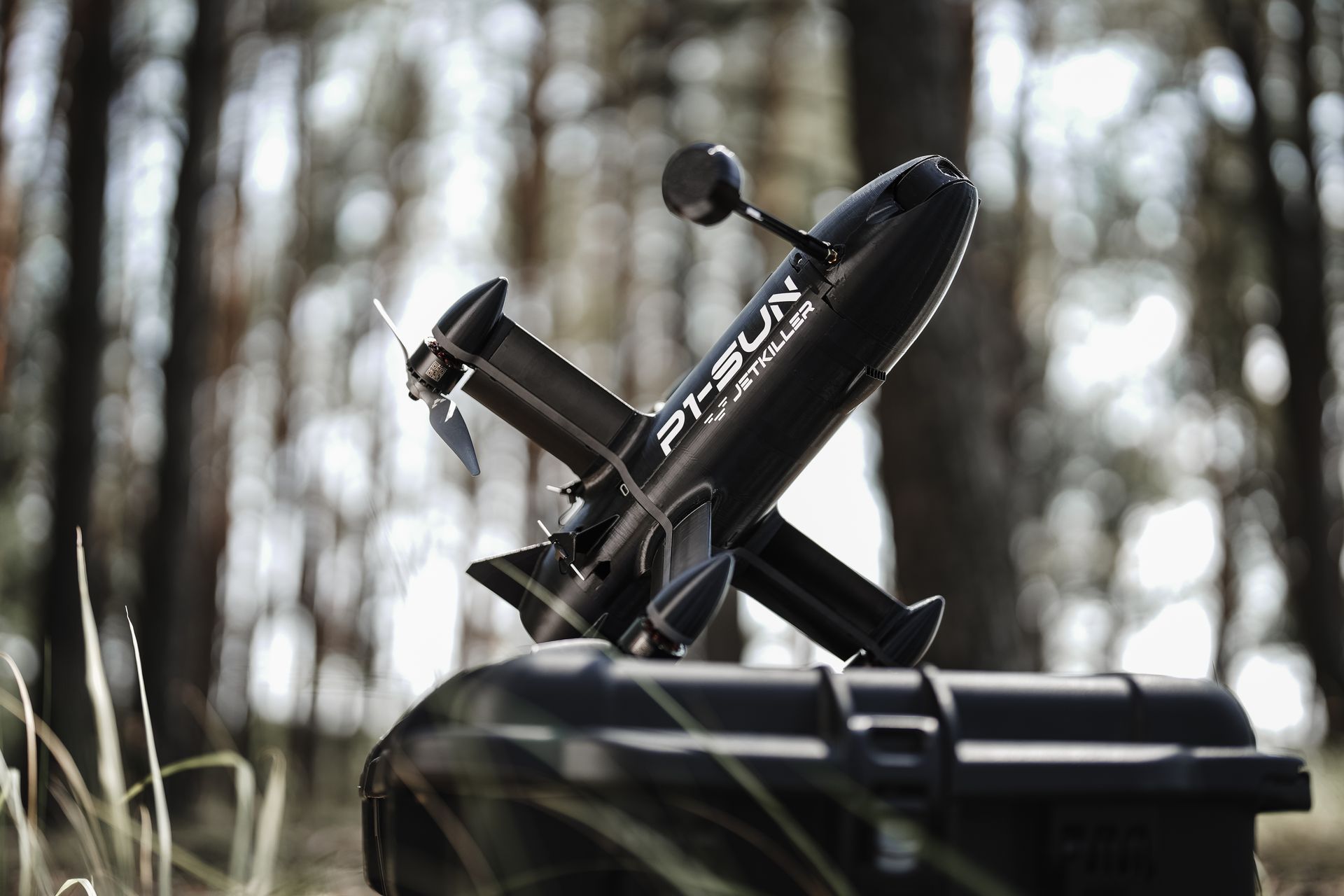
According to a report by the AP in early August, the 2026 Defense White Paper states that Japan must adapt to new ways of fighting based on AI and drones, taking into account the expansion of drone warfare demonstrated in Ukraine and the Middle East. Defense Minister Shinjiro Koizumi also stated in July that "speed is key." In other words, the introduction of interceptor drones should be viewed not as a standalone equipment issue, but as the first concrete example of translating the awareness presented in the white paper into rapid procurement.
Traditionally, base air defense has centered around relatively expensive missile systems like the PAC-3 and the Type 03 medium-range surface-to-air missile. However, if the adversary deploys dozens, and in some cases hundreds, of small unmanned aerial vehicles, the method of assigning expensive munitions to each target will not withstand sustained combat. Interceptor drones serve as a lower-tier air defense measure to correct this poor cost-exchange ratio as much as possible.
In the Defense of the Southwestern Islands, Protecting Runways and Supply Lines Comes First
What I find more significant is that the targets for interception are not limited to air bases. In the defense of the southwestern islands, the first targets are likely to be runways, fuel facilities, communication nodes, and deployment bases for anti-ship missile units, rather than the fighter jets themselves. If a few suicide drones incapacitate the rear nodes supporting sea lines of communication (SLOC), the forward deployment of Japan and the U.S. could become more vulnerable than imagined.
In this sense, interceptor drones are not flashy equipment that dramatically shoots down enemy aircraft, but rather modest equipment that supports the sustainability of island defense. At bases like Kadena, Naha, Miyako Island, and Ishigaki Island, the question is not how quickly ammunition can be resupplied or how maintenance personnel can be rotated, but how cheaply and effectively low-speed, low-altitude threats can be dealt with. The Japan Maritime Self-Defense Force's vessels face the same issue when moored and resupplying in ports or near the coast.
It May Be the Most Realistic Quick Fix Among the 8.9 Trillion Yen Budget Request
As mentioned in Takashi Tanaka's article this morning, the Ministry of Defense's budget request for fiscal year 2027 is expected to be around 8.9 trillion yen, with the possibility of further increases during year-end adjustments. This includes research on submarine-launched hypersonic missiles and ship-launched attack drones. However, such long-range, high-performance equipment takes time to deploy. In contrast, interceptor drones are one of the few projects that can relatively quickly fill gaps in base air defense.
In other words, while discussions about Japan's defense capabilities tend to lean towards "can we strike from afar?", the more pressing initial concern is "can we avoid being incapacitated first?" Even if long-range missiles enhance deterrence, if launch bases or supply points are rendered inoperable by small unmanned aerial vehicles, the ability to retaliate becomes just a number on paper. The rapid introduction of interceptor drones should be understood as an attempt to fill that vulnerable middle ground.
Even with Accelerated Systems, Issues of Identification and Command Remain
However, using the rapid procurement system does not solve everything. First, in an environment where civilian airspace and friendly unmanned aerial vehicles coexist, at what stage do we determine what is hostile? Second, to what extent can data links and autonomous control on the intercepting side be maintained in a jamming environment? Third, can the supply system, including batteries, spare units, and personnel training, be managed on the islands? If these remain ambiguous, simply increasing the number of aircraft will leave gaps in actual combat.
- The Ministry of Defense is reportedly using the rapid procurement system for the first time to acquire interceptor drones, aiming to begin deployment in September.
- The 2026 Defense White Paper emphasized the need to adapt to new ways of fighting based on AI and drones.
- In the defense of the southwestern islands, sustainable lower-tier air defense at low cost is essential, not just expensive surface-to-air missiles.
In my view, the significance of this development is not merely that "Japan finally has drones." Discussions about attack unmanned aerial vehicles and long-range strikes have already been underway. What has been delayed is the establishment of a low-cost, repeatable interception mechanism to protect bases and supply lines. The true challenge in the southwestern islands lies not in the performance specifications of the aircraft, but in how to endure the first few minutes of a saturation attack. The only thing that will shorten the timeline with rapid procurement is the time until contracts are signed. Whether we can maintain base functionality on the first day of a crisis depends on the speed of operational decision-making thereafter.
Japan is accelerating the procurement of interception drones for deployment starting in September 2023, marking a shift in air defense strategy in the Nansei Islands. This move acknowledges the limitations of traditional expensive missile systems against numerous small drones. The 2026 defense white paper emphasizes the need to adapt to drone warfare and AI, focusing on protecting airfields and supply lines.
- Japan is using a rapid procurement system for interception drones.
- Deployment of these drones is set to begin in September 2023.
- The new strategy acknowledges the limitations of expensive missile systems against numerous small drones.
- The 2026 defense white paper emphasizes adapting to drone warfare and AI.
- The focus is on protecting airfields and supply lines in the Nansei Islands.