

The F-4 Phantom Is No Pushover – Summary and Key Points: A Hellenic Air Force F-4E Phantom II came down on September 5, 2026, shortly after takeoff at Athens Flying Week at Tanagra Air Base, about 35 miles north of Athens, and both crew members were killed. No spectators were hurt, and investigators have not said the jet’s age caused the crash. The aircraft that fell is one of the toughest fighters still in service anywhere: first flown on May 27, 1958, pushed past Mach 2 by two General Electric J79s, and built to haul about 18,000 pounds of weapons at a takeoff weight of more than 60,000 pounds. Greece has flown the F-4E since 1974. Rafales, upgraded F-16s, and future F-35s will each beat it at something. None of them, alone, puts twin engines, two crew, that payload, and that speed in one airframe.
What Makes the F-4 Phantom So Tough:
A fatal accident has drawn attention to one of the oldest fighter aircraft still serving anywhere in the world.
A Hellenic Air Force F-4E Phantom II crashed on September 5, 2026, while performing at Athens Flying Week at Tanagra Air Base, around 35 miles north of Athens.
The aircraft came down shortly after takeoff, and the crash killed both crew members.
No spectators or local residents were injured.
The cause of the crash remains under investigation, and there is currently no evidence that the age of the aircraft’s age caused it.
However, the crash occurred as Greece prepares to retire the fighter jet, which has been operating for more than half a century.
Greece’s Phantom Era Is Almost Over
Greece first received the F-4E in 1974.
The fleet of fighter jets went on to serve as one of the main interception and strike aircraft of the Hellenic Air Force, and today the remaining Greek Phantoms are operated by 338 Squadron at Andravida Air Base in western Greece.
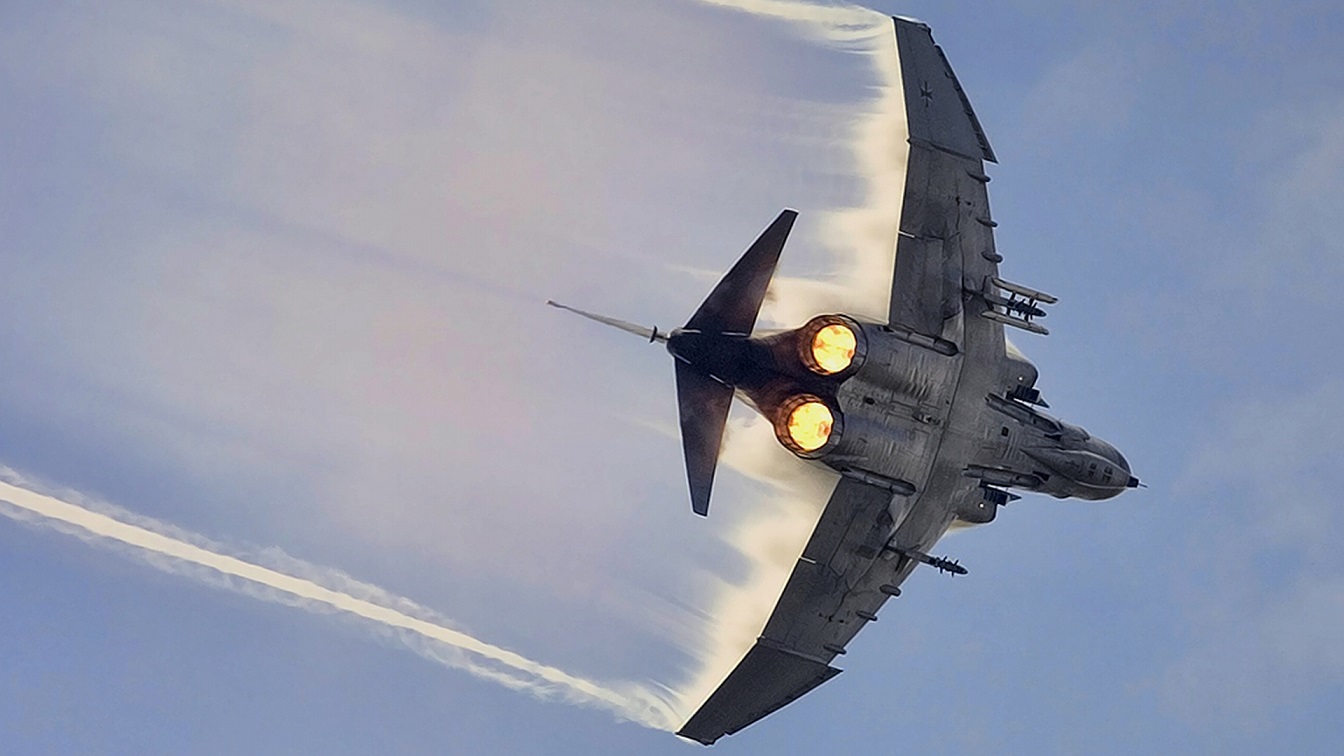
F-4 Phantom II. Image Credit: Creative Commons.
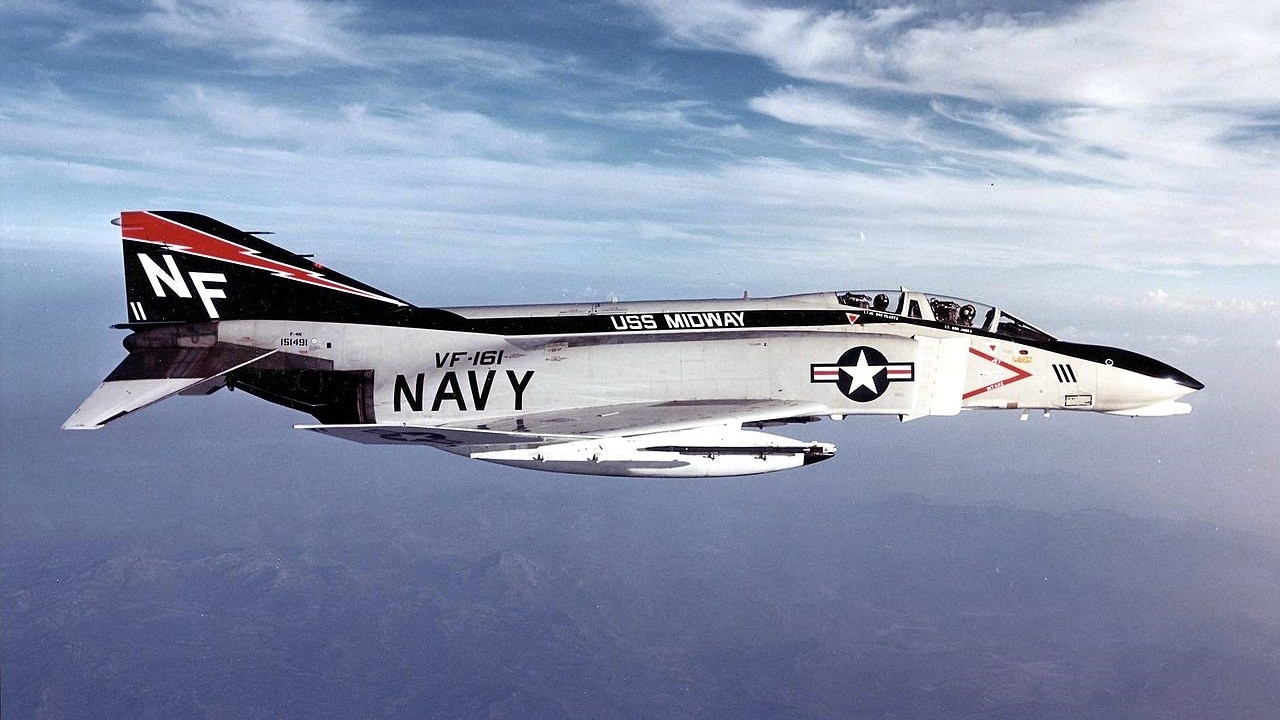
A U.S. Navy McDonnell F-4N Phantom II (BuNo 151491) of Fighter Squadron VF-161 “Chargers” in flight. 151491 was assigned to VF-161, Carrier Air Wing 5 (CVW-5), aboard the aircraft carrier USS Midway (CV-41) from 1973 to 1977. It was retired to the MASDC as 8F0077 on 3 November 1977.
Greek newspaper To Vima reported that, after the Tanagra crash, the remaining F-4E Phantom II aircraft are expected to stop flying by the end of 2027.
The newspaper also said that the decision to retire the aircraft was made before the crash, though the Hellenic Air Force and the Greek Ministry of National Defense have not publicly confirmed a precise date for its full retirement.
Whenever that final flight occurs, it will mark the end of one of the Phantom’s longest careers with a NATO air force.
It would also leave Turkey and Iran as the aircraft’s only remaining military operators — at least, on paper.
The current state of Iran’s air force inventory is unknown.
The F-4 Was Built Around Brute Force
The F-4’s design is legendary, with some describing it as built around “brute force.” But that assessment doesn’t mean it was crudely designed.
In fact, it was built around powerful engines and high speed, combined with a substantial weapons load and massive capacity to accept new equipment. It is a fighter jet in every sense.
The Phantom first flew on May 27, 1958.
Its two General Electric J79 turbojets generated about 17,000 pounds of thrust each with afterburners, pushing the aircraft beyond Mach 2.
An F-4 could also carry approximately 18,000 pounds of weapons across nine external stations.
That performance was packed into an aircraft with a maximum takeoff weight of more than 60,000 pounds.
The Phantom, then, was not as nimble a fighter as the lighter ones developed after the Vietnam War, but it could accelerate and climb while carrying large quantities of weapons and fuel.
It has an unusual appearance, too — the product of deliberate engineering decisions.
McDonnell incorporated raised outer wing sections during wind tunnel testing, as well as a downward-angled horizontal stabilizer design intended to address stability problems that emerged during development.
The Formula Worked
The result of that development was an aircraft with capabilities that extend far beyond its original role as a carrier-based fleet defense fighter.
Over the years of the F-4 had various versions, including air superiority and conventional strike, nuclear strike, reconnaissance, suppression of enemy air defense missions, and more.
It has a large fuselage that accommodates two crew members.
It features powerful radar and additional electronic equipment, and its large payload capacity allows it to carry missiles, bombs, rockets, external fuel tanks, and specialized pods.
Its internal capacity also meant that foreign operators of the aircraft could modernize and adapt the aircraft decades later.
For example, Greece’s Avionics Upgrade Program added the APG-65GY multimode radar, along with new mission computers and modern cockpit displays.
It also added improved navigation equipment and compatibility with AIM-120 AMRAAM missiles.
Turkey did much the same thing with its own F-4E 2020 Terminator.
The upgrades transformed the F-4 from an aging Cold War fighter into a dedicated long-range strike aircraft capable of delivering modern precision weapons.
It Can’t Be Directly Replaced
Modern fighters can now perform every mission that was once assigned to the Phantom.
None of them, however, truly reproduce its combination of speed, payload, twin-engine power, two-person operation, and overall adaptability.
It is one of the most flexible aircraft ever.
The F-35, today’s most advanced fifth-generation fighter, provides stealth and sensor fusion. The F-15EX, meanwhile, offers greater payload.
The Phantom’s qualities have been distributed across multiple platforms.
Without A Successor
Arguably, the F-4 may never truly be replaced.
Modern air forces no longer want aircraft to survive through a combination of speed, power, and weapons capacity.
Instead, modern aircraft favor stealth and networking and are designed to serve as long-range sensors and strike platforms.
Greece’s Rafales, upgraded F-16s, and its future F-35s will all outperform the Phantom, but it will arguably take an entire modern fleet to replace everything that it once offered.
About the Author: Jack Buckby
Jack Buckby is a British researcher and analyst specializing in defense and national security, based in New York. His work focuses on military capability, procurement, and strategic competition, producing and editing analysis for policy and defense audiences. He brings extensive editorial experience, with a career output spanning over 1,000 articles at 19FortyFive, and has previously authored books and papers on extremism and deradicalization.